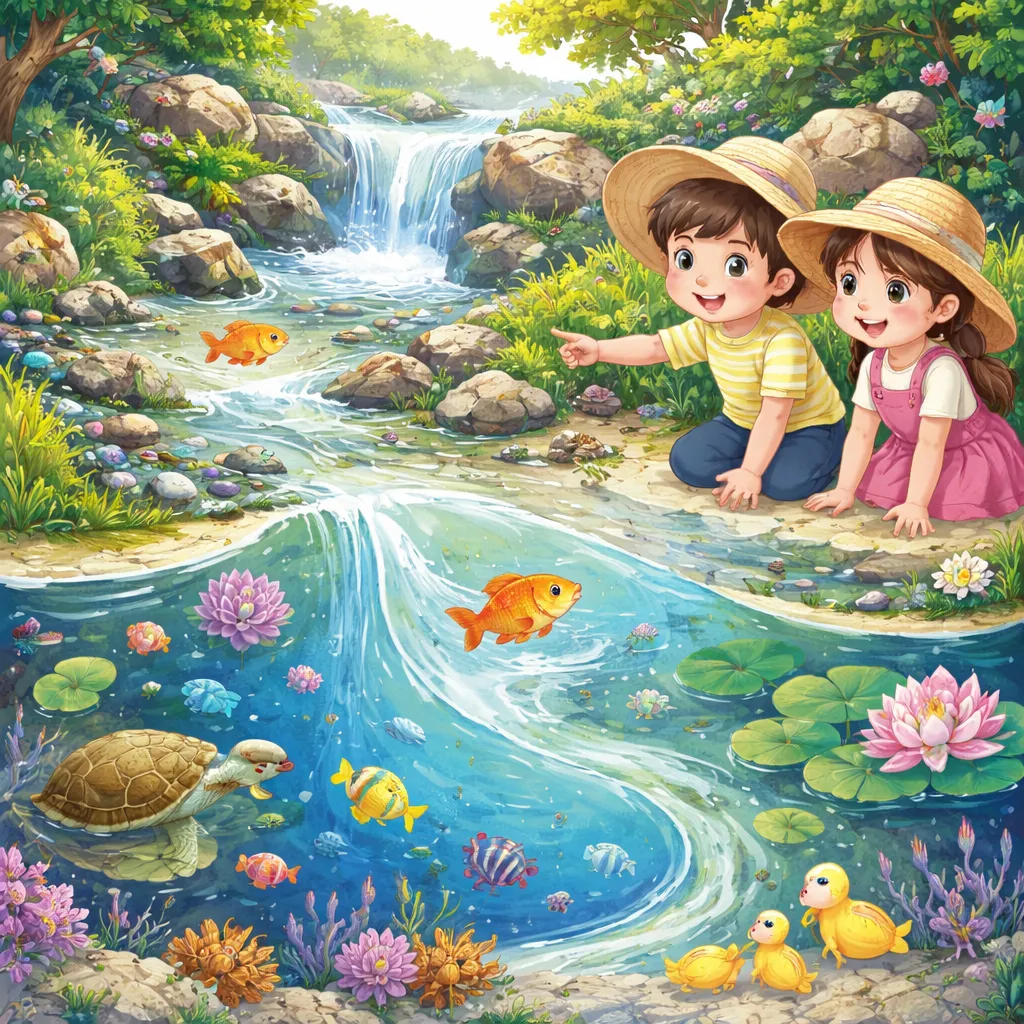

Have you ever watched fish in a tank or a pond? They glide smoothly without making a sound, their tails waving like tiny fans. How do they breathe underwater? Where are they going? In Korea, a country with clear rivers and wide oceans, there is a flowing song about this graceful swimmer. Let’s dive into the Korean Song: The Little Fish (물고기).
About the Song
Here is a classic verse from this beloved song in Korean and English:
물고기 물고기 작은 물고기
(Mulgogi mulgogi jageun mulgogi)
Little fish, little fish, small fish
꼬리치며 헤엄쳐요
(Kkorichimyo heeomchyeoyo)
Swimming, wagging its tail
파도 속에서 재미있게
(Pado sogeseo jaemiitge)
Having fun among the waves
시원한 물속에서 놀아요
(Shiwonhan mulsogeseo norayo)
Playing in the cool water
This song’s original Korean name is “물고기” (Mulgogi), which means “fish.” It is a very popular and traditional Korean children’s song. The song paints a happy picture of a fish’s life in the water. The music is often flowing, smooth, and has a wavy rhythm. The Korean Song: The Little Fish (물고기) is a musical swim, celebrating the freedom, movement, and simple joy of life underwater.
What the Song is About
The song is a cheerful observation of a fish’s day. First, we call to it: “Little fish, little fish, small fish.” We see how it moves: “Swimming, wagging its tail.” The tail is the fish’s motor, pushing it forward. The song describes its environment: “Having fun among the waves.” We can imagine the fish darting in and out of the gentle underwater currents. Finally, we know how it feels: “Playing in the cool water.” For the fish, the water isn’t wet; it’s home—a cool, refreshing place to play all day. The whole song is about the beauty of effortless motion and the happiness of being in your perfect element.
Who Made It & Its Story
This song is a traditional Korean folk song, shared by generations. The original creator is unknown, as it comes from the shared experience of living near water. Korea is a peninsula surrounded by sea and dotted with rivers, so fish are an important part of life and diet. The Korean Song: The Little Fish (물고기) captures this connection. It is adored for three flowing reasons. First, it creates a sense of peace and gentle movement, which is very calming. Second, it teaches children about the natural habitat and behavior of a common animal. Third, its melody is simple, wave-like, and easy to hum, making it a favorite for quiet play or rest time.
When to Sing It
You can sing this song while moving your arms like swimming strokes, gliding around the room. It’s perfect to hum while playing in a pool or during bath time. You could also sing it with friends, holding hands and swaying in a line like a school of fish.
The Korean Song: The Little Fish (물고기) shows us a world of fluid motion. But to swim like a fish, we need to learn about its world. This song is a clear pool of knowledge. It introduces us to water words, shows us how to describe ongoing actions, and shares a bit about Korea’s relationship with the sea. Let’s take a deep breath and explore below the surface.
What Children Can Learn
Vocabulary
This song helps us learn words for water, movement, and marine life.
Current: The steady flow of water in a river or ocean. The fish swims with the current.
Gill: The part on the side of a fish that it uses to breathe underwater.
Aquatic: Living or found in water. Fish are aquatic animals.
School: A large group of fish swimming together. A school of fish moves as one.
Buoyant: Able to float in water or air. A fish is buoyant in the water.
Habitat: The natural home of an animal. The river is the fish’s habitat.
Language Skills
This song is a clear example of using the Present Continuous Tense for actions happening now. We use this tense to describe actions that are in progress at the moment of speaking.
What Is It?: Think of the Present Continuous as the “Right Now” tense. It shows actions that are ongoing. The fish isn’t just able to swim; it is swimming right now.
Finding the Secret: Look for the verb “to be” (am, is, are) plus a main verb ending in “-ing.” Ask: “Is this action happening right this minute?”
Using It:
◦   Formula: [Subject] + is/am/are + [verb-ing].

◦   Examples: “The fish is swimming. I am singing. We are learning.”

◦   In the song: The fish is swimming, is wagging its tail, and is playing. These are actions happening in the present scene.
Sounds & Rhythm Fun
Listen to the flowing rhythm. The Korean Song: The Little Fish (물고기) has a smooth, wavy, and gentle beat. It might sound like the soft lap of water against the shore. The melody often rises and falls slowly, like a fish diving and surfacing. This fluid, calm rhythm is soothing and makes the lyrics about cool, playful water easy to remember and feel. You can use this same flowing, wave-like rhythm to make up a song about any smooth, continuous motion, like a bird gliding or a cloud drifting.
Culture & Big Ideas
This song connects to Korea’s deep relationship with water. A major river is the 한강 (Hangang / Han River), which flows through Seoul and is a place for leisure. A traditional practice is 해녀 (Haenyeo), the women divers of Jeju Island who harvest seafood. The Korean Song: The Little Fish (물고기) teaches three gentle ideas. First, Moving with Your Element: The fish is perfectly adapted to its home (water), showing us the joy of being where you belong. Second, Effortless Action: Swimming, for a fish, is as natural and fun as playing—it is action without struggle. Third, The Calm Depths: Water can be a symbol of calm and refreshment (“cool water”), teaching us to find peace and playfulness in our surroundings.
Values & Imagination
Imagine you are the little fish. What do you see in the cool, blue water? Sunlight making patterns? Smooth stones? This song teaches you to appreciate grace and ease. It encourages you to observe animals closely and think about how they are perfectly designed for their homes. A simple idea: The next time you are near water, watch how it moves. Drop a small leaf in and follow its journey. It is traveling like a little boat, just as the fish swims.
Your Core Takeaways
The Korean Song: The Little Fish (물고기) is a fluid, peaceful lesson in movement, adaptation, and natural joy. You learned water words like “current,” “gill,” and “aquatic.” You discovered how to use the Present Continuous tense to describe actions happening right now. You moved to the song’s smooth, wavy rhythm. You also connected the fish to Korea’s rivers and coastal traditions. Most importantly, the song teaches that every creature has a perfect home, that moving with grace is beautiful, and that there is simple, cool fun to be found in your own element.
Your Practice Missions
- Be a “Right Now” Ocean Reporter. For one minute, pretend you are looking into an aquarium. Describe what the imaginary fish are doing using “is ___ing” or “are ___ing.” Example: “The blue fish is chasing the red fish. The yellow fish is hiding behind a plant. They are playing.” This practices the Present Continuous tense.
- Create a “Fish’s Cool Water” Drawing. On a blue piece of paper, draw your little fish swimming. Around it, draw its cool, watery world—waves, bubbles, plants, and friendly sea creatures. Show your drawing and explain, “My fish is swimming happily here. It is playing in the cool current.” This turns the song into a visual story.














