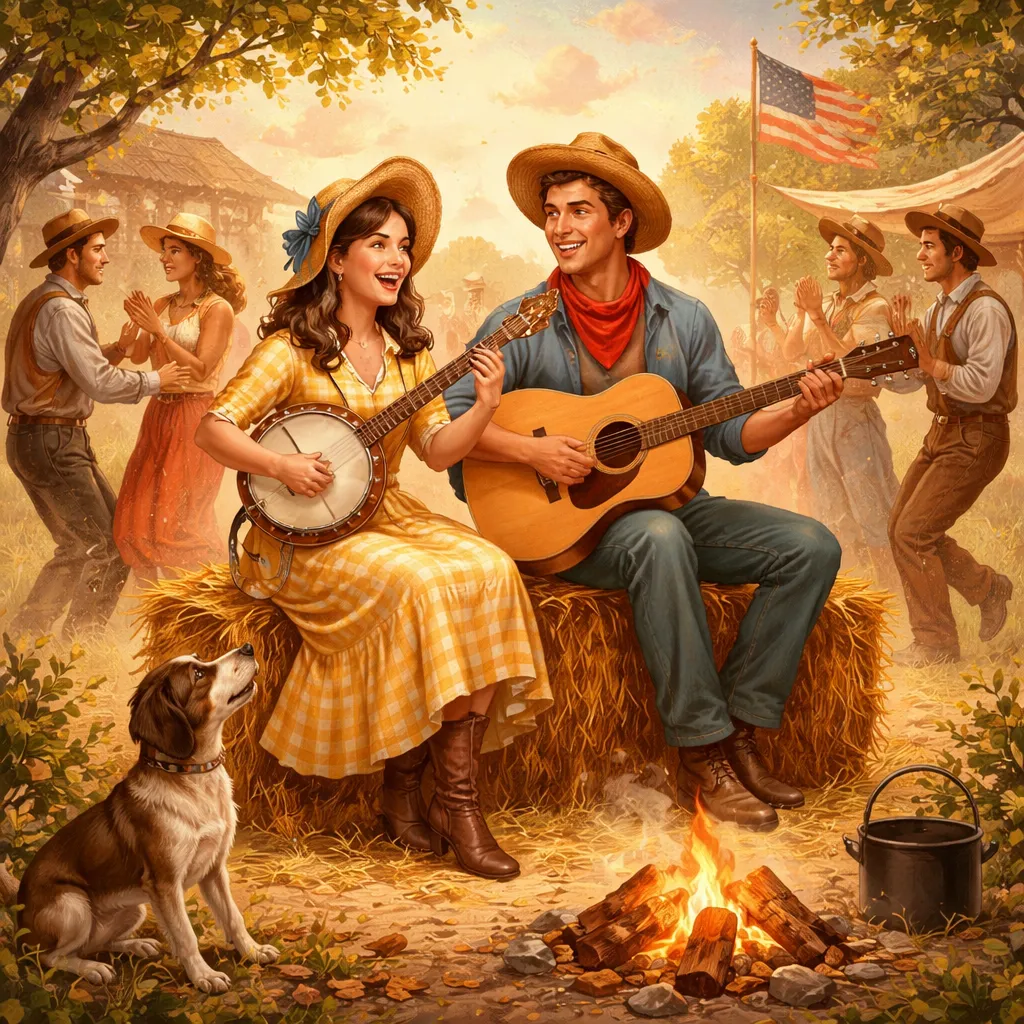

What is the Rhyme "Oh, Susanna"? "Oh, Susanna" is one of the most famous American folk songs ever written. Stephen Foster composed it in 1848, and it became an instant hit during the California Gold Rush. The song tells the story of a man traveling from Alabama to Louisiana with a banjo on his knee to see his beloved Susanna. The English song: Oh, Susanna has been sung by generations of Americans on journeys, around campfires, and in classrooms. The lively melody makes everyone want to clap along. The simple chorus is easy to remember. The song captures the spirit of adventure and the longing for loved ones left behind. For children, it introduces American history, geography, and the joy of folk music.
The Complete Lyrics of the Nursery Rhyme Let us look at the words together. The song has several verses and a repeating chorus.
I came from Alabama with my banjo on my knee, I'm going to Louisiana, my true love for to see. It rained all night the day I left, the weather it was dry, The sun so hot I froze to death, Susanna, don't you cry.
Chorus: Oh, Susanna, oh don't you cry for me, I've come from Alabama with my banjo on my knee.
I had a dream the other night when everything was still, I thought I saw Susanna coming down the hill. The buckwheat cake was in her mouth, a tear was in her eye, I said I'm coming from the south, Susanna, don't you cry.
Chorus
Vocabulary Learning from the Song This English song: Oh, Susanna introduces children to words about travel, emotions, and old-fashioned life. Each word builds their understanding of history and language.
First, the song teaches geography words. "Alabama" and "Louisiana" are states in the southern United States. You can show your child a map and point to these places. This builds early geography knowledge.
The song teaches about a "banjo." A banjo is a musical instrument with a round body and a long neck. It is often used in folk music. You can show your child pictures of a banjo or listen to banjo music online.
The phrase "my true love" means the person the singer loves most. Susanna is his sweetheart. This introduces the concept of love and missing someone special.
The song has playful weather lines. "It rained all night the day I left, the weather it was dry. The sun so hot I froze to death." These are silly contradictions that make children smile. Rain and dry together? Hot sun but frozen? This shows playful use of language.
"Buckwheat cake" is an old-fashioned food. Buckwheat is a grain used to make pancakes. This introduces historical food vocabulary.
Phonics Points to Practice Let us listen for special sounds in the song. Phonics helps children connect letters to the sounds they hear. This English song: Oh, Susanna gives us many sounds to explore.
Listen to the long "o" sound at the beginning of "Oh." It says its own name. You can hear it in words like "go," "no," and "hello."
The "s" sound appears in "Susanna" and "south." It is a soft sound made by pushing air through the teeth. Practice other "s" words like "sun," "sand," and "sing."
Listen to the "b" sound in "banjo" and "buckwheat." It is a strong sound made by pressing lips together. Practice other "b" words like "ball," "book," and "baby."
The "c" sound in "came" and "cry" is made at the back of the throat. Practice other "c" words like "cat," "cake," and "car."
The "m" sound in "mountain" and "morning" but here it is "Alabama." Practice other "m" words like "mommy," "milk," and "moon."
Grammar Patterns We Can Learn This folk song teaches important grammar in a very natural way. The English song: Oh, Susanna introduces past tense verbs, prepositions, and the phrase "for to" which is old-fashioned English.
The song uses past tense throughout. "I came from Alabama." "It rained all night." "I had a dream." "I thought I saw Susanna." These are all past tense verbs. You can talk about past events in daily life. "We came home." "It rained yesterday." "I had a snack."
The song uses prepositions of place. "From Alabama" shows where the journey started. "To Louisiana" shows where it is going. "From the south" shows direction. You can practice using prepositions. "We came from home." "We are going to the park."
The phrase "for to see" is an old way of saying "to see." This shows children that language changes over time. People long ago spoke a little differently.
Learning Activities to Do at Home Bringing this English song: Oh, Susanna into your daily life is simple and joyful. Here are some activities you can try with materials you already have.
A wonderful activity is the "Banjo Craft." Make a simple banjo from a paper plate and rubber bands. Stretch rubber bands across the plate for strings. Decorate it. Pretend to play while singing the song. This builds fine motor skills and connects to the music.
Another activity is the "Map Journey." Look at a map of the United States. Find Alabama and Louisiana. Trace a path from one to the other. Talk about how the traveler might have gone by foot, horse, or wagon. This builds geography skills.
You can also have a "Weather Contradictions" game. The song says it rained but the weather was dry, and the sun was hot but he froze. Make up your own silly weather sentences. "It snowed but I was hot." "The wind blew but the air was still." This builds creative language skills.
Printable Materials for Learning Creating simple printables can make this English song: Oh, Susanna more visual and engaging. You can make these materials together with your child.
A journey map coloring page is perfect. Draw a simple map showing Alabama and Louisiana. Add a path between them with a traveler carrying a banjo. Let your child color the scene. Write "Oh, Susanna" at the top. Display their artwork proudly.
Story sequencing cards help with comprehension. Draw simple pictures on separate cards. Man with banjo leaving Alabama. Rain and sun on the journey. Dreaming of Susanna. Susanna with buckwheat cake. Arriving in Louisiana. Your child can arrange the cards in order and retell the story. This builds sequencing and narrative skills.
You can also create simple word cards. Write words from the song on cards. "Alabama," "banjo," "Louisiana," "Susanna," "rain," "sun," "froze," "dream," "buckwheat," "cake," "south." Show each card as you sing that word. This builds early reading skills.
A banjo coloring page lets children design their own instrument. Draw a banjo outline. Let your child add patterns and colors. Count the strings together.
Educational Games for Deeper Learning Games make learning active and exciting. They encourage children to use the language from the English song: Oh, Susanna in new and creative ways.
The "New Destination" game encourages creativity. Ask your child, "Where could the traveler go instead?" From Texas to Montana? From New York to Florida? Create new verses. "I came from Texas with my banjo on my knee, I'm going to Montana, my true love for to see." This shows children how to adapt the song pattern.
The "Banjo Sounds" game adds music. Make banjo sounds with your voice. Plink plink plink. Strum strum strum. Practice making different sounds. This builds phonemic awareness through play.
The "Dream Journal" activity connects to the verse about dreaming. Ask your child about their dreams. Draw pictures of dreams together. This builds imagination and emotional expression.
The "Buckwheat Cakes" cooking activity is fun. Make pancakes together. Talk about how people long ago ate buckwheat cakes. Add a little honey or syrup. This connects the song to real cooking and eating.
The "Weather Report" game explores the silly weather. Give your child a weather report with contradictions. "Today it will rain but stay dry. The sun will shine but you'll freeze." This builds listening skills and understanding of opposites.
The "Travel Diary" activity builds narrative skills. Pretend to be the traveler. What did you see on the journey? What happened each day? Draw pictures and tell the story. This builds creativity and language.
The "Don't You Cry" discussion explores emotions. Why might Susanna cry? Because she misses the traveler. Talk about times when we miss people. How do we feel better? This builds emotional intelligence.
The "Gold Rush History" conversation extends learning. The song was popular during the California Gold Rush. People traveled west hoping to find gold. Tell simple stories about this time in history. This builds historical understanding.