
What is the Rhyme "Peter Piper"?
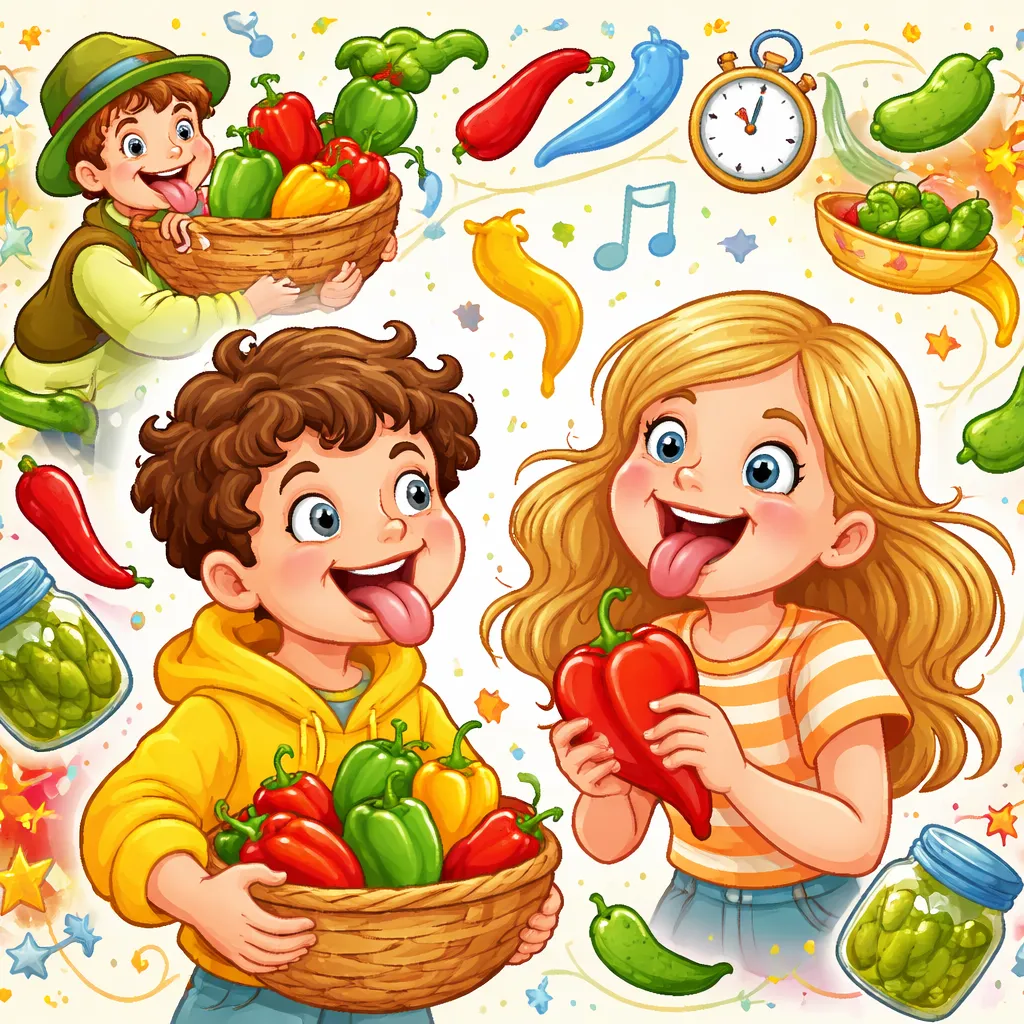
"Peter Piper" is not just a nursery rhyme. It is one of the most famous tongue twisters in the English language. The rhyme tells a simple story about Peter Piper picking a peck of pickled peppers. Then it asks a tricky question. If Peter Piper picked a peck of pickled peppers, where is the peck of pickled peppers that Peter Piper picked? The English song: Peter Piper has been challenging speakers of all ages for generations. The repeating "p" sounds make it difficult to say quickly. Children love the challenge of trying to say it faster and faster. The silly story about pickled peppers makes everyone smile. This tongue twister is a wonderful tool for speech development, helping children practice clear pronunciation and have fun with language at the same time.
The Complete Lyrics of the Nursery Rhyme
Let us look at the words together. The rhyme is short but packed with tricky sounds.
Peter Piper picked a peck of pickled peppers.
A peck of pickled peppers Peter Piper picked.
If Peter Piper picked a peck of pickled peppers,
Where's the peck of pickled peppers that Peter Piper picked?
Vocabulary Learning from the Song
This English song: Peter Piper introduces children to words about food, measurement, and names. Each word builds their understanding of language and the world.
First, we meet "Peter Piper." This is a character name full of the "p" sound. Peter is a common name. Piper means someone who plays the pipes. Together they create a memorable alliterative name.
The song teaches about "peppers." Peppers are vegetables that can be sweet or spicy. "Pickled peppers" are peppers that have been preserved in vinegar or brine. This is an old-fashioned way of keeping food. You can show your child a jar of pickles and explain that pickled peppers are similar.
A "peck" is an old unit of measurement. It is about two gallons. Children do not need to know the exact amount. They just need to understand that a peck is a certain amount, like a basket full.
The word "picked" means harvested or chosen. Peter picked the peppers from plants. This action word is repeated many times, reinforcing its meaning.
Phonics Points to Practice
Let us listen for special sounds in the song. Phonics helps children connect letters to the sounds they hear. This English song: Peter Piper is all about practicing the "p" sound.
Listen to the "p" sound that appears everywhere. "Peter Piper picked a peck of pickled peppers." The "p" sound is made by pressing lips together and releasing a small burst of air. Say it slowly. Feel your lips pop open each time. Practice making the "p" sound clearly.
The "p" sound can be at the beginning of words like "Peter" and "Piper." It can be in the middle like "peppers." It can be at the end like "peck" and "pickled." Practicing all positions helps with clear speech.
The song also has the "ck" sound in "peck" and "pickled" and "picked." This is a sharp sound at the back of the throat. Putting "p" and "ck" together in words like "peck" and "pick" is excellent practice.
Listen to the short "i" sound in "Piper," "picked," and "pickled." This is a common vowel sound. You can hear it in words like "pig," "sit," and "milk."
Grammar Patterns We Can Learn
This tongue twister teaches important grammar in a very natural way. The English song: Peter Piper introduces past tense verbs, questions, and relative clauses.
The song uses past tense throughout. Peter Piper "picked" a peck of pickled peppers. This is a regular past tense verb, adding "ed." You can practice forming regular past tense. "Today I pick, yesterday I picked." "Today I play, yesterday I played." "Today I jump, yesterday I jumped."
The song asks a question. "Where's the peck of pickled peppers that Peter Piper picked?" This teaches question formation with "where." You can practice asking "where" questions. "Where is your toy?" "Where did we go yesterday?" "Where is Daddy?"
The phrase "that Peter Piper picked" is a relative clause. It gives more information about the peppers. This is an advanced structure that children absorb naturally through repetition.
Learning Activities to Do at Home
Bringing this English song: Peter Piper into your daily life is simple and joyful. Here are some activities you can try with materials you already have.
A wonderful activity is the "Speed Challenge." Say the tongue twister together slowly at first. Then try it a little faster. Then faster still. Laugh when you get tangled up. Time yourselves. See if you can say it three times fast without mistakes. This builds speech clarity and is lots of fun.
Another activity is the "Pepper Tasting" experience. If your child is old enough, let them taste different kinds of peppers. Sweet bell peppers are mild and crunchy. Pickles are sour and salty. Talk about the tastes and textures. This connects the song to real sensory experiences.
You can also have a "Pretend Pickling" activity. Use play dough or real vegetables. Pretend to pack them into a jar with vinegar (water with a little vinegar smell). Count how many peppers fit in your "peck." This builds imagination and fine motor skills.
Printable Materials for Learning
Creating simple printables can make this English song: Peter Piper more visual and engaging. You can make these materials together with your child.
A "p" sound picture page is perfect. Draw or print pictures of things that start with "p." Peter, Piper, peppers, pickles, pie, pig, puppy. Your child can color them and practice saying each word. This builds phonemic awareness.
A sequencing page helps with the story. Draw simple pictures showing Peter Piper, a basket of peppers, pickling jars, and the question "where?" Your child can point to each part as you say the rhyme. This builds comprehension.
You can also create simple word cards. Write words from the rhyme on cards. "Peter," "Piper," "picked," "peck," "pickled," "peppers." Show each card as you say that word. This builds early reading skills.
A measurement activity helps understand "peck." Draw a basket. Count how many small pepper pictures fit inside. This is your peck. This builds early math concepts.
Educational Games for Deeper Learning
Games make learning active and exciting. They encourage children to use the language from the English song: Peter Piper in new and creative ways.
The "New Letter" game encourages creativity. Ask your child, "What if we try a different letter?" Try "b" words. "Billy Baker bought a basket of baked biscuits." Try "t" words. "Tommy Tucker took two tiny turtles." This shows children how alliteration works with different sounds.
The "Action Peppers" game adds movement. Pretend to pick peppers from plants. Count them as you pick. Put them in a basket. Pretend to pickle them. This brings the story to life through physical play.
The "Where Is It?" game practices the question from the rhyme. Hide a small object. Ask your child, "Where is the [object] that I hid?" They must find it and answer. Then switch roles. This builds language and observation skills.
The "Rhythm Clap" game adds a beat. Clap a steady rhythm while saying the tongue twister. Clap on each word. Then try clapping only on the "p" words. This builds rhythm awareness and listening skills.
The "Memory Challenge" game tests recall. Say the tongue twister once. Then see if your child can repeat it. Start with just the first part. Add more as memory improves. This builds working memory and language skills.
The "Vegetable Basket" game extends the vocabulary. What else could Peter pick? Carrots? Cucumbers? Tomatoes? Create new sentences. "Peter Piper picked a peck of pickled cucumbers." This builds vocabulary and sentence formation.
The "Speech Speed" game is great for groups. Take turns saying the tongue twister. Time each person. Who can say it fastest without mistakes? This adds friendly competition to speech practice.
The "Draw Peter" activity builds creativity. Ask your child to draw what they think Peter Piper looks like. Is he a farmer? Does he have a basket of peppers? Display the artwork and practice the tongue twister together while looking at it.