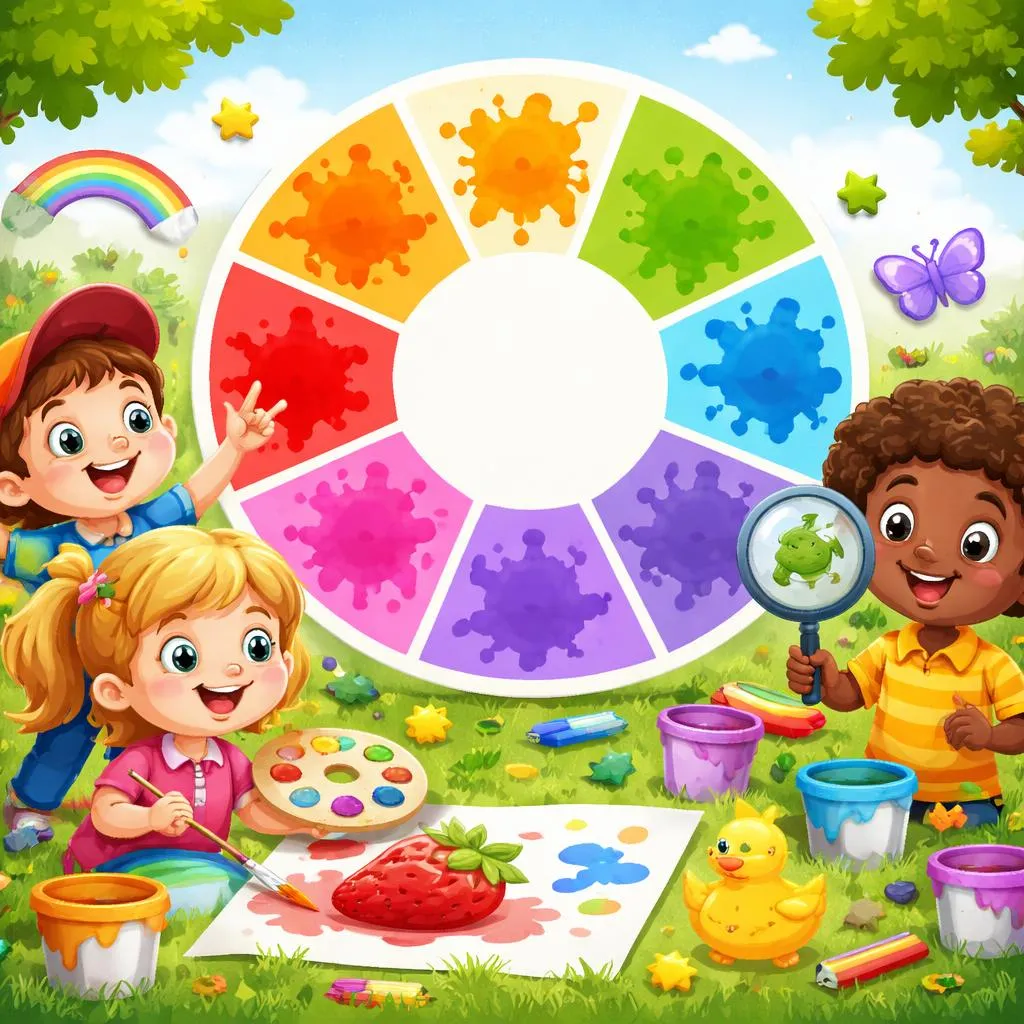

Hello, young artists and color explorers. Welcome to a world full of brightness. Today, we are going to learn about the english colors. What are the english colors. They are the names we give to all the wonderful shades we see. The sky is blue. Grass is green. Learning these names in English is like getting a bigger box of crayons for your brain. Let us start our colorful adventure and learn all the english colors together.
What is english colors?
When we talk about "english colors," we mean the words in the English language that we use to name colors. A color is how our eyes see light. Red, blue, yellow, green are all english colors. They are simple but very important words. Knowing the english colors helps you describe everything. You can say "I want the red ball" instead of "I want that ball." The word "red" tells everyone exactly which one. So, english colors are basic building blocks of English vocabulary. Every child should learn them. They are some of the first and most fun words to learn.
Meaning and explanation
The meaning of learning english colors is about description and communication. Let us explain. Colors help us give more information. They make our sentences clearer and more interesting. The explanation is simple. When you know the english colors, you can talk about the world in detail. You can say "I see a brown dog" instead of just "I see a dog." This helps the listener picture the exact dog. Colors are also used in many expressions. "Feeling blue" means feeling sad. "Green with envy" means very jealous. But for starters, we just learn the basic color names. Learning english colors opens the door to better stories, better art, and better conversations.
Categories or lists
We can sort the english colors into fun groups. This makes them easy to learn. The first group is the Basic Colors. These are the most important ones. Red, blue, yellow, green, orange, purple, pink, brown, black, white, gray. Another group is Light and Dark Colors. We add "light" or "dark" before a color. Light blue, dark green, light pink, dark brown.
We also have a group for Mixed Colors. These colors are made by mixing two basic colors. Orange is red and yellow. Purple is red and blue. Green is blue and yellow. Another fun list is Color Words from Things. These colors are named after objects. Gold (like the metal), silver, violet (a flower), turquoise (a gemstone), salmon (a fish). Thinking in these categories helps you learn more english colors step by step. Start with the basic ten. Then add the light and dark ones. Soon you will know a rainbow of words.
Daily life examples
You can use english colors every single day. Here are some scenes. First, getting dressed in the morning. Look at your clothes. Say the colors. "I am wearing a blue shirt and black shorts." "My socks are white with red stripes." When you eat breakfast, talk about your food. "The banana is yellow." "The milk is white." "The strawberries are red." This simple habit teaches you the words naturally.
Second, on your way to school or the park. Play the "I Spy Colors" game. "I spy with my little eye, something that is green." Is it the grass. Is it a sign. "I spy something silver." Is it a car. This game makes you look carefully and say the english colors out loud. In the car, you can look for all the red things you see. Count them. This turns travel into a learning game.
Third, during playtime or art time. When you are drawing, name the crayons or paints as you use them. "I will use the purple crayon for the grapes." "The sun is yellow and orange." When you are playing with blocks, sort them by color. "All the red blocks go here. All the blue blocks go there." Daily life is full of chances to practice english colors. The more you say them, the faster you remember.
Printable flashcards
Printable flashcards are a super tool for learning english colors. How to make them. The best way is to make color cards. On one side, have a large square of a solid color. A big red square. On the other side, write the word "RED" in bold letters. Do this for all the basic colors. You can also make object cards. A card with a picture of an apple. The other side says "The apple is red." This connects the color to a real thing.
How to use the cards. For little ones, show the color side. They say the color name. Then flip to check the word. For older kids, show the word side first. They say the word and then think of something that color. You can play a matching game. Match the color square card to the object card that is that color. Match the red square to the picture of a fire truck. Another game is "Color Go Fish." Use the word cards. "Do you have the color green?" Printable flashcards make learning english colors visual and hands-on. You can touch the color. You can sort the words. It is very effective.
Learning activities or games
Learning english colors should be a joyful game. Let us play some. First, "Color Scavenger Hunt." Give your child a list of colors. Their mission is to run around the house and find one object for each color on the list. Find something red. Find something blue. Set a timer to make it exciting. This game is full of energy and connects colors to the real world.
Second, play "Color Twister." Make your own simple version. Place large colored paper circles on the floor. Call out commands. "Put your right hand on blue. Put your left foot on yellow." This gets the whole body moving and reinforces color recognition. It is hilarious and active.
Third, the "Mixing Colors" science and art activity. Use finger paints or watercolors. Start with the primary colors: red, blue, yellow. Let your child mix them to discover new english colors. Mix red and yellow to make orange. Mix blue and yellow to make green. As they mix, say the new color name. "You made green!" This is a memorable way to learn how colors are related.
For a craft, make a "Color Wheel." Draw a circle and divide it into sections. Color each section with a different color. Write the name in the section. Hang it on the wall. It is a beautiful reference chart. For a quiet listening game, play "Color Bingo." Make bingo cards with color words or color squares. Call out the colors. Players mark them. First to get a line wins. All these games make mastering the english colors an adventure. You are not just memorizing. You are playing, creating, and exploring the colorful world with new words. Have fun.