
Children love hearing praise. It makes them feel proud. It pushes them to try harder. Two common phrases offer praise. “Very good” and “Excellent.” Both mean “You did well.” But they carry different weights. Parents and kids can learn together. Giving praise is an art. The right words build confidence without pressure. Let us explore these two uplifting expressions.
What Do These Expressions Mean? “Very good” means “You did a good job.” The word “good” means high quality. “Very” makes it stronger. The message is positive and clear.
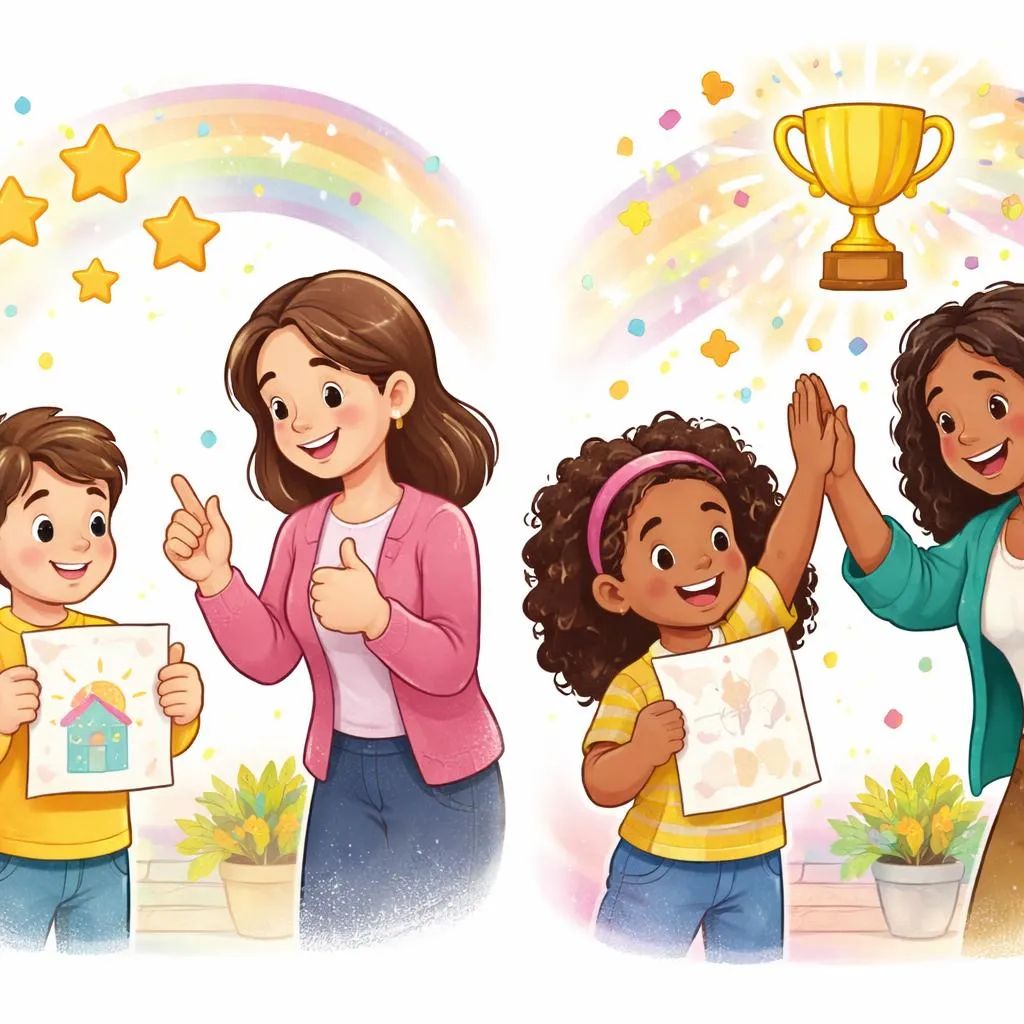
For a child, think of a gold star on a paper. “Very good” says “I see your effort. You did it right.”
“Excellent” means “You did an outstanding job.” It is stronger than “very good.” It means the work is special. Top quality.
For a child, think of a trophy. “Excellent” says “This is not just good. This is amazing. You should feel very proud.” Both phrases give praise. Both encourage children to keep trying. They seem similar because teachers and parents use both for success. Yet one is common praise. The other is top praise.
What’s the Difference? The main difference is strength. “Very good” is standard praise. You use it for everyday good work. A neat handwriting page. A correct answer. A helpful act.
“Excellent” is top praise. You use it for outstanding work. Something that goes beyond what you expected.
Another difference is frequency. You can say “very good” many times a day. Children need regular encouragement. “Excellent” should be less common. It stays special.
One more difference is expectation. “Very good” means “You met my expectations.” “Excellent” means “You exceeded my expectations.” You did more than asked.
Also, “excellent” sounds more formal. Teachers use it in report cards. Coaches use it for great plays. “Very good” sounds warmer and more everyday.
Teach children that both are wonderful to hear. One is a happy pat on the back. The other is a big celebration.
When Do We Use Each One? Use “Very good” for daily achievements. A child ties their shoes alone. Say “Very good.” A child shares a toy. Say “Very good.”
Use “Very good” for progress. A child learns a new letter. Say “Very good.” A child tries hard even if the result is not perfect. Say “Very good effort.”
Use “Very good” for small steps. Putting away one toy. Saying please. Waiting a turn. These deserve regular praise.
Use “Excellent” for outstanding moments. A child wins a contest. Say “Excellent.” A child helps without being asked. Say “Excellent.”
Use “Excellent” for difficult tasks. A child solves a hard math problem. Say “Excellent.” A child reads a whole book alone. Say “Excellent.”
Use “Excellent” when you feel truly surprised by the quality. A drawing that shows amazing detail. A story that makes you laugh. Say “Excellent work.”
Parents can model both. Say “very good” for everyday things. Save “excellent” for special moments. Children learn to value both.
Example Sentences for Kids Here are simple sentences children can hear and say.
Very good:
Very good job cleaning your room.
Very good. You remembered to wash your hands.
Very good reading that sentence.
Very good. You shared your snack nicely.
Very good. You almost have the whole puzzle.
Excellent:
Excellent work on your science project.
Excellent. You helped your little brother tie his shoe.
Excellent choice of colors in your drawing.
Excellent. You practiced piano every day this week.
Excellent job staying calm when you were angry.
Read these aloud. Notice how “very good” fits everyday moments. Notice how “excellent” fits bigger achievements. Use both with a warm voice.
Common Mistakes to Avoid Parents and children make praise mistakes. Here are common errors.
Mistake 1: Saying “excellent” for every small thing. Example: A child puts on a sock. “Excellent!” The word loses its power. Correct: Save “excellent” for truly special efforts. Use “good job” or “very good” for small things.
Mistake 2: Never saying “excellent” at all. Some parents only say “very good.” Children miss the thrill of top praise. Correct: Look for moments to say “excellent.” Even once a week makes a difference.
Mistake 3: Saying “very good” in a flat voice. A bored “very good” feels like no praise at all. Children cannot tell you care. Correct: Smile. Look at the child. Let your voice go up a little.
Mistake 4: Forgetting to say why it is good. “Very good” alone can feel empty. The child does not know what they did right. Correct: Say “Very good sharing your crayons” or “Excellent idea for the game.”
Mistake 5: Comparing children with praise. “Your drawing is very good, but your sister’s is excellent.” This hurts feelings. Correct: Praise each child for their own growth. Do not compare.
Easy Memory Tips Here are simple memory tricks.
Memory tip 1: Think of a bicycle and a race car. “Very good” is a bicycle. It moves well. It is dependable. “Excellent” is a race car. It goes much faster. It is special.
Memory tip 2: Use your hands. Two claps = “very good.” Five loud claps = “excellent.”
Memory tip 3: Think about surprise. If you expected the good work, say “very good.” If the work surprised you with how good it is, say “excellent.”
Memory tip 4: Draw a ladder. Bottom rung = “good.” Middle rung = “very good.” Top rung = “excellent.” The ladder shows the climb.
Memory tip 5: Use the “once a day” rule for “excellent.” Try to say “excellent” no more than once or twice a day. This keeps it special. Say “very good” as much as you want.
Practice these tips during family time. Praise each other using both words.
Quick Practice Time Try these exercises. Parents read aloud. Children answer.
Exercise 1: Choose the best phrase.
Your child puts their plate in the sink without being asked. A nice habit. Do you say: a) Very good b) Excellent
Your child wins first place in a spelling bee against older kids. Do you say: a) Very good b) Excellent
Your child writes their name for the first time. It is wobbly but clear. Do you say: a) Very good b) Excellent
Answers: 1(a), 2(b), 3(a — save “excellent” for when it is neat and easy)
Exercise 2: Fill in the blank.
“__________ cleaning up one toy. That helped.” (everyday, nice)
“__________! You finished the whole 100-piece puzzle alone.” (special achievement)
Answers: 1. Very good, 2. Excellent
Bonus: Play the “Praise the Day” game. At dinner, everyone shares one thing someone did that was “very good” and one thing that was “excellent.” Talk about why each praise fits. Celebrate together.
Wrap-up Say “very good” for everyday good work and effort. Say “excellent” for outstanding achievements that go beyond expectations. Both build confidence. One is daily bread. One is a celebration cake. Use both with love.