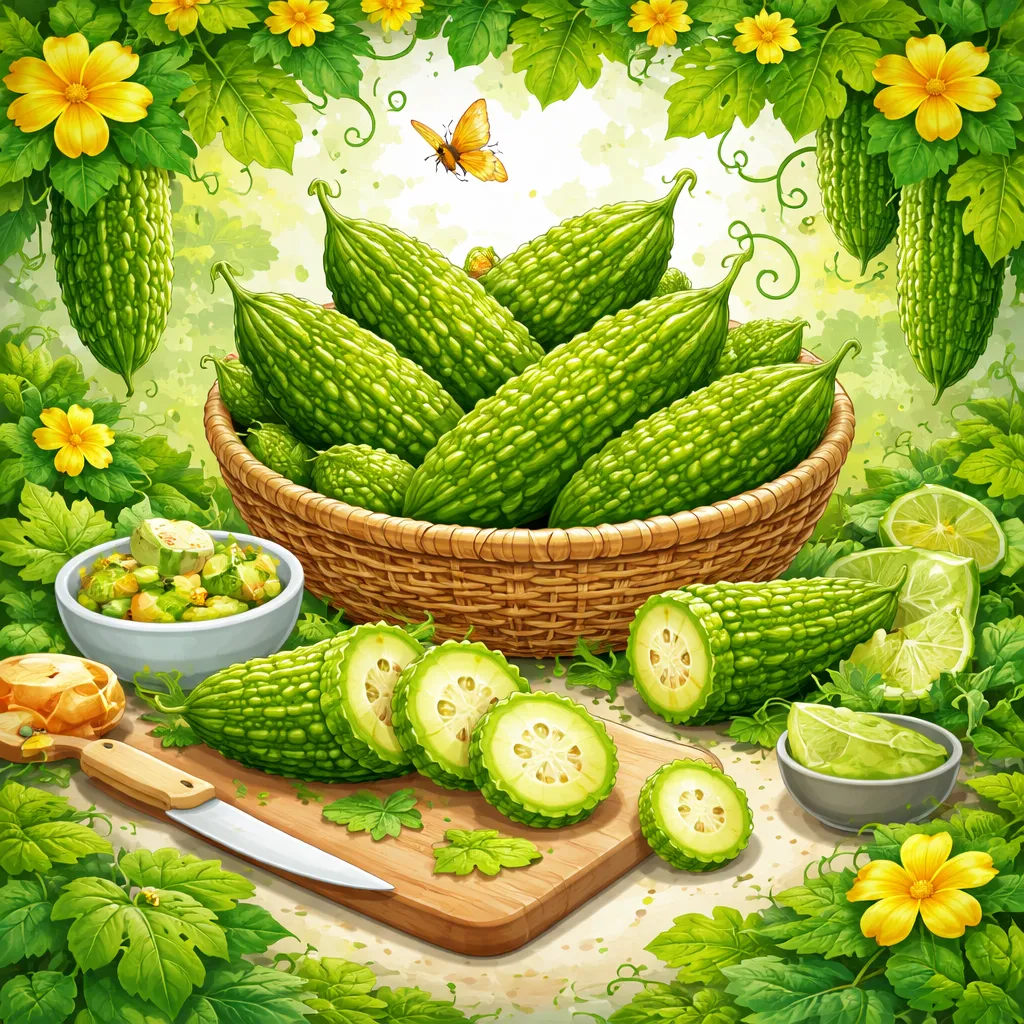

Have you ever seen a long, green vegetable in the market that looks like it’s covered in warts or crocodile skin? If you take a tiny taste, it is incredibly, mouth-puckeringly bitter! This unique plant is a bitter melon. It grows on a fast-climbing vine and is loved in many parts of the world, not in spite of its bitterness, but because of it! People believe its strong taste means it’s very good for you. Let’s get ready to learn about the challenging and healthy Bitter Melon plant.
Let’s Learn the Word! – Open the Treasure Box of Language
Formal Name and Pronunciation
This bold-tasting plant is called Bitter Melon. Its scientific name is Momordica charantia. You can say it like this: /ˈbɪt.ər ˈmel.ən/ (BIT-er MEL-un). The “Bitter” is the taste, and “Melon” is the fruit. Bit-ter Mel-on. Say it: Bitter Melon. In many places, it is called Bitter Gourd or Karela.
The Etymology Tale
The name tells it like it is! “Bitter” from the Old English word “biter,” meaning sharp taste. “Melon” from the Greek “mēlopepon,” for apple-shaped fruit. The scientific name Momordica comes from Latin for “to bite,” probably because the seeds look like they’ve been bitten. Its name is a direct warning and a description.
Nicknames and Friendly Aliases
This plant is known by names that describe its look and taste. It is Bitter Gourd, Bitter Squash, or Balsam Pear. In India, it is Karela. The small, very bumpy type is sometimes called Cacavel or Wild Cucumber. Because of its health use, it is the Vegetable Insulin.
Building Your Word Web: Core Parts
Let’s learn the words for a Bitter Melon plant’s bold body. The Vine is the long, thin, climbing stem. The Leaf is green, heart-shaped, and deeply lobed. The Flower is a simple, pretty yellow bloom. The Fruit is the famous, warty, oblong melon. The Seed is flat, with a red, sweet-tasting coating when ripe. The Tendril is the curly thread that helps it climb. A ripe, orange fruit is a bitter melon.
Action and State Words
Bitter Melon plants are energetic and robust. The vine grows and climbs quickly. The flowers are pollinated. The fruit forms and becomes bitter. It is harvested when green. The fruit is sliced, soaked (to reduce bitterness), and cooked. A bitter melon plant is pungent, vigorous, heat-loving, and annual.
Ecosystem Friends Vocabulary
A bitter melon vine is a busy place. The yellow flowers attract bees and other insects for pollination. The strong bitterness of the leaves and fruit helps protect it from many pests, but sometimes aphids or fruit flies might still visit. The dense vine provides shade and shelter. It is a tough survivor in the garden.
Cultural Imprint in Language
Bitter melon is a powerful symbol of health, healing, and the idea that “what is good for you is not always sweet.” A common proverb in many cultures is, “Good medicine tastes bitter,” meaning helpful things can be hard to accept at first. In some traditions, eating bitter melon at the New Year is meant to wash away the bitterness of the old year. It represents resilience and the value of challenges.
Ready for Discovery
We know its honest, sharp-tasting name. Are you ready to be a plant chemist and discover why this fruit is so bitter and why that might be a good thing? Let’s explore the powerful world of the Bitter Melon plant.
Discover the Plant’s Secrets! – A Nature Detective’s Notebook
The Plant Passport
Bitter Melon belongs to the Cucurbitaceae family, the gourd and cucumber family. Its genus is Momordica. It is a fast-growing, annual climbing vine. The leaves are deeply lobed, with 5-7 points. The flowers are yellow. The fruit is a pepo (a type of berry) with a distinctive bumpy, warty surface. It turns from green to a bright orange-yellow when overripe. It is native to tropical Asia and Africa and thrives in hot, humid climates with lots of sun.
Survival Smarts
Bitter melon’s superpower is its bitterness. This comes from chemicals called momordicins and cucurbitacins. In nature, this intense bitterness is a brilliant defense strategy. It makes the leaves and fruit taste terrible to most insects and animals, protecting the plant from being eaten. The vine grows with incredible speed, using tendrils to climb towards the sun and outcompete other plants. When the fruit is overripe, it splits open, revealing bright red seeds that attract birds, which then spread them.
Its Role and Gifts
In the garden, it is a vigorous, pest-resistant vine that provides good cover. Its greatest gift is the fruit. Despite its taste, bitter melon is a staple in Asian, African, and Caribbean cuisines, used in stir-fries, curries, and teas. It is also renowned in traditional medicine systems for its potential health benefits. The red seed coating is sweet and edible when ripe. It’s a plant of strong contrasts.
Human History and Cultural Symbol
Bitter melon has been used for food and medicine in tropical regions for centuries. It was carried from Africa to Asia and the Americas. It holds an important place in Ayurvedic and Traditional Chinese Medicine. Today, it is grown and cherished in gardens worldwide, especially by communities who value its unique flavor and health properties. It represents the global journey of traditional knowledge and the appreciation for functional foods.
Fun “Wow!” Facts
Get ready for a seed fact! When the bitter melon fruit is overripe and orange, it splits open. Inside, the seeds are covered in a bright red, sweet, jelly-like pulp. The contrast between the bitter fruit and the sweet seed coating is amazing! And here’s a kitchen fact: Soaking sliced bitter melon in salt water before cooking helps draw out some of the bitterness, making it tastier.
From Bitter Vine to Your Plate
The story of the Bitter Melon plant is one of bold flavor and vigor. Would you like to try growing your own powerful vine? You can grow bitter melon in a sunny spot with a strong support! Let’s see how.
Let’s Grow It Together! – A Little Guardian’s Action Guide
Good for Home Growing?
Yes, if you have a long, hot summer! Bitter melon vines are vigorous and need a sturdy trellis, fence, or arbor to climb. You can grow 1-2 plants in a very large container or in a sunny garden bed. It’s a fascinating project for a patient gardener who wants to grow something truly unique and bold.
Little Gardener’s Toolkit
You will need bitter melon seeds (nick the hard seed coat with a nail clipper and soak overnight). Get a large, deep pot or a garden spot. Use rich, well-draining potting soil. Have a tall, strong trellis, a watering can, liquid fertilizer, and the sunniest, hottest spot you can find ready.
Step-by-Step Growing Guide
Planting Your Bold Friend
Start seeds indoors 4-6 weeks before the last frost. Plant them ½ inch deep. Transplant outside only when the weather is consistently warm. Plant near the base of your trellis. Water well. Bitter melon needs full, blazing sun and heat to thrive.
Care Calendar
Water regularly to keep the soil moist, but not soggy. The vines are heavy feeders, so give them liquid fertilizer every 2-3 weeks. Train the young vines onto the trellis. The most important job is providing strong support for the heavy vines and fruit. You may need to tie the larger fruits to the trellis with soft cloth to prevent the stem from breaking.
Watch and Be Friends
Watch the vine shoot up the trellis with curling tendrils. See the pretty yellow flowers. Look for the tiny, warty fruit forming behind female flowers. Watch it grow longer and bumpier each day. You can harvest the fruit when it is 4-6 inches long and still green for the most culinary use. If you leave it, watch it turn yellow and then orange, and finally split open!
Problem Diagnosis
If the plant has flowers but no fruit, it might not be pollinated. You can help by using a small brush to move pollen from male to female flowers. Powdery mildew (white dust on leaves) can happen; water at the soil level and ensure good air flow. Aphids might cluster; spray them off with water. The most common problem is not enough heat or a short growing season.
Your Rewards and Gifts
Your gift is growing something truly extraordinary. You are learning about tropical plants, unique flavors, and the concept of “functional foods.” Caring for bitter melon teaches patience, provides a lesson in cultural foods, and offers the pride of harvesting a challenging, valuable crop. You become a grower of bold tastes and traditions.
Creative Fun
Start a Bold Flavors Journal. Draw the vine and the warty fruit. Do a “bitter taste test” with a tiny piece of a store-bought bitter melon (with an adult’s okay) and describe the sensation. With an adult, try a simple stir-fry. Research a country where bitter melon is popular and find it on a map. Create a “Superfood Superhero” character whose power comes from bitter foods. Make a print by dipping a cross-section of the bumpy fruit in paint. Write a short poem about the “Sweet Seed in a Bitter Fruit.”
Growing a Vine of Contrasts
By planting bitter melon, you are not just growing a vegetable. You are growing a lesson in plant defense, a connection to global medicinal traditions, and a living example that strength often comes in a challenging package. You are a cultivator of resilience and health.
Conclusion and Forever Curiosity
What a vigorous, bold, and transformative journey from a hard seed to a bitter, beneficial fruit! You started to learn about the Bitter Melon plant, you discovered its secrets as the momordicin-packed, pest-deterring champion of the vine world, and you learned how to nurture your own patch of powerful flavor. You now know the Bitter Melon plant is not just an acquired taste; it is a lesson in chemical defense, a cornerstone of traditional wellness, a grower’s challenge, and a global symbol of the strength found in bitterness. Remember, its power is in its protective, sharp taste. Your curiosity helps you appreciate the complex ways plants interact with the world and with us. Keep exploring the wide world of flavors, asking why plants taste the way they do, and growing your understanding of nature’s pharmacy. Your adventure to learn about the Bitter Melon plant shows us that sometimes, the most powerful gifts are the ones that challenge us first.