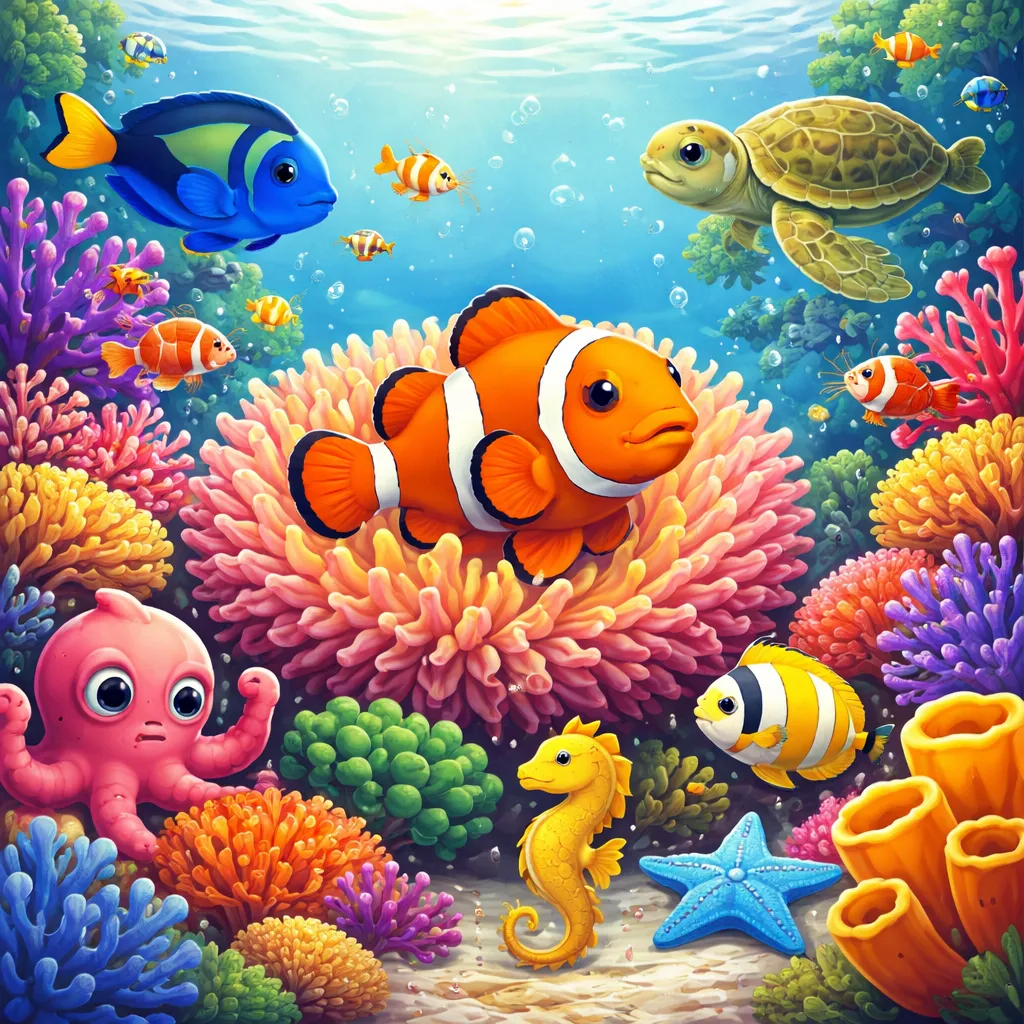

Have you ever seen a bright orange and white striped fish peeking out from the waving arms of a sea anemone in a movie or at an aquarium? That’s a clownfish! These cheerful-looking fish are famous for their special friendship with the sea anemone. Learning about clownfish is a colorful underwater adventure that shows us how animals can be the best of friends. Let’s begin our journey of learning about clownfish homes and partnerships.
English Language Learning
Vocabulary and Spelling Our bright, striped friend is called a clownfish. The word "clownfish" is a noun. A noun names a person, place, or thing. So, a clownfish is a thing—a small, living fish. Spelling "clownfish" is two words together: C-L-O-W-N and F-I-S-H. C-L-O-W-N-F-I-S-H spells clownfish.
Sound and Pronunciation Let’s say the word correctly. It sounds like this: /ˈklaʊn.fɪʃ/. We can say it in two clear parts. First, say "clown". It’s just like the funny performer, a clown! Next, say "fish". It’s the same as the animal, a fish. Now, put it together! "Clown" "fish". Clownfish! Great! The word "clownfish" has two beats, or two syllables. Clap your hands twice: Clown-fish. It’s a fun, bouncy word.
Related Words Learning about clownfish is more fun with new words! Here are some important ones. Home: The special animal a clownfish lives with is a sea anemone. A group of clownfish is a school or a group. Baby: A baby clownfish is called a fry or a larva. Action: The special relationship between the clownfish and anemone is called symbiosis.
A Famous Saying From a famous movie, we know: "Just keep swimming." This cheerful advice from a clownfish character reminds us to stay positive and keep trying, even when things are tough. It’s a message of hope and persistence. Say the saying with me: "Just keep swimming." It’s great advice for any challenge.
Now you know the word "clownfish"! Are you ready to dive into their amazing world? Let’s swim from words to wonderful knowledge!
Animal Knowledge
Who Are They? – Family and Group What kind of animal is a clownfish? Clownfish are fish. They are cold-blooded, have scales, and lay eggs. They are part of the damselfish family. Their scientific name is Amphiprioninae. The most famous type is the Ocellaris Clownfish, which looks like the movie character. They are small but very tough fish.
What Do They Look Like? – Amazing Bodies Clownfish are small fish, about the size of your hand. They are famous for their bright orange color and white stripes. Some have three stripes, like a bandit’s mask! Their fins are round and help them dart quickly. Their color is a super signal! The bold stripes help them hide among the anemone’s tentacles. They have a special slime coat on their skin that protects them from the anemone’s sting. Clownfish have special adaptations. They are one of the few fish that are not hurt by the sea anemone’s stinging tentacles. They can live safely inside, protected from bigger fish. They are also born male, and the biggest one in a group can change into a female!
Where Do They Live and How? – Home and Habits Clownfish live in warm, shallow seas. Their home is in the coral reefs of the Indian and Pacific Oceans. They are always found living with a sea anemone, their best friend and home. Clownfish are omnivores. This means they eat both plants and animals. They eat tiny algae, plankton, and little creatures. They help keep their anemone home clean by eating leftovers. Clownfish live in small family groups inside or near one anemone. They are active during the day. They spend their time swimming around their anemone, protecting it, and looking for food. They are very territorial and will protect their home anemone bravely.
A Clownfish’s Life Story – Growing Up A baby clownfish is called a larva or fry. Clownfish are fish, so they hatch from eggs. The parents lay hundreds of tiny eggs on a flat surface right next to their anemone home. The father clownfish is a super dad! He guards the eggs fiercely, fanning them with his fins to keep them clean and give them air. He protects them until they hatch. The larvae are tiny and drift in the ocean currents. After about a week, they must find a sea anemone to call home. Only the lucky ones that find an anemone survive. They quickly develop their colors and stripes.
How Do They "Talk"? – Communication Clownfish are not very noisy. They communicate by making popping or chirping sounds with their teeth. They do this to show they are upset or to defend their home. They use a lot of body language. Darting movements, chasing, and even touching the anemone are ways to send messages to other clownfish. They are very social with their own family. Their best senses are their eyesight and smell. They have good vision to spot danger and find food. Their sense of smell is incredible and helps them find their way back to their home anemone.
Are They Okay? – Taking Care of Them Many clownfish populations are healthy, but they face dangers because their home, the coral reef, is in trouble. The reefs need our protection. The main threats are the loss of coral reefs from pollution and warming oceans. Also, in the past, many were taken from the wild for pet tanks. Now, many pet clownfish are bred in special tanks, which is much better for the wild ones. You can be a clownfish protector! You can learn about coral reefs and tell others. You can reduce plastic use to keep the ocean clean. If a clownfish is your dream pet, make sure it is one that was bred in a tank, not taken from the reef. Support groups that protect coral reefs.
Life Connections and Inspiration
How to Be With Them – Safety and Love Clownfish are wild ocean fish. We must admire them in the wild or in responsible aquariums without disturbing their delicate home. The rule is: Look, don’t touch, and protect their home. If you are snorkeling near a reef, look but never touch the coral or the animals. Never try to take a clownfish or an anemone from the wild. If you have a saltwater aquarium, make sure it is set up correctly with expert help. We show our love by protecting the beautiful coral reefs they need to survive. We can be voices for the whole ocean community.
Super Qualities We Learn from Them Clownfish teach us wonderful things. One super quality is teamwork and friendship (symbiosis). The clownfish and the anemone help each other perfectly. The fish gets a safe home, and the anemone gets cleaning and protection. This teaches us the value of true friendship, teamwork, and how helping each other makes everyone stronger. Another quality is bravery and protecting your home. Even though clownfish are small, they bravely chase away much bigger fish to protect their anemone family. This reminds us to be brave in standing up for our home, our family, and our friends, no matter our size. Think about it: Who is on your "team" or in your "family" that you work well with? How can you bravely protect or stand up for something you care about?
Take Action! – Your "Clownfish Community" Project Let’s do a creative and team-focused activity! Your project is to draw a symbiotic reef community. On a large piece of blue paper, draw a big, beautiful sea anemone. Draw a clownfish family peeking out. Now, add other reef friends—maybe a helpful cleaner shrimp, a grazing parrotfish, and some living coral. Label how each friend helps the other. This shows the teamwork of the reef, just like the clownfish and its anemone.
Closing Learning about clownfish friendship is a bright and joyful adventure! We learned the word "clownfish" and how to say its two-part name. We discovered amazing facts about their special slime, their anemone homes, and their life in a protective family. We know that clownfish are brave, friendly fish that show us the power of teamwork and caring for our home. You can use your new words to share the wonderful story of these striped swimmers. You can use your knowledge to understand the importance of coral reefs and make choices that protect our oceans. The animal world is full of friendly and brave teachers. Always remember to respect wildlife and their homes, value your friendships and teamwork, and be brave in protecting what you love. Keep exploring with a cheerful heart, just keep swimming through your learning, and be a friend to the wild. Your caring actions and friendly spirit make you a true friend to the amazing clownfish.