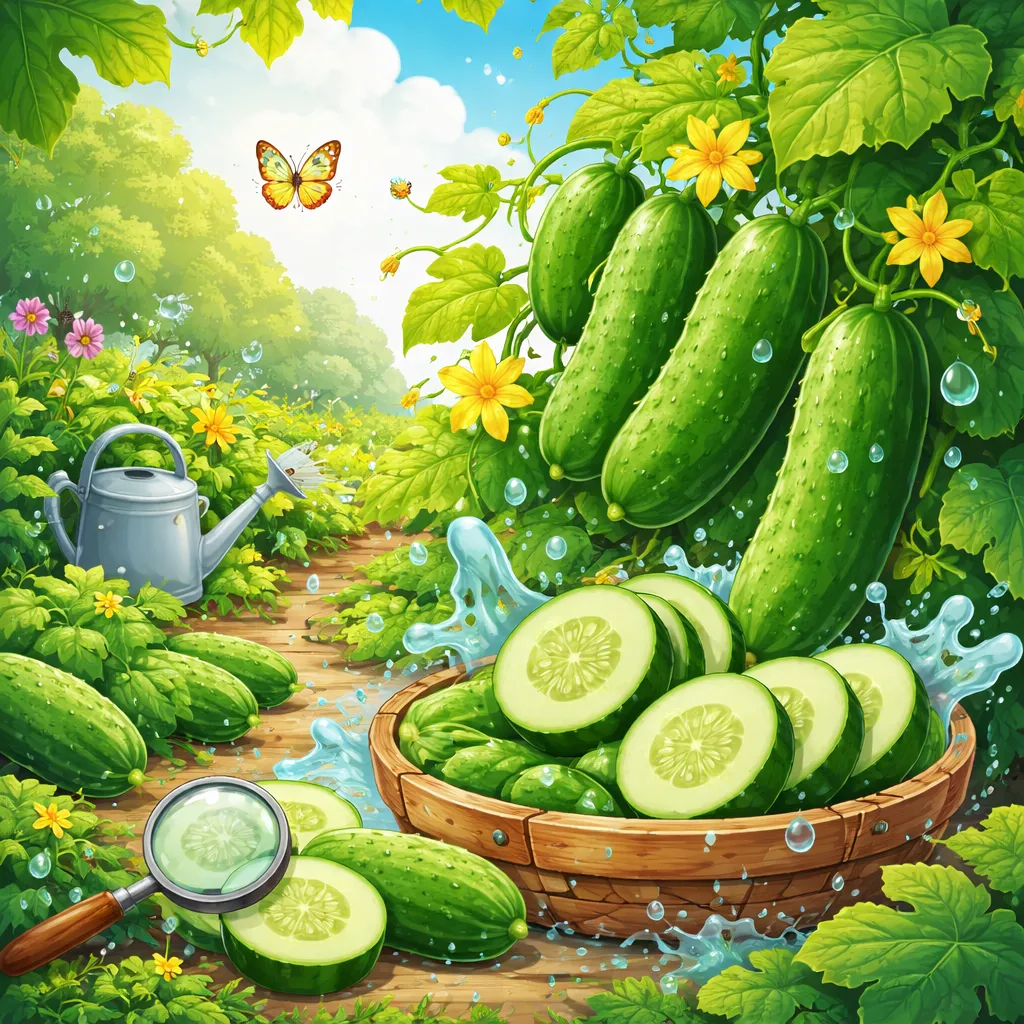

On a hot summer day, what’s more refreshing than biting into a cool, crisp slice of cucumber? It tastes like crunchy, green water! This amazing plant grows on a long, wandering vine that loves to climb. In the garden, you’ll see big, scratchy leaves, pretty yellow flowers, and then long, green fruits hanging down. People all over the world love to eat them fresh in salads or pickled in jars. Let’s explore the cool, vining world of the Cucumber plant.
Let’s Learn the Word! – Open the Treasure Box of Language
Formal Name and Pronunciation
This refreshing fruit is called a Cucumber. Its scientific name is Cucumis sativus. You can say it like this: /ˈkjuː.kʌm.bər/ (KYOO-kum-ber). The “Cu” sounds like “queue,” and “cumber” rhymes with “number.” Cu-cum-ber. Say it: Cucumber. It’s a fun, bumpy-sounding word.
The Etymology Tale
The word “Cucumber” has a long, growing history. It came from the Latin word “cucumis.” Before that, it might have come from an ancient language of India! The name traveled through Old French (“cocombre”) to become “cucumber” in English. Its name has been growing and changing for thousands of years, just like the vine.
Nicknames and Friendly Aliases
Cucumbers are often named for their job. The long, smooth ones for slicing are Slicing Cucumbers. The small, bumpy ones for pickles are Pickling Cucumbers or Gherkins. Plants that only make female flowers are called Seedless or Burpless Cucumbers. Because it’s a creeper, it’s often called a Cucumber Vine.
Building Your Word Web: Core Parts
Let’s learn the words for a Cucumber plant’s climbing body. The Vine is the long, trailing main stem. The Tendril is the thin, curly string that grabs onto supports. The Leaf is large, hairy, and shaped like a hand. The Flower is bright yellow—males and females grow on the same plant. The Fruit is the cucumber itself (botanically, it’s a fruit!). A Treillis is the frame the vine climbs. A Patch of plants is a cucumber patch.
Action and State Words
Cucumber plants are energetic climbers. The vine grows incredibly fast. The tendrils climb and cling. The flowers are pollinated by bees. The fruits swell and lengthen quickly. They are harvested by twisting off. A cucumber plant is refreshing, vining, thirsty, and annual.
Ecosystem Friends Vocabulary
A cucumber patch is a busy place! Bees are the most important visitors. They pollinate the flowers so the fruits can grow. The big leaves provide shade and hiding spots for frogs and spiders. Sometimes, cucumber beetles (striped pests) might visit. Ladybugs are garden heroes that eat other pests. It’s a mini jungle ecosystem.
Cultural Imprint in Language
Cucumbers are symbols of coolness, refreshment, and sometimes, calm. The phrase “cool as a cucumber” means someone is very relaxed and not worried, even in a hot or stressful situation. Having “cucumber slices on your eyes” is an old idea for making puffy eyes feel better. It represents staying cool, calm, and collected.
Ready for Discovery
We know its cool, climbing, ancient name. Are you ready to be a garden explorer and discover how this plant grows so fast and holds so much water? Let’s explore the secrets of the Cucumber plant.
Discover the Plant’s Secrets! – A Nature Detective’s Notebook
The Plant Passport
Cucumber belongs to the Cucurbitaceae family, the gourd and melon family. Its genus is Cucumis. It is a creeping vine that can grow over 6 feet long! The leaves are broad and rough. The flowers are yellow. The fruit is a type of berry called a “pepo,” with a hard outer rind and fleshy inside. It is native to South Asia but now grows in gardens worldwide. It loves hot weather, lots of sun, and plenty of water.
Survival Smarts
The cucumber vine is a speed champion. It grows quickly to cover ground, beat weeds, and find sunlight. Its tendrils are touch-sensitive; they coil around anything they touch to help the plant climb toward the sun. The fruit’s superpower is water. It is about 95% water! This helps the plant store moisture. The slightly bitter taste in the skin (cucurbitacin) is a natural defense to deter some animals from eating it.
Its Role and Gifts
In the garden, the large leaves provide shade, helping to keep the soil moist. Its greatest gift is the fruit. Cucumbers are eaten fresh for their hydrating, crunchy quality in salads, sandwiches, and as a snack. They are also famously pickled. The juice is used in skincare products for its soothing, cooling feeling. It is the essence of summer refreshment.
Human History and Cultural Symbol
Cucumbers have been cultivated for over 3,000 years. They were grown in ancient India, Mesopotamia, and Egypt. The Romans grew them in specailly heated carts to have them year-round! They spread throughout Europe and were brought to the Americas by Columbus. Today, they are a global garden staple. They represent ancient cultivation, summer bounty, and simple, healthy eating.
Fun “Wow!” Facts
Get ready for a speed fact! Under perfect conditions, a cucumber vine can grow up to 2 inches in just one day! And here’s a family fact: Cucumbers are very close cousins to watermelons, pumpkins, and zucchinis. Look at the leaves and flowers—they look quite similar!
From Fast Seed to Crunchy Harvest
The story of the Cucumber plant is one of explosive summer growth. Would you like to grow your own refreshing vines? You can grow cucumbers in a large pot with a trellis! Let’s see how.
Let’s Grow It Together! – A Little Guardian’s Action Guide
Good for Home Growing?
Yes, with the right setup! Cucumbers need space to climb and lots of sun. You can grow 1-2 plants in a very large pot (like a 20-gallon container) with a strong trellis, teepee, or fence for them to climb. It’s exciting to watch them race up the support. Perfect for a sunny patio or balcony.
Little Gardener’s Toolkit
You will need cucumber seeds or a seedling. Get an extra-large, deep pot with drainage. Use rich, well-draining potting soil. Have a sturdy trellis, a watering can, liquid fertilizer, and the sunniest spot you can find ready.
Step-by-Step Growing Guide
Planting Your Climbing Friend
Plant seeds or a seedling only after all danger of frost, when the soil is warm. Cucumbers hate the cold. Plant 3-4 seeds in the center of the pot, 1 inch deep. Water well. Once they sprout, keep the two strongest plants. Place your trellis in the pot at planting time. Put the pot in full, all-day sun.
Care Calendar
Cucumbers are thirsty! Water deeply and regularly, especially when fruits are forming. They love heat and full sun. Feed them with a liquid fertilizer every 1-2 weeks. The most important job is training the vines. Gently wrap the young vines around the base of the trellis. The tendrils will take over from there.
Watch and Be Friends
Watch for the first rounded leaves. The vine will grow like a rocket! Watch the clever tendrils reach out and grab the trellis. Look for the pretty yellow flowers. Then, watch a tiny cucumber form behind a female flower. It will grow longer every day. Check your plants daily—cucumbers can go from tiny to huge surprisingly fast! Harvest by twisting the fruit off the stem.
Problem Diagnosis
If leaves wilt during the day, it needs more water. If fruits are misshapen or taste bitter, the plant was stressed by uneven watering. Powdery mildew (white dust on leaves) can happen; water at the soil, not the leaves. Cucumber beetles might appear; pick them off. The most common problem is not enough water or sun.
Your Rewards and Gifts
Your gift is the taste of ultimate summer refreshment. You are learning about vining plants, pollination, and the magic of fast growth. Caring for cucumbers teaches daily attention, the importance of support structures, and the thrill of a big, fast harvest. You become a grower of living, climbing snacks.
Creative Fun
Start a Speed Vine Journal. Draw your plant climbing the trellis. Measure the longest vine each week. Do the “cucumber in a bottle” trick: when a tiny fruit forms, carefully slip it into a clear plastic bottle and watch it grow and fill the bottle inside! With an adult, make refrigerator pickles with your harvest. Create a mini “cucumber spa” with slices for your eyes (just for fun!). Research ancient Egypt and draw a cucumber on a market stall. Have a “cool as a cucumber” pose contest on a hot day.
Growing a Living Water Slide
By planting cucumbers, you are not just growing a vegetable. You are growing a lesson in speed and thirst, a buzzing pollinator cafe, and the coolest, crunchiest snack of summer. You are a cultivator of refreshment.
Conclusion and Forever Curiosity
What a fast, cool, and climbing journey from a tiny seed to a crunchy, green fruit! You started to learn about the Cucumber plant, you discovered its secrets as the water-packed, tendril-grabbing speedster of the summer garden, and you learned how to support your own vining patch. You now know the Cucumber plant is not just for salad; it is a lesson in explosive growth, a master of hydration, a cousin to pumpkins, and a global symbol of staying cool. Remember, its power is in its incredible speed and its amazing water storage. Your curiosity helps you appreciate the fast-paced, thirsty wonders of the plant world. Keep training your curiosity to climb, supporting your knowledge to grow, and tasting the fresh, watery rewards of your care. Your adventure to learn about the Cucumber plant shows us that the coolest, most refreshing things in life often grow the fastest, with a little help to climb toward the sun.