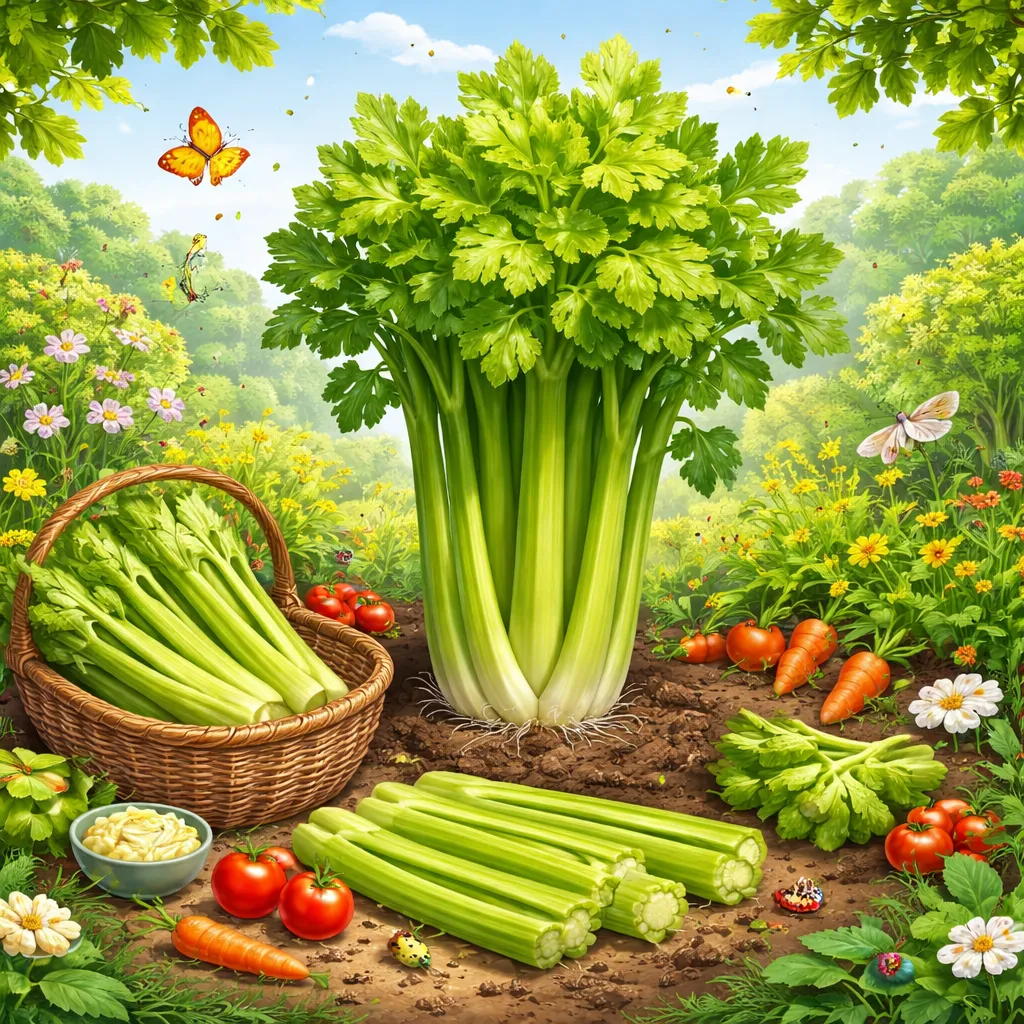

Have you ever bitten into a long, pale green stalk of celery? It makes a loud, satisfying CRUNCH and is full of cool, watery juice. People love to eat it with peanut butter or dip, or chopped up in soups and stews. In the garden, this plant is a real challenge! It grows tall with many thick, grooved stalks and bushy, fragrant leaves. It needs a lot of water and care, but the reward is a super crunchy vegetable. Let’s get ready to learn about the demanding and delicious Celery plant.
Let’s Learn the Word! – Open the Treasure Box of Language
Formal Name and Pronunciation
This crunchy challenge is called Celery. Its scientific name is Apium graveolens. You can say it like this: /ˈsel.ər.i/ (SEL-uh-ree). The “Cel” sounds like “sell,” and “ery” rhymes with “very.” Cel-er-y. Say it: Celery. It’s a clean, crisp word.
The Etymology Tale
The word “Celery” has a quiet, ancient sound. It comes from the French word “céleri,” which came from the Italian “seleri.” This word came from the Latin “selinon,” which was borrowed from the Greek word for parsley. So, its name shows it’s a close cousin to parsley! Its name is a whisper from ancient Greek gardens.
Nicknames and Friendly Aliases
Celery is often called by simple names. A single piece is a Celery Stalk or Celery Rib. The whole bunch is a Celery Head or a Celery Bunch. The inner, tender yellow stalks are called Celery Hearts. The leaves are Celery Greens or Celery Tops. The wild plant is sometimes called Smallage.
Building Your Word Web: Core Parts
Let’s learn the words for a Celery plant’s tall body. The Stalk or Petiole is the long, crunchy, edible stem we eat. The Leaf is the dark green, parsley-like top. The Heart is the tender, pale yellow center of the plant. The Root system is shallow and wide. The Seed is tiny and used as a spice. A Bundle of stalks is a celery bunch. The Strings are the tough fibers in the stalk.
Action and State Words
Celery plants are thirsty and patient. They grow slowly from tiny seeds. The stalks blanch (turn pale) if covered from the sun. The plant needs to be hilled (soil piled around it). It is harvested by cutting at the base. The stalks are chopped, sliced, or eaten raw. A celery plant is crunchy, fibrous, water-loving, and biennial (grown as an annual).
Ecosystem Friends Vocabulary
A celery patch is a moist, shady spot. The flowers, if the plant blooms in its second year, attract many small bees, wasps, and other beneficial insects. The leaves might sometimes get aphids. Ladybugs are helpful friends that eat the aphids. Frogs or toads might hide in the damp shade under the big leaves.
Cultural Imprint in Language
Celery is a symbol of perseverance and subtle flavor. In ancient Greece, winners of athletic games were crowned with celery wreaths! The phrase “cream of the crop” sometimes refers to the tender, best part of the celery plant, the “heart.” It’s not a loud, spicy plant; it represents quiet, refreshing strength and patience.
Ready for Discovery
We know its ancient, crunchy name. Are you ready to be a garden detective and discover why this plant is so hard to grow and so full of water? Let’s explore the world of the Celery plant.
Discover the Plant’s Secrets! – A Nature Detective’s Notebook
The Plant Passport
Celery belongs to the Apiaceae family, the carrot and parsley family. Its genus is Apium. It is a biennial marshland plant, but we grow it as an annual vegetable. The plant forms a clump of tall, grooved, succulent leaf stalks (petioles) topped with divided, serrated leaves. It needs very rich, constantly moist soil and a long, cool growing season. It is native to the Mediterranean and likes conditions that mimic its marshy home.
Survival Smarts
Celery is a water hog, and that’s its trick! In its wild home, it grows in wet, boggy ground. Its stalks are designed to store and move lots of water. They are crunchy because they are full of special water-holding cells and have air pockets inside! The strong taste and smell of the leaves might help protect it from some pests. Growing it in dry garden soil is a big challenge, which is why it needs so much help from gardeners.
Its Role and Gifts
In a wetland, celery helps stabilize soggy soil. Its greatest gift is the stalk. Celery is famous as a low-calorie, crunchy snack. It is essential for adding flavor to soups, stews, and stuffings. The leaves are a strong-flavored herb. The seeds are dried and used as a spice (celery seed). It’s a three-in-one plant: vegetable, herb, and spice.
Human History and Cultural Symbol
Celery was first used as a medicine and seasoning in the Mediterranean over 3,000 years ago. The ancient Greeks and Romans used it more like we use herbs today. It wasn’t until the 1600s in Italy that gardeners developed the mild, thick-stalked vegetable we know. It represents the long, patient work of plant breeders to turn a wild, bitter plant into a sweet, crunchy treat.
Fun “Wow!” Facts
Get ready for a calorie fact! People sometimes call celery a “negative-calorie food” because it takes more energy to chew and digest it than it gives you—but that’s not quite scientifically true! It is, however, very, very low in calories. And here’s a sound fact: The loud crunch happens because the stalks are full of tiny water-filled cells that burst when you bite them!
From Tiny Seed to Towering Stalks
The story of the Celery plant is one of patience and water. Would you like to take on the challenge of growing your own crunchy stalks? You can try growing celery in a large container! Let’s see how.
Let’s Grow It Together! – A Little Guardian’s Action Guide
Good for Home Growing?
It’s a challenge, but possible! Celery is one of the most difficult common vegetables to grow. It needs perfect, unending moisture, rich soil, and cool weather. For a dedicated young gardener, it’s a great project. You can grow a few plants in a very large, deep container. The reward of homegrown celery is huge because store-bought will never taste as good!
Little Gardener’s Toolkit
You will need a celery seedling from a garden center (growing from seed is very hard). Get an extra-large, deep pot (at least 12 inches wide and deep). Use the richest potting soil you can find, mixed with lots of compost. Have a watering can, liquid fertilizer, and a partly sunny spot ready.
Step-by-Step Growing Guide
Planting Your Thirsty Friend
Plant your seedling in early spring. Celery loves cool weather. Make a hole in the soil and place the plant in, keeping it at the same depth it was in its pot. Water it deeply right away. Place the pot where it will get morning sun and afternoon shade. Celery doesn’t like blazing hot sun all day.
Care Calendar
Water, water, water! This is the number one rule. The soil must never dry out. Check it every day. Water until it runs out the bottom. Feed it with liquid fertilizer every two weeks. As the stalks grow, you can wrap the lower half in cardboard or paper to “blanch” them, making them more tender and less bitter. Keep the area weeded.
Watch and Be Friends
Watch the plant settle in and then slowly start to produce more stalks. The stalks will get thicker and taller. Feel how firm they are. Taste a small piece of leaf—it’s strong! After many weeks, when the stalks are tall and thick, you can start harvesting the outer ones by cutting them at the base. The plant will keep making more from the center.
Problem Diagnosis
If stalks are thin and stringy, the plant didn’t get enough water or fertilizer. If the center turns brown and mushy, it might have a rot disease from too much wetness on the leaves—water at the soil level. The most common problem is letting the soil get dry, even once. Slugs love celery; pick them off at night.
Your Rewards and Gifts
Your gift is the satisfaction of mastering a gardening challenge. You are learning about plant needs, patience, and the importance of consistent care. Caring for celery teaches supreme responsibility, daily dedication, and the incredible taste of a vegetable you nurtured from a tiny plant. You become a grower of crisp, hard-won success.
Creative Fun
Start a Watering Champion’s Journal. Draw your celery plant. Measure stalk height and width. Do the “celery and food color” experiment: put a stalk in colored water and watch the color travel up the veins! With an adult, make ants on a log (celery with peanut butter and raisins). Research the ancient Greek Olympics and draw a celery wreath medal. Create “celery stalk stamps” by cutting the end of a stalk and dipping it in paint. Write a story about a very thirsty plant that lives in a marsh.
Growing a Lesson in Care
By planting celery, you are not just growing a vegetable. You are growing a lesson in ecology, a test of your gardening skills, and a deep appreciation for the work that goes into our food. You are a cultivator of diligence.
Conclusion and Forever Curiosity
What a crunchy, watery, and patient journey from marsh plant to garden challenge! You started to learn about the Celery plant, you discovered its secrets as the water-storing, fiber-packed descendant of marshlands, and you learned how to take on the task of growing your own crisp stalks. You now know the Celery plant is not just a snack; it is a lesson in plant adaptation, a triumph of selective breeding, a test for gardeners, and a symbol of refreshing, quiet strength. Remember, its true crunch comes from endless water and care. Your curiosity helps you understand the delicate balance needed to grow some of our favorite foods. Keep taking on garden challenges, savoring the crisp rewards of hard work, and asking about the needs of every living thing. Your adventure to learn about the Celery plant shows us that the most refreshing, simple crunch can be the result of the greatest care and patience.