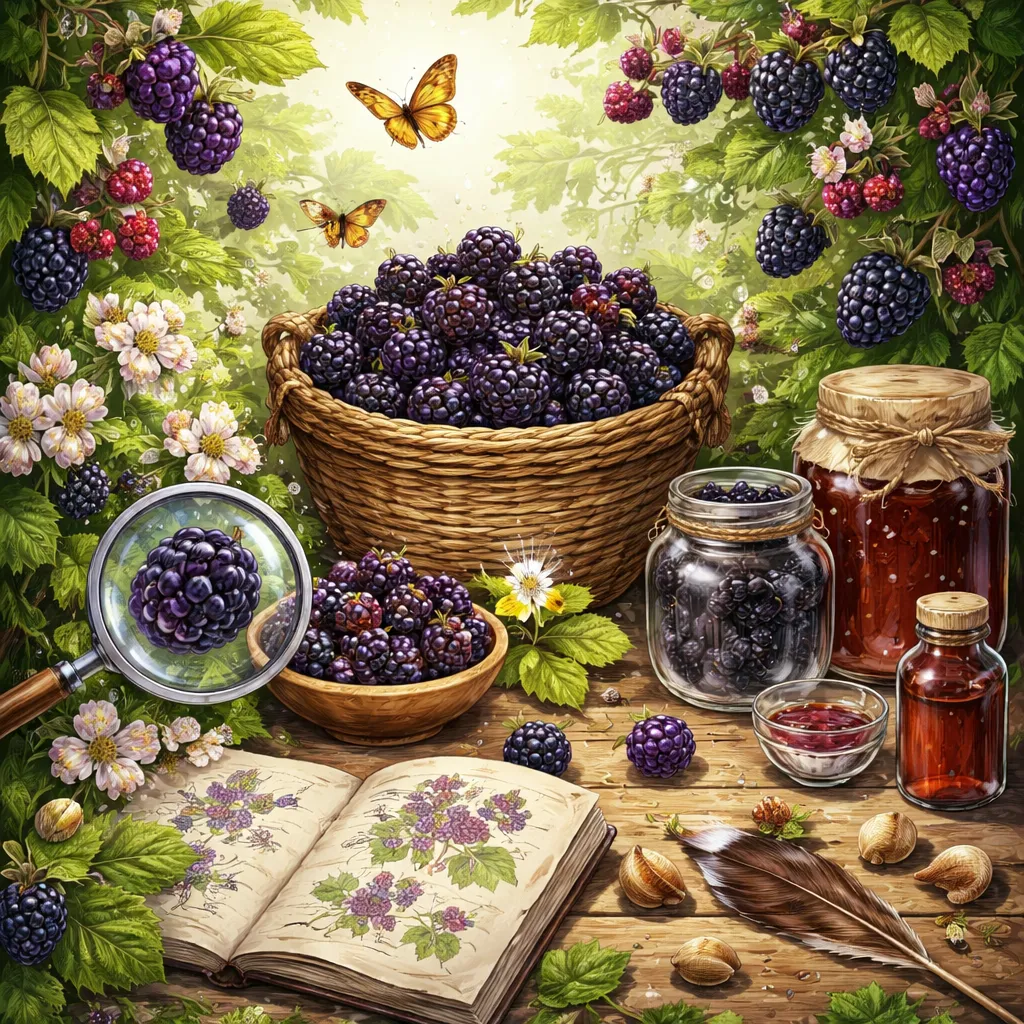

Have you ever walked along a country path in late summer and spotted dark purple berries hanging on thorny green branches?
Have you tasted a juicy, sweet-tart fruit that stains your fingers purple with every delicious bite?
This tough yet fruitful plant bears nature’s dark jewels, and today we will learn about blackberry plant together.
It grows in tangled bushes with sharp thorns, hiding sweet rewards for those who look carefully.
It blooms pale pink flowers in spring and bears deep black fruits when the sun lingers longest.
Let us step into a fun adventure to explore this hardy and wonderful berry plant.
Let‘s Learn the Word! – Open the Treasure Box of Language
Formal Name and Pronunciation
The full name of this plant is blackberry plant, pronounced /ˈblækbəri plɑːnt/.
Clap twice for black-ber-ry and one for plant to make a catchy learning rhythm.
Pretend to touch a dark berry while saying the word to fix its sound in your mind.
Word Origin Story
The word “blackberry” combines “black” for its ripe dark color and “berry” for its small fruit shape.
Old English speakers called it “bræmel” which evolved into the word “bramble” we use today.
People have named this plant for its color for hundreds of years across many languages.
It is one of the most simply named fruits that describes exactly how it looks.
Nicknames and Other Names
Gardeners call it a bramble bush for its tangled, thorny growth pattern.
Children love to name it “Dark Jewel Bush” for its shiny purple-black fruits.
It is also known as a thorny berry vine that spreads freely in wild spaces.
Core Plant Parts Vocabulary
Canes are long, arching stems that grow tall and bend toward the ground.
Thorns are sharp little bumps that protect the plant from hungry animals.
Leaflets grow in groups of three to five, shaped like small green ovals with jagged edges.
Blossoms are pale pink or white flowers that open wide in late spring.
Drupelets are tiny juicy bumps that cluster together to form one blackberry.
Roots spread wide underground and send up new shoots called suckers.
Suckers grow from roots to create new blackberry plants all around the bush.
Seeds hide inside each drupelet, ready to grow into a new blackberry plant.
Action and State Words
Ripen means green berries turn red, then purple, then deep black when ready to eat.
Tangy describes the sharp, sweet taste that makes blackberries so delicious.
Climb shows how long canes spread and climb over fences and other plants.
Prickle means the sharp thorns that tickle or poke when you touch the bush.
Cluster describes how many small drupelets group together to make one fruit.
Ecosystem Related Vocabulary
Honeybees flock to pink blossoms to collect sweet nectar for their hives.
Butterflies rest on broad leaves and sip juice from ripe blackberries.
Birds eat the dark fruits and carry seeds to grow new plants far away.
Squirrels hide blackberries in the ground for winter food supplies.
Cultural Imprints in Language
A folk saying tells “blackberries ripen when summer’s light is at its height”.
It teaches children that fruits need long sunny days to grow sweet and ripe.
A simple nursery rhyme sings, “Pink flowers bloom, black berries loom, on the thorny bush in the afternoon.”
It paints a lively picture of the blackberry’s journey from flower to fruit.
The phrase “blackberry winter” describes a short cold snap in late spring.
Now we hold all the special words to explore deeper, and we can learn about blackberry plant’s hidden natural secrets.
Discover the Plant’s Secrets! – Nature Detective’s Exploration Notes
Plant Passport
The blackberry plant belongs to the Rosaceae family, just like roses and raspberries.
Its scientific genus is Rubus, a group of thorny berry plants found all over the world.
It grows as a tangled bush with arching canes that can reach several feet long.
Its leaves are dark green and fuzzy underneath, with sharp saw-like edges.
Pale pink flowers bloom in clusters, each turning into a single blackberry fruit.
The blackberry plant follows a tough and lively cycle with every season.
New green canes sprout from roots when spring warmth melts winter frost.
Pink blossoms open in late spring, welcoming insects to help make fruits.
Green berries grow all summer, turning red then black in late summer heat.
Canes that bear fruit die in autumn, while new canes grow for the next year.
The bush rests quietly under winter snow, ready to wake up again in spring.
Survival Wisdom
Blackberry plants grow sharp thorns to protect their sweet fruits from plant-eating animals.
Their canes bend to the ground and grow new roots, creating more plants easily.
They can grow in almost any soil, from forest floors to sunny roadside edges.
They first grew in Europe and Asia, and now thrive in every continent except Antarctica.
They survive drought better than many berries, with deep roots that find hidden water.
Ecological Niche and Contributions
As a strong producer, the blackberry plant makes food from sunlight, water and air.
Bees and insects rely on its late spring blossoms when few other flowers bloom.
Small animals find safe shelter in its tangled, thorny branches from predators.
Its thick roots hold soil tightly and stop erosion during heavy rain and wind.
Leaves take in harmful air gases and release clean oxygen for all living things.
Fallen leaves rot into rich soil that feeds other plants in the wild ecosystem.
Human History and Cultural Symbols
In ancient Roman myths, blackberries were linked to festivals of harvest and joy.
Native American tribes used blackberry roots to make healing teas for many ailments.
In European folklore, blackberries symbolize protection because of their sharp thorns.
People eat fresh blackberries, bake them in pies, make jams and sweet syrups.
Dried blackberries make healthy snacks that last through cold winter months.
Fun Wow Facts
Each blackberry is made of dozens of tiny drupelets clustered together in one fruit.
Blackberries are not truly black when ripe, but a very deep dark purple color.
Thorns on blackberry canes are actually modified hairs that protect the plant.
We have unlocked all the amazing secrets of this thorny bush, and now we can grow a blackberry plant with our own hands.
Let’s Grow It Together! – Little Guardian’s Action Guide
Suitability for Home Planting
Dwarf blackberry bushes grow well in large pots on balconies and spacious gardens.
Regular varieties need a large outdoor space with room for canes to arch and spread.
It needs a spot with full sunlight for at least six hours every single day.
Even young kids can care for it with gloves to protect from sharp thorns.
Little Gardener’s Tool Kit
A young dwarf blackberry sapling works better than seeds for fast fruit growth.
A very large pot with drainage holes to hold its spreading root system.
Rich loamy soil mixed with compost to give the plant plenty of nutrients.
A wooden trellis to support arching canes and keep fruit off the ground.
Soft gardening gloves, a watering can and organic fruit fertilizer for care.
Step-by-Step Planting and Care
Plant the sapling in early spring when frost is gone and the air grows warm.
Fill the pot with soil, place the sapling, cover roots fully and set up the trellis.
Water the soil slowly until it is moist all through for the first planting time.
Check the top soil daily, water only when it feels dry to the touch.
Keep the pot in full sunlight, as sunshine makes blackberries dark and sweet.
Feed with organic fertilizer once a month during spring and summer months.
Observe the bush every day and draw its changes in a special nature notebook.
Record when pink flowers bloom, green berries form and dark fruits ripen.
Problem Diagnosis Room
Yellow leaves mean too much water, stop watering and let the soil dry out fully.
Small green aphids on leaves can be wiped away with mild soapy water gently.
Sparse fruits show not enough sunlight, move the pot to a brighter outdoor spot.
Dry, wilted canes mean the plant is thirsty, give it a slow deep drink of water.
Harvest and Growth Gifts
Wait one to two years, and you can pick your own home-grown dark blackberries.
Harvesting with gloves teaches kids caution and respect for plants’ defenses.
Caring for the bush builds responsibility and patience for growing edible fruits.
Sharing homemade blackberry jam with family creates warm, lasting memories.
Creative Extension Activities
Make a growth diary to draw and write about the bush’s changes each week.
Create leaf rubbings with paper and crayons to save the shape of blackberry leaves.
Paint a picture of dark blackberries with pink blossoms and green thorny canes.
Learn the blackberry nursery rhyme and sing it while picking ripe fruits.
Bake blackberry muffins with your harvest and share them with friends and neighbors.
Nurturing a blackberry bush helps us connect with nature and truly learn about blackberry plant each passing day.
Conclusion and Eternal Curiosity
Today we have finished a wonderful journey with the hardy blackberry plant.
We learned useful English words, discovered natural secrets and learned to grow this thorny treasure with care.
This unique plant gives us dark sweet fruits, shelters small animals and protects soil with strong roots.
It teaches us that beauty and sweetness often come with gentle protection and boundaries.
Keep your eyes wide open when you walk along paths, gardens or wild forest edges.
Look closely at thorny bushes and clustered fruits, and you will find new magic every single day.
Never stop asking questions about nature, because the world holds endless wonders waiting for you to explore and discover.