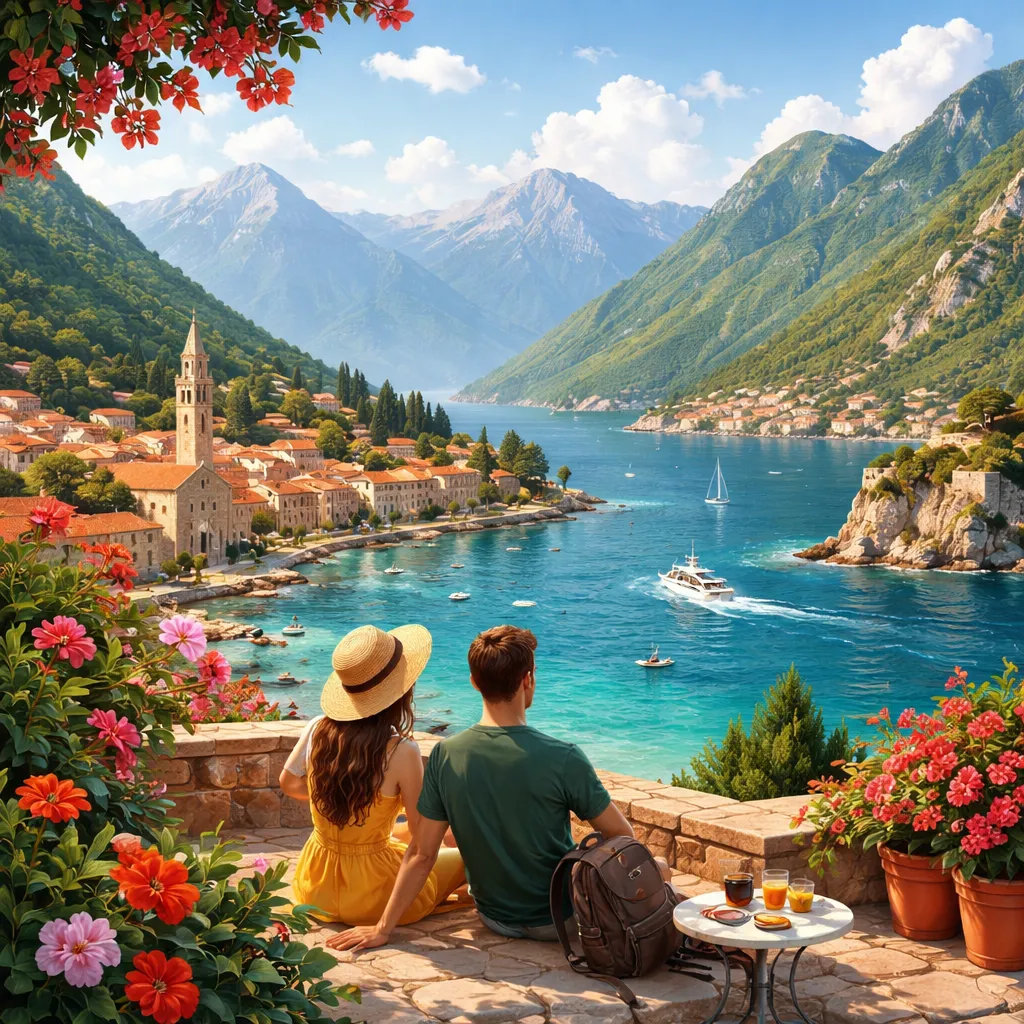

Introduction to Montenegro
Language learning carries us to a land where rugged mountains plunge into sapphire seas. Today we explore a small Balkan country with dramatic natural beauty. Its name means "Black Mountain" in Italian. Children will discover a land of medieval walled cities and deep fjord-like bays. They will learn about a country that emerged from history to become one of Europe's newest nations. Exploring Montenegro builds reading skills while revealing a landscape of stunning contrasts. Every fact uncovers another layer of beauty. Every word invites young readers to imagine this Adriatic jewel.
Where Is Montenegro?
Montenegro lies in Southeastern Europe on the Balkan Peninsula. It sits along the Adriatic Sea. The country shares borders with Croatia, Bosnia and Herzegovina, Serbia, Kosovo, and Albania. The Adriatic Sea forms its western edge. The capital city is Podgorica. Podgorica sits in the southern part of the country. The coastal city of Kotor ranks as a major historic port. The country covers about five thousand square miles. That makes it one of the smaller nations in Europe. Mountains dominate the landscape. The Dinaric Alps run through the country. Finding Montenegro on a map shows a small country hugging the Adriatic coast. Its location made it a crossroads for empires throughout history.
Interesting Facts About Montenegro
Montenegro offers many remarkable facts for young learners. Its name comes from the dark forests that covered its mountains. Venetians called it "Monte Negro," meaning Black Mountain. Another interesting fact involves the Bay of Kotor. This bay looks like a fjord with steep mountains rising from deep water. It ranks as one of the most beautiful bays in the world. The old town of Kotor sits within thick stone walls built by Venetians.
Montenegro also has a unique island. Our Lady of the Rocks is an artificial island in the Bay of Kotor. People built it by sinking old ships and piling rocks. They placed a church on the island. Another fun fact involves the Tara River Canyon. This canyon ranks as the deepest in Europe. It stretches for over fifty miles and drops nearly four thousand feet. Rafters travel down its turquoise waters.
The country also has an ancient forest. Biogradska Gora ranks as one of the last remaining virgin forests in Europe. Some trees there are over four hundred years old. Montenegro also gained independence recently. It separated from Serbia in 2006. It is one of the youngest countries in the world. These facts show children a country of natural wonders and recent history.
Key Vocabulary About Montenegro
Let us build vocabulary for this Adriatic nation. These words help children describe what they learn.
Fjord: a long, narrow inlet with steep cliffs.
Canyon: a deep gorge carved by a river.
Medieval: relating to the Middle Ages.
Virgin Forest: an old forest untouched by human activity.
Peninsula: a piece of land surrounded by water on three sides.
Rafting: traveling down a river on an inflatable boat.
Independence: freedom from control by another country. Introduce these words with pictures and stories. Show the Bay of Kotor with its steep mountains. Show the Tara River Canyon and rafters on the water. Let children say each word aloud. These vocabulary words give children the language to explore Montenegro's dramatic landscape.
Simple Sentences for Reading Practice
Short sentences help new readers build confidence. Use these sentences about Montenegro for practice.
Montenegro is a small country in Southeastern Europe.
The Adriatic Sea borders Montenegro to the west.
The capital city is Podgorica.
The Bay of Kotor has steep mountains and deep water.
Kotor is an old walled city on the bay.
The Tara River Canyon is the deepest in Europe.
Montenegro became independent in 2006. Read each sentence together. Let children point to the words. Encourage them to repeat after you. Use pictures to show each fact. These simple sentences prepare young readers for longer passages.
Short Reading Passage About Montenegro
Here is a short passage for children to read together.
“Montenegro sits on the Adriatic coast of the Balkan Peninsula. Rugged mountains rise directly from the sea. The Bay of Kotor cuts deep into the coastline. Mountains tower over the water on both sides. The old town of Kotor lies within thick stone walls. Venetians built these walls centuries ago. People still walk along them today. A short boat ride takes visitors to Our Lady of the Rocks. This small island is completely man-made. People built it by sinking ships and adding stones. In the north, the Tara River carved the deepest canyon in Europe. The canyon walls drop nearly four thousand feet. Rafters float down the turquoise water below. The mountains hold Biogradska Gora, one of Europe's last virgin forests. Ancient trees stand untouched by human hands. The capital, Podgorica, sits in the south near the coast. Montenegro became its own country in 2006. It ranks as one of the youngest nations in the world. From the bay to the mountains, Montenegro offers breathtaking beauty.”
Read this passage slowly together. Pause to talk about each idea. Ask children to find vocabulary words in the text. This activity builds reading fluency and deepens understanding.
Fun Questions About Montenegro
Questions make reading interactive and engaging. Use these to start conversations with young learners.
What sea borders Montenegro to the west?
What is the capital city of Montenegro?
What makes the Bay of Kotor so special?
What is the name of the man-made island in the bay?
What river canyon is the deepest in Europe?
When did Montenegro become independent? Let children answer in complete sentences. Encourage them to use new vocabulary. Ask them to imagine sailing through the Bay of Kotor. What would they see looking up at the mountains? Creative questions make the topic personal and exciting.
Tips for Learning English with This Topic
Use Montenegro to create rich English learning experiences. Start with a map activity. Let children find Montenegro on the Adriatic coast. Point out its neighbors and the bay cutting into the coast. Discuss how geography shaped its history as a seafaring and mountain nation.
Next, introduce the vocabulary through a hands-on activity. Create a simple model of the Bay of Kotor using clay or playdough. Form steep mountains rising from a deep water channel. For the canyon, use a long strip of paper folded to show depth. Let children move toy boats through the bay and toy rafts through the canyon.
Read the passage aloud with a sense of awe and discovery. Let your voice reflect the dramatic scenery. After reading, let children draw a scene from Montenegro. One child might draw the Bay of Kotor with mountains rising from the water. Another might draw rafters on the Tara River. Let them label their drawings with vocabulary words. Add blue for the sea and green for the mountains.
Incorporate a history connection. Talk about the Venetians who built Kotor's walls. Discuss how Montenegro became independent so recently. Compare this to other countries with older independence dates. This shows children that language learning reading connects to European history.
Use music and movement to enhance the experience. Listen to traditional Montenegrin music with folk instruments. Let children move like boats sailing through the bay. Pretend to climb the walls of Kotor. Physical activity reinforces learning in joyful ways.
Encourage children to share their knowledge. Let them tell a family member about the deepest canyon in Europe. They can explain how people built an island in the bay. Teaching others builds confidence and deepens understanding.
Connect Montenegro to your child's world. Ask, “What mountains or bays have we visited?” Compare them to Montenegro's dramatic coastline. Ask about old stone walls or historic places near you. Compare to Kotor's medieval walls. These connections help children see that language learning reading is about understanding the beauty of different places. By exploring Montenegro together, you give children a rich experience. They learn new words, discover a land of mountains and sea, and grow their love for reading. This Balkan nation becomes a treasured part of their learning journey.