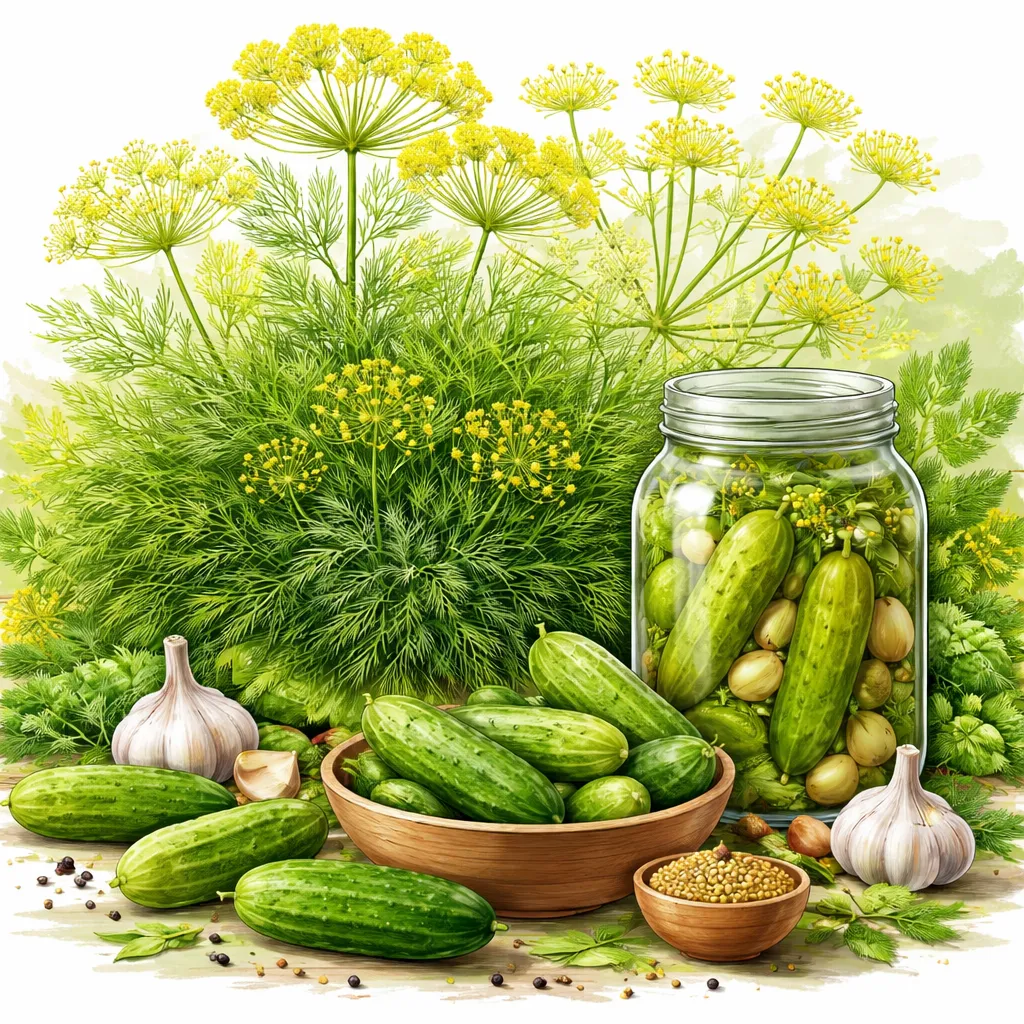

Have you ever bitten into a cool, crunchy, sour dill pickle? That delicious, tangy flavor comes from a beautiful, feathery green herb! Imagine a plant in the garden that looks like a soft, green cloud. Its leaves are so thin and delicate, they look like ferns or feathers. This plant grows fast and tall, and its flowers are like tiny yellow fireworks. Butterflies love it, and it makes many foods taste amazing. Let’s get ready to learn about the airy and tasty Dill plant.
Let’s Learn the Word! – Open the Treasure Box of Language
Formal Name and Pronunciation
This feathery friend is called Dill. Its scientific name is Anethum graveolens. You can say it like this: /dɪl/ (dil). It rhymes with “hill” and “will.” Dill. Say it: Dill. It’s a very short, fun word.
The Etymology Tale
The word “Dill” is very old. It comes from an old Norse word “dilla,” which meant “to lull” or “to soothe.” Why? Because long ago, people made a tea from dill seeds to help soothe upset stomachs and help babies sleep! Its name tells us it was once a comforting, gentle plant.
Nicknames and Friendly Aliases
Dill is often called by names that describe its job. Because of its famous pickle job, it is called Dill Weed (for the leaves) and Dill Seed. It is sometimes called Garden Dill. In some places, it’s simply called the Pickling Herb. Its fine leaves are also called Dill Fronds.
Building Your Word Web: Core Parts
Let’s learn the words for a Dill plant’s airy body. The Frond is the thin, thread-like, feathery green leaf. The Stem is tall, hollow, and has grooves. The Flower is a tiny, yellow bloom that grows in a flat, umbrella-shaped cluster called an umbel. The Seed is the small, flat, oval, brown seed. The Plant is the whole soft, green bush. A Sprig is a small stem with fronds.
Action and State Words
Dill plants are speedy and useful. They grow very fast from seed. They bolt (send up a tall flower stalk) quickly. The leaves are harvested for fresh eating. The flowers bloom and then make seeds. The seeds are harvested for pickling and spice. A dill plant is feathery, fast-growing, aromatic, and annual.
Ecosystem Friends Vocabulary
A dill plant is a buzzing, fluttering hotel! The flowers are a favorite restaurant for ladybugs, hoverflies, praying mantises, and parasitic wasps. These are all beneficial insects that eat pest insects like aphids. Most excitingly, dill is a host plant for the Black Swallowtail butterfly. The caterpillars happily munch on the leaves. Growing dill helps your whole garden.
Cultural Imprint in Language
Dill is a symbol of protection, good luck, and good flavor. In the Middle Ages, people believed dill could protect against witchcraft. Brides would put dill seeds in their shoes for good luck! Today, it’s famous for making pickles. The phrase “in a pickle” means in a tricky situation, but real dill pickles are a tasty treat! Dill represents comfort, tradition, and bringing a zing to meals.
Ready for Discovery
We know its feathery, soothing name. Are you ready to be a garden detective and discover how this soft plant protects gardens and flavors pickles? Let’s explore the secrets of the Dill plant.
Discover the Plant’s Secrets! – A Nature Detective’s Notebook
The Plant Passport
Dill belongs to the Apiaceae family, the carrot and parsley family. Its scientific name is Anethum graveolens. It is a tall annual herb, growing 2 to 4 feet high. The leaves are soft, fine, and divided many times, like delicate green threads. The stems are hollow. The flowers are small, yellow, and form large, flat clusters that look like lace doilies. It grows best in cool spring or fall weather and loves full sun. It grows very fast.
Survival Smarts
Dill’s strategy is speed. It grows incredibly fast, produces leaves, then quickly “bolts” to make flowers and seeds. This fast life cycle lets it produce the next generation before hot summer weather or frost comes. The strong, sharp smell of its leaves and seeds comes from essential oils. This scent helps protect it from some pests. The tall, hollow stems help it stand up in the breeze.
Its Role and Gifts
In the garden, dill is a superhero for attracting beneficial insects that act as natural pest control. Its greatest gifts are its flavor and seeds. The feathery fronds have a bright, grassy, slightly tangy taste for fish, potatoes, salads, and dips. The seeds are stronger and warmer, used to flavor pickles, breads, and stews. Dill is a two-in-one flavor factory for the kitchen.
Human History and Cultural Symbol
Dill has been used for thousands of years. Ancient Egyptians used it as a medicine. Romans considered it a sign of good luck and used dill wreaths to celebrate heroes. In the Middle Ages, it was used to protect against witchcraft and was a key ingredient in medicines. Settlers brought it to America. Today, it is essential for making dill pickles. It represents ancient remedies, good fortune, and the simple joy of a crunchy pickle.
Fun “Wow!” Facts
Get ready for a butterfly fact! If you see green, black, and yellow striped caterpillars on your dill, that’s a good sign! You are helping Black Swallowtail butterflies. Plant extra dill for them. And here’s a pickle fact: It’s the dill weed (leaves) and dill seeds that give “dill pickles” their famous, tangy, delicious flavor!
From Fast Seed to Your Plate
The story of the Dill plant is one of speedy growth and garden help. Would you like to grow your own insect hotel and pickle flavoring? You can grow dill easily in a pot or garden! Let’s see how.
Let’s Grow It Together! – A Little Guardian’s Action Guide
Good for Home Growing?
Absolutely! Dill is one of the easiest and fastest herbs to grow. It’s perfect for a first-time gardener. It grows well in a medium-sized pot on a sunny balcony or in a garden bed. It grows so fast you’ll be amazed. Just be ready for it to get tall and go to seed quickly—that’s its nature!
Little Gardener’s Toolkit
You will need a packet of dill seeds. Get a medium-deep pot with drainage holes. Use regular potting soil. Have a watering can, a sunny spot, and scissors for harvesting ready.
Step-by-Step Growing Guide
Planting Your Speedy Friend
Dill hates having its roots disturbed, so always plant seeds directly in their pot or garden spot. Plant in spring or early fall. Scatter the seeds on the soil and cover them with just a tiny sprinkle of soil. Water gently. Place the pot in a spot that gets full sun. Dill loves sunshine.
Care Calendar
Keep the soil moist until the little seedlings pop up, which happens in 7-14 days. Once growing, water when the top inch of soil is dry. It loves full sun. You don’t need to fertilize. The most important thing is to plant new seeds every 2-3 weeks if you want a continuous harvest of fresh leaves, because each plant doesn’t last long before flowering.
Watch and Be Friends
Watch for the first two skinny seed leaves, then the wonderful, feathery true leaves. The plant will shoot up quickly. Gently brush the fronds and smell your fingers. Check the leaves for butterfly eggs or caterpillars. Soon, you’ll see a tall stalk with a yellow flower umbrella. Let it flower to feed insects and make seeds for you to collect!
Problem Diagnosis
If the plant is weak and floppy, it needs more sun. If leaves turn yellow, it might need a little water. The most common “pest” is actually the beautiful swallowtail caterpillar—don’t spray it, just plant more dill! Aphids might also visit; spray them off with a strong jet of water.
Your Rewards and Gifts
Your gift is a fast-growing, living lesson. You are learning about plant life cycles, beneficial insects, and seed saving. Caring for dill teaches patience, observation, and the joy of growing something that helps your whole garden ecosystem. You become a grower of flavor and life.
Creative Fun
Start a Pickle Pioneer’s Journal. Draw your dill plant’s feathery leaves. Press a frond and a dried flower umbel. With an adult, make refrigerator pickles with your homegrown dill. Create a “Wanted” poster for beneficial insects, with dill as their favorite hangout. Design a label for your own brand of “Gardener’s Dill Pickles.” Write a short story about a swallowtail caterpillar’s day on a dill plant. Make a miniature garden trellis from twigs for your tall dill to lean on.
Growing a Cloud of Green
By planting dill, you are not just growing an herb. You are growing a habitat for helpful creatures, a science lesson in growth, and the key ingredient for a tasty snack. You are a cultivator of quick, green abundance.
Conclusion and Forever Curiosity
What a fast, feathery, and fascinating journey! You started to learn about the Dill plant, you discovered its secrets as the speedy, butterfly-hosting hero of the pickle jar, and you learned how to grow your own cloud of flavor. You now know the Dill plant is not just for pickles; it is a lesson in speed, a beacon for garden helpers, a whisper of ancient magic, and a symbol of tangy, fresh taste. Remember, its power is in its delicate fronds and its fast, helpful life. Your curiosity helps you see the busy, buzzing world in a single, soft green plant. Keep planting seeds that grow quickly, watching for caterpillars, and tasting the fresh rewards of your care. Your adventure to learn about the Dill plant shows us that sometimes the most delicate-looking plants are the toughest, fastest, and most helpful friends in the garden.