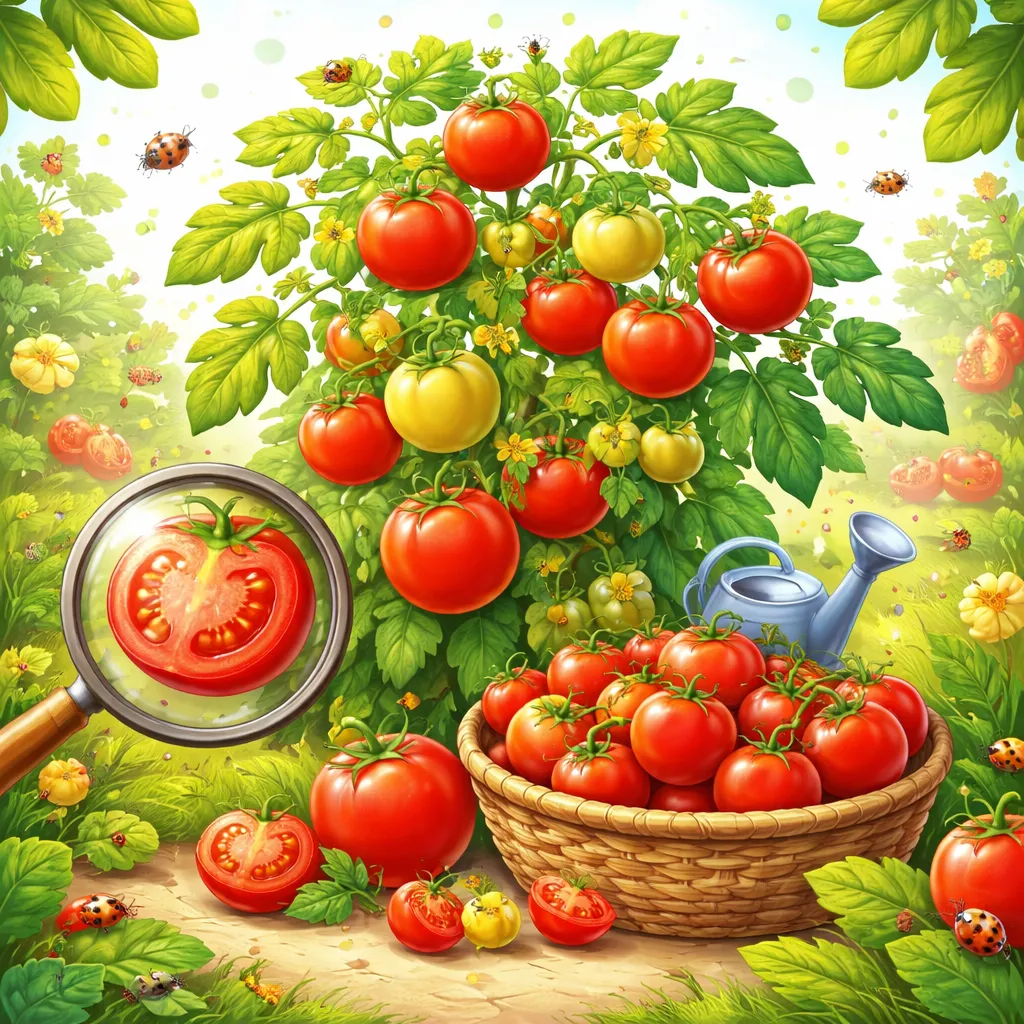

Imagine biting into a plump, red, juicy slice of tomato on a hamburger, or tasting the rich, cooked tomato in a warm bowl of spaghetti sauce. That delicious flavor starts on a lively, green plant that loves sunshine. In the garden, tomato plants can be big, sprawling vines or neat, bushy plants covered in round, green fruits that slowly turn red, yellow, or even purple! People have argued for years: is it a fruit or a vegetable? Botanists say it’s a fruit, and a berry at that! Let’s explore the surprising and tasty world of the Tomato plant.
Let’s Learn the Word! – Open the Treasure Box of Language
Formal Name and Pronunciation This delicious plant is called the Tomato. Its scientific name is Solanum lycopersicum. You can say it like this: /təˈmɑː.təʊ/ (tuh-MAH-toh). The “To” sounds like “toe,” and “ma” is like “ma.” To-ma-to. Say it: Tomato. Some people say /təˈmeɪ.təʊ/ (tuh-MAY-toh). Both are right!
The Etymology Tale The word “Tomato” has a journey from the Americas! It comes from the Nahuatl (Aztec) word “tomatl.” Spanish explorers took the word back to Europe. In many languages, it kept a similar sound. Its scientific name lycopersicum means “wolf peach” in Greek, maybe because people once thought it was wild and suspicious! Its name tells a story of exploration.
Nicknames and Friendly Aliases Tomatoes have many fun names. They are often called Love Apples from an old story. A small, round type is a Cherry Tomato. A big, meaty one is a Beefsteak Tomato. The plant is a Tomato Vine or Tomato Bush. Green, unripe ones are Green Tomatoes. The famous sauce is Tomato Sauce or Ketchup.
Building Your Word Web: Core Parts Let’s learn the words for a Tomato plant’s busy body. The Fruit is the tomato itself—a juicy berry! The Vine is the long, trailing stem. The Leaf is green, fuzzy, and has a strong smell. The Flower is small, yellow, and star-shaped. The Sucker is a small shoot that grows between the stem and a branch. The Root system is wide and hungry. A garden with many plants is a tomato patch.
Action and State Words Tomato plants are energetic growers. They grow tall and need support. They are often staked or caged. The flowers are pollinated. The fruit sets and ripens. Gardeners prune the suckers. Tomatoes are harvested when ripe. A tomato plant is juicy, sun-loving, heavy-feeding, and annual.
Ecosystem Friends Vocabulary A tomato patch is a buzzing place. Bumblebees are the best pollinators for the flowers, buzzing to shake the pollen loose. The strong smell of the leaves can deter some pests. Ladybugs might visit to eat aphids. But watch out for the tomato hornworm, a big green caterpillar that loves the leaves! It’s a whole mini world.
Cultural Imprint in Language Tomatoes are symbols of summer, health, and good food. A famous phrase is, “You say tomato, I say tomahto,” meaning we can have different opinions but it’s the same thing. The Spanish festival La Tomatina is a giant tomato fight! The phrase “as red as a tomato” describes someone who is blushing. Tomatoes represent joy, abundance, and the heart of the garden.
Ready for Discovery We know its juicy, controversial name. Are you ready to be a garden detective and solve the mystery of the fruit that acts like a vegetable? Let’s explore the life of the Tomato plant.
Discover the Plant’s Secrets! – A Nature Detective’s Notebook
The Plant Passport The Tomato belongs to the nightshade family, Solanaceae. Its genus is Solanum. It is a perennial vine in hot climates but grown as an annual. The plant can be a tall, rambling vine (indeterminate) or a shorter bush (determinate). The leaves are compound with many leaflets. The flowers are yellow. The fruit is a true botanical berry. It is native to western South America and loves hot, sunny weather.
Survival Smarts Tomato plants are sun worshippers. They grow quickly to cover ground and beat other plants for sunlight. The tiny hairs on the stems and leaves can give off a strong scent. This smell confuses or repels some pest insects. The plant also makes a mild toxin called tomatine in its leaves and green fruit to discourage animals from eating it. When the fruit is ripe and red, it’s a signal to animals to eat it and spread the seeds.
Its Role and Gifts In the garden, tomatoes are a major producer. Their greatest gift is the fruit. Tomatoes are incredibly versatile. We eat them raw in salads, cooked in sauces, dried, or juiced. They are full of vitamins like Vitamin C and lycopene. They are the backbone of countless dishes around the world, from Italian pizza to Mexican salsa.
Human History and Cultural Symbol Tomatoes were first domesticated in the Andes Mountains. Spanish explorers brought them to Europe in the 1500s. At first, people in Europe and North America thought they were poisonous and grew them only as pretty ornaments! By the 1800s, they became a kitchen favorite. In 1893, the US Supreme Court even declared the tomato a vegetable for tax reasons! It represents a dramatic change from fear to love.
Fun “Wow!” Facts Get ready for a space fact! Tomato seeds were taken to space, grew on the International Space Station, and astronauts made the first space salsa! And here’s a fruit fact: Botanically, a tomato is a fruit because it grows from a flower and has seeds. But in cooking, we treat it like a vegetable. It’s both!
From Tiny Seed to Juicy Harvest The story of the Tomato plant is one of summer abundance. Would you like to grow your own sweet, sun-ripened tomatoes? You can grow tomatoes in a pot or garden! Let’s see how.
Let’s Grow It Together! – A Little Guardian’s Action Guide
Good for Home Growing? Yes, it’s a top garden favorite! Tomatoes do need a big pot, a sunny spot, and some care, but they are very rewarding. You can grow a bush type (determinate) in a large pot on a sunny patio. Vine types (indeterminate) need a big cage or stake. There’s nothing like eating a tomato warm from your own plant.
Little Gardener’s Toolkit You will need a tomato seedling from a garden center (easier than seeds for beginners). Get a very large, deep pot (at least 5 gallons). Use rich potting soil with compost. Have a watering can, tomato fertilizer, a sunny spot, and a cage or stake ready.
Step-by-Step Growing Guide
Planting Your Sunny Friend Plant your seedling after all danger of frost. Dig a deep hole. You can even bury part of the stem! Roots will grow from it, making a stronger plant. Place a cage around it or put in a stake. Water it deeply. Place the pot in the sunniest, hottest spot you have.
Care Calendar Water deeply and regularly, especially when fruits are forming. Let the soil dry a little between waterings. They need full sun. Feed them with tomato fertilizer every two weeks. For vine types, pinch off the small “sucker” shoots that grow in the leaf joints to focus energy on fruit. Tie the main stem to the stake as it grows.
Watch and Be Friends Watch the plant grow taller. Look for the yellow flowers. Watch a tiny green tomato form behind a flower. Watch it grow bigger and bigger, then slowly change color. Gently squeeze it—when it’s slightly soft, it’s ready! The best sound is the pop when you pick a ripe tomato. Measure your biggest tomato.
Problem Diagnosis If leaves turn yellow at the bottom, it might be normal aging or need fertilizer. If flowers fall off, it might be too hot or not pollinated; gently shake the plant to help. Watch for big green hornworms; pick them off. The most common problem is not enough sun or inconsistent watering, which can cause the fruit to crack.
Your Rewards and Gifts Your gift is the taste of sunshine. You are learning about plant care, pollination, and patience. Caring for a tomato plant teaches responsibility, problem-solving, and the incredible reward of growing your own delicious, healthy food. You become a grower of your own snacks.
Creative Fun Start a Sun-Ripened Journal. Draw your plant’s progress. Press a leaf and a flower. With an adult, make a simple salsa or bruschetta with your harvest. Research the journey of the tomato from the Andes to your plate and draw a map. Have a “Tomato Taste Test” with different colors from the store. Write a news report about the “Great Vegetable Trial of 1893.” Build a mini trellis for a small plant.
Growing a Taste of Summer By planting tomatoes, you are not just growing a vegetable. You are growing a history lesson, a science project, and the freshest, tastiest ingredient for your table. You are a cultivator of summer itself.
Conclusion and Forever Curiosity What a juicy, sunny, and surprising journey from flower to fruit! You started to learn about the Tomato plant, you discovered its secrets as the berry that conquered the world, and you learned how to nurture your own patch of red gold. You now know the Tomato plant is not just for salads; it is a botanical wonder, a historical adventurer, a heavy feeder, and a symbol of garden abundance. Remember, its true nature is a sun-ripened fruit, no matter what we call it in the kitchen. Your curiosity helps you see the amazing stories in everyday foods. Keep planting seeds of knowledge, savoring the fruits of your labor, and asking questions about the plants on your plate. Your adventure to learn about the Tomato plant shows us that the most ordinary things in the garden can have the most extraordinary stories.