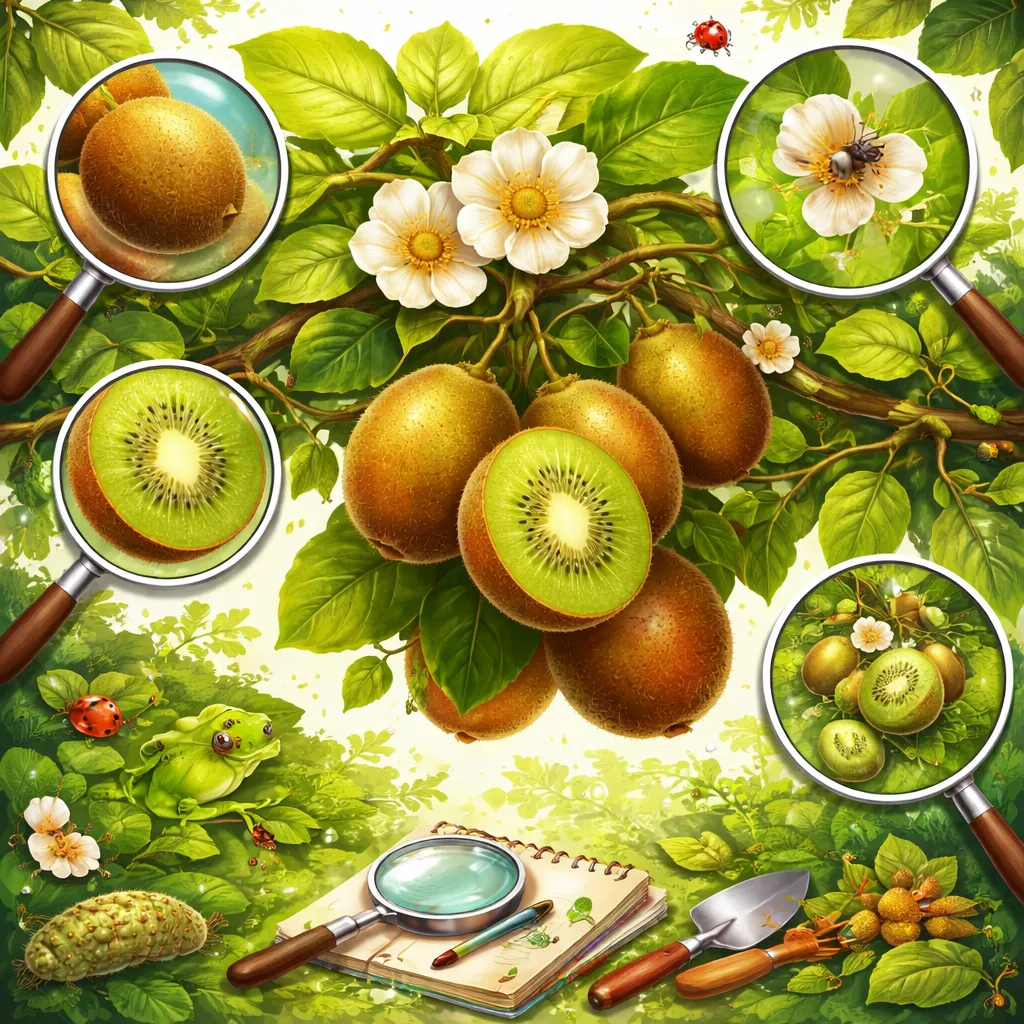

Have you ever found a small, fuzzy brown fruit hiding among thick green vines?
Have you sliced it open and seen bright green flesh dotted with tiny black seeds like a starry night?
This climbing vine holds sweet, tangy treasures inside its fuzzy skin, and today we will learn about kiwi fruit plant together.
It creeps and climbs instead of growing tall, wrapping its thin stems around supports to reach sunlight.
It blooms soft white flowers in spring and grows fuzzy brown fruits as the days grow warm.
Let us start a fun exploration to uncover the secrets of this special climbing plant.
Let‘s Learn the Word! – Open the Treasure Box of Language
Formal Name and Pronunciation
The full name of this plant is kiwi fruit plant, pronounced /ˈkiːwi fruːt plɑːnt/.
Clap twice for ki-wi and once for fruit and plant to make a light, playful rhythm.
Pretend to touch fuzzy fruit skin while saying the word to remember it easily.
Word Origin Story
The name “kiwi” comes from the kiwi bird, a small fuzzy bird from New Zealand.
People first called this fruit Chinese gooseberry, as it originally grew in China.
Farmers renamed it kiwi fruit to honor New Zealand’s unique national bird.
The name quickly spread worldwide because of its cute sound and fuzzy look.
Nicknames and Other Names
Gardeners call it the fuzzy vine for its soft, hairy fruits and climbing stems.
Children love to name it “Starry Night Fruit Plant” for its seed pattern inside.
It is also known as Chinese gooseberry vine, its original historical name.
Core Plant Parts Vocabulary
Vines are long, thin stems that twist and climb to reach warm sunlight.
Tendrils are curly little arms that hold the vine tight to fences or trellises.
Leaves are round and fuzzy, with a deep green color like soft velvet.
Blossoms are creamy white with a sweet smell, opening in springtime.
Fruits are oval and brown, covered in soft fuzzy hair to protect the flesh inside.
Seeds are tiny and black, scattered like stars in bright green fruit flesh.
Roots spread shallow under soil, drinking water to feed the climbing vine.
Sepals are small green leaves that cover young fruits before they grow big.
Action and State Words
Climb describes how vines twist up trellises to catch more sunlight each day.
Bloom means white flowers open and release a gentle, sweet fragrance.
Ripen shows green fruits turn brown and fuzzy, growing sweet and tangy.
Fuzzy tells the soft, hairy texture on the outside of the ripe kiwi fruit.
Twine means vines wrap themselves tightly around supports as they grow.
Ecosystem Related Vocabulary
Honeybees visit white blossoms to collect nectar and help fruits grow.
Butterflies rest on large fuzzy leaves and enjoy the warm sun above the ground.
Birds peck at ripe fruits and spread tiny seeds to grow new vines in new places.
Ladybugs crawl along vines and eat small bugs that try to harm the leaves.
Cultural Imprints in Language
A lovely saying tells that kiwi vines grow sweetest when they reach for the light.
It teaches children that growth and goodness come from reaching toward bright things.
A simple nursery rhyme sings, “Vines twist tall, flowers white call, fuzzy fruits hide sweetest all.”
It paints a cheerful picture of the kiwi fruit plant’s growing journey.
The phrase “kiwi energy” means being small but full of bright, lively power.
Now we have all the useful words to explore deeper, and we can learn about kiwi fruit plant’s hidden natural secrets.
Discover the Plant’s Secrets! – Nature Detective’s Exploration Notes
Plant Passport
The kiwi fruit plant belongs to the Actinidiaceae family, a group of climbing vines.
Its scientific genus is Actinidia, with many different types of kiwi vines around the world.
It grows as a woody climbing vine, not a tree, with curly tendrils to grip supports.
Its leaves are round and fuzzy, feeling soft like velvet when touched gently.
Creamy white flowers bloom in clusters, and small green fruits grow after pollination.
The kiwi fruit plant follows a clear cycle with every changing season.
Tiny buds wake up and sprout new leaves and vines when spring arrives.
White fragrant flowers bloom in late spring, waiting for bees to visit them.
Green fuzzy fruits grow all summer, swelling with juice as sunlight increases.
Fruits ripen to brown in autumn, ready to pick and enjoy with family.
Vines lose leaves in winter and rest until warm spring days come again.
Survival Wisdom
Kiwi vines grow curly tendrils to climb high and catch more sunlight than nearby plants.
Male and female plants grow separately, and both are needed to grow sweet fruits.
They first grew in the mountain forests of China, enjoying cool and mild weather.
Now they thrive in New Zealand, Italy, California and other mild climate regions.
The fuzzy skin on fruits locks in moisture and protects the soft flesh inside.
Ecological Niche and Contributions
As a hardworking producer, the kiwi fruit plant makes food from sunlight, water and air.
Bees and insects get important nectar from its early spring blossoms.
Small animals find safe hiding spots among thick, leafy vines from predators.
Its dense leaves provide cool shade for small creatures on hot sunny days.
Roots hold soil together and stop erosion when heavy rain falls in autumn.
Leaves take in harmful gases and release clean oxygen for all living things.
Human History and Cultural Symbols
In ancient China, kiwi fruits were a rare treat for emperors and noble families.
In New Zealand, kiwi fruit stands for national pride and unique natural beauty.
It symbolizes health and energy in many cultures because of its rich nutrients.
People eat fresh kiwi slices, blend them into smoothies, bake them in pies and make jams.
Kiwi juice adds a sweet tangy flavor to many summer drinks and desserts.
Fun Wow Facts
A single kiwi fruit has more vitamin C than many types of citrus fruits.
Male kiwi plants only make flowers and never grow any fruits at all.
The tiny black seeds inside are edible and add a gentle crunch to every bite.
We have unlocked all the amazing secrets of this climbing vine, and now we can grow a kiwi fruit plant with our own hands.
Let’s Grow It Together! – Little Guardian’s Action Guide
Suitability for Home Planting
Dwarf kiwi vines grow well in large pots on balconies with a small trellis.
Regular kiwi vines need a garden trellis or fence to climb and spread freely.
They need a spot with bright sunlight for at least six hours every single day.
They grow best in mild weather, not too hot and not too cold for long periods.
Little Gardener’s Tool Kit
A young dwarf kiwi vine sapling, including both male and female small plants.
A large deep pot with drainage holes to keep roots from getting too wet.
Loose, fertile soil mixed with compost to give the vine plenty of nutrients.
A small trellis for vines to climb, a watering can and organic fruit fertilizer.
Soft gardening gloves to protect hands from rough woody vines.
Step-by-Step Planting and Care
Plant the saplings in early spring when frost fades and air feels warm and mild.
Fill the pot with soil, place the vines near the trellis and cover roots fully.
Water the soil slowly until it feels moist, not soggy, for the first planting.
Check the top soil every day, water only when it feels dry to the touch.
Guide young tendrils to wrap around the trellis so the vine can climb upward.
Feed the vine with organic fertilizer once a month during spring and summer.
Watch the vine every day and draw its changes in a special nature notebook.
Record when white flowers bloom, green fruits form and brown fuzzy fruits ripen.
Problem Diagnosis Room
Yellow leaves mean too much water, stop watering and let the soil dry out completely.
Small green aphids on leaves can be wiped away with mild soapy water gently.
No fruits show missing male or female plants, add the missing type nearby.
Brown leaf tips mean dry air, mist the leaves gently with clean water each day.
Harvest and Growth Gifts
Wait two to three years, and you can pick your own home-grown fuzzy kiwi fruits.
Harvesting ripe kiwis teaches kids gentleness and careful observation skills.
Caring for the climbing vine builds responsibility and patience for growing food.
Slicing home-grown kiwis and sharing them creates sweet family memories.
Creative Extension Activities
Make a growth diary to draw and write about the vine’s climbing progress each week.
Create leaf rubbings with paper and crayons to save fuzzy kiwi leaf shapes.
Paint a picture of climbing vines, white flowers and fuzzy brown kiwi fruits.
Learn the kiwi nursery rhyme and sing it while tending to your growing vine.
Make a starry fruit salad with kiwi slices and share it with friends and family.
Nurturing a kiwi fruit plant helps us connect with nature and truly learn about kiwi fruit plant each passing day.
Conclusion and Eternal Curiosity
Today we have finished a wonderful journey with the charming kiwi fruit plant.
We learned useful English words, discovered natural secrets and learned to grow this climbing vine with care.
This unique vine gives us fuzzy, starry fruits, helps small creatures and adds green beauty to gardens.
It teaches us that even small, fuzzy treasures can hold amazing sweetness and life inside.
Keep your eyes wide open when you walk through gardens, trellises or park areas.
Look closely at climbing vines and fuzzy brown fruits, and you will find new magic every single day.
Never stop asking questions about nature, because the world holds endless wonders waiting for you to explore and love.