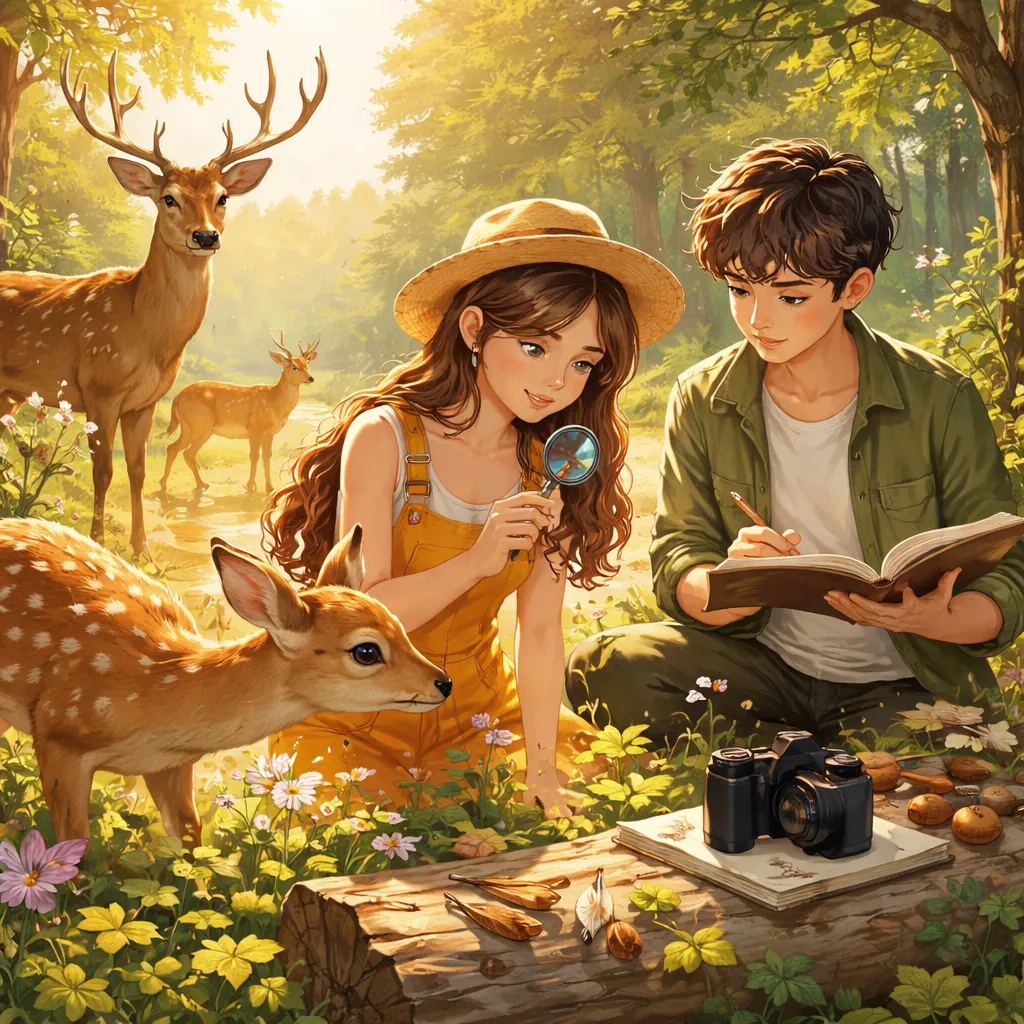

Have you ever spotted a deer in a forest, a park, or even in a storybook? With their long legs, big ears, and sometimes magnificent antlers, deer move with quiet grace. They are shy, gentle animals that live in woods and meadows all over the world. Learning about deer is a peaceful adventure that takes us to quiet, natural places. Let’s tiptoe softly and begin our journey of learning about deer beauty and behavior.
English Language Learning
Vocabulary and Spelling Our graceful friend is called a deer. The word "deer" is a noun. A noun names a person, place, or thing. So, a deer is a thing—a gentle, living animal. Spelling "deer" is simple: D-E-E-R. The 'D' starts the word, and it has two 'E's in the middle, like two watchful eyes, and ends with 'R'. D-E-E-R spells deer. The plural of deer is also deer!
Sound and Pronunciation Let’s say the word correctly. It sounds like this: /dɪr/. We can say it in one clear part. First, say the sound "d". It’s the sound at the start of "dog". Next, say "eer". It rhymes with "ear" that you hear with, or "near". Now, blend it together! "D" "eer". Deer! Great! The word "deer" has just one beat, or one syllable. Clap your hands once: Deer! It’s a soft, quick word.
Related Words Learning about deer is more fun with new words! Here are some important ones. Baby: A baby deer is called a fawn. A male deer is often called a buck, and a female is a doe. Body Part: The branched, bony structures on a buck’s head are called antlers. They are shed and regrow every year! Group: A group of deer is called a herd.
A Famous Saying There is a common phrase: "Like a deer in headlights." This means to be so surprised or scared that you freeze and can’t move. It comes from how a deer might stop suddenly when it sees car lights at night. It reminds us that surprise can make us pause, and to always be careful near roads. Say the phrase with me: "Like a deer in headlights." It’s a way to describe a moment of shock.
Now you know the word "deer"! Are you ready to leap into some amazing facts? Let’s bound from words to wonderful knowledge!
Animal Knowledge
Who Are They? – Family and Group What kind of animal is a deer? Deer are mammals. They have hair, are warm-blooded, and mother deer feed their babies milk. They are part of the cervidae family. This family includes elk, moose, and reindeer. Deer are known as ungulates, which means they have hooves.
What Do They Look Like? – Amazing Bodies Deer come in many sizes, from as small as a dog to as large as a horse! They usually have reddish-brown or grayish fur in summer and thicker, grayer fur in winter. This helps them hide. Their most famous feature, for bucks, is their antlers. Antlers are made of bone and grow from the buck’s head each spring. They are used for fighting other bucks and showing off. In winter, the antlers fall off! Deer have special adaptations. They have long, powerful legs for running fast and jumping high. Their large ears can turn to catch the smallest sound. Their eyes are on the sides of their head, giving them a wide view to spot danger.
Where Do They Live and How? – Home and Habits Deer live on every continent except Antarctica and Australia. Their homes are forests, woodlands, grasslands, and even some city parks. They need places with plants to eat and cover to hide. Deer are herbivores. This means they only eat plants. They are browsers, eating leaves, twigs, fruits, nuts, and grass. They do not have top front teeth, so they bite plants off with their hard bottom teeth and a rough pad on top. Deer are most active at dawn and dusk, which is called being crepuscular. They are social and often live in small herds, especially in winter. They spend their time foraging for food, resting, and staying alert.
A Deer’s Life Story – Growing Up A baby deer is called a fawn. Deer are mammals, so fawns are born live from their mother. A mother deer usually has one or two fawns at a time. The mother deer hides her fawn in tall grass or bushes. She leaves it alone for many hours to avoid attracting predators, returning only to feed it milk. The fawn’s spotted coat is perfect camouflage. Fawns are born with white spots that help them disappear in the dappled forest light. They can walk shortly after birth. They drink their mother’s milk for a few months, then start to eat plants. The spots fade as they grow.
How Do They "Talk"? – Communication Deer are mostly quiet, but they do make sounds. They can snort to warn others of danger. Fawns make a soft bleat to call their mother. They use their bodies a lot. A deer might stamp its hoof to signal alarm. They also use scent from glands on their legs and face to leave messages for other deer. Their best senses are their incredible hearing and sense of smell. Their large ears catch every rustle. Their nose is their best guide to finding food, sensing danger, and understanding the world.
Are They Okay? – Taking Care of Them Many deer are common, but some species are endangered or threatened. This means they need our help to survive. The main threats are losing their forest homes to buildings and farms, being hit by cars, and sometimes being hunted too much. In some places, they have trouble finding enough food. You can be a deer friend! You can learn about them and watch for deer crossing signs on roads. You can support groups that protect forests and wild lands. Never feed wild deer, as human food can make them very sick.
Life Connections and Inspiration
How to Be With Them – Safety and Love Deer are beautiful wild animals. We must always admire them from a safe and respectful distance. The most important rule is: Observe quietly from far away. If you see a deer in the wild, stop, be quiet, and watch. Never try to touch, chase, or feed a deer. If you see a fawn alone, leave it be—its mother is likely nearby. In parks or neighborhoods, keep your distance. We show our love by protecting the forests and fields they call home. We can be good neighbors to wildlife by driving carefully in areas where deer live.
Super Qualities We Learn from Them Deer teach us wonderful things. One super quality is gentle awareness and grace. Deer move quietly and are always aware of their surroundings. They teach us to move through our world with gentleness, to be aware of what’s around us, and to act with grace. Another quality is renewal and growth. Bucks grow new antlers every year. This reminds us that we can always grow, learn new things, and start fresh, just like a deer gets a new set of antlers. Think about it: How can you be more gently aware of your friends and surroundings? What is something new you would like to grow or learn this year?
Take Action! – Your "Deer Observer" Project Let’s do a fun and quiet activity! Your project is to become a wildlife artist and draw a deer in its habitat. Find a quiet spot, maybe by a window looking into a yard or park, or use a picture from a book. Watch carefully. What does the deer look like? What is it doing? Using paper and crayons, draw the deer. Add details like trees, grass, and the sky. Is it grazing? Is it listening? Write one sentence about your deer below your picture. This helps you practice quiet observation, just like a deer.
Closing Learning about deer grace is a peaceful and wonderful adventure! We learned the word "deer" and how to say its soft, one-syllable name. We discovered amazing facts about their growing antlers, their quiet habits, and their life in the herd. We know that deer are gentle, aware animals who are an important part of nature. You can use your new words to share stories about these graceful creatures. You can use your knowledge to watch wildlife safely and protect natural spaces. The animal world is full of gentle and renewing teachers. Always remember to respect wildlife from a distance, move through life with gentle awareness, and embrace your own growth. Keep exploring with quiet curiosity, appreciate the beauty of nature, and be a voice for all wild things. Your observant eyes and caring heart make you a true friend to the graceful deer.