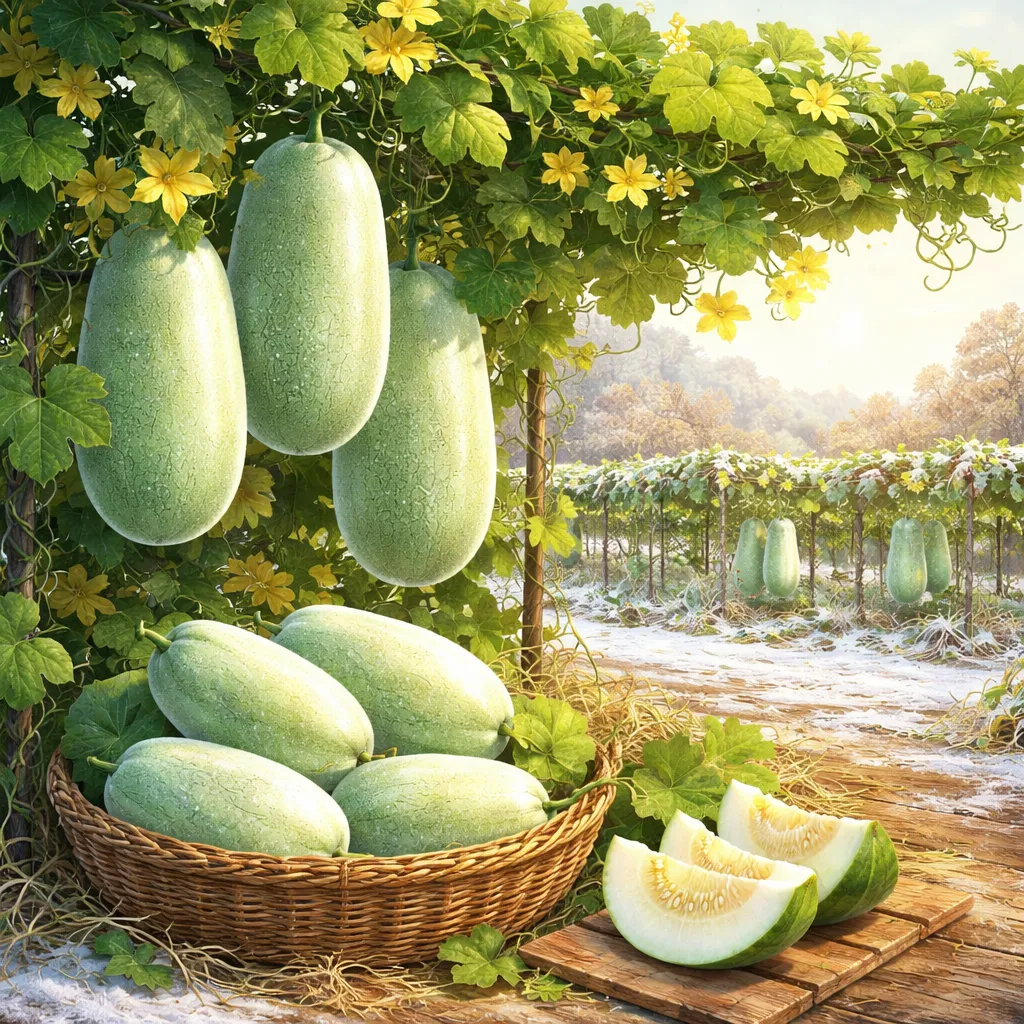

Have you ever seen a huge, pale green, oval vegetable in an Asian market? It can be as big as a beach ball! Its skin is covered in a soft, powdery white coating that looks like frost or dust. This amazing plant is a winter melon. It grows on a long vine during the hot summer, but its real magic is in its name—it can be stored for months and eaten in the winter! People love to cook it in warm, comforting soups. Let’s discover the giant, patient world of the Winter Melon plant.
Let’s Learn the Word! – Open the Treasure Box of Language
Formal Name and Pronunciation
This giant gourd is called Winter Melon. Its scientific name is Benincasa hispida. You can say it like this: /ˈwɪn.tər ˈmel.ən/ (WIN-ter MEL-un). The “Winter” is the cold season, and “Melon” is the fruit. Win-ter Mel-on. Say it: Winter Melon. In many places, it is called Wax Gourd or White Gourd.
The Etymology Tale
Its name tells its story! “Winter” because this melon can be stored and eaten long after harvest, often into the winter months. “Melon” comes from Latin and Greek words for apple or fruit. The name “Wax Gourd” comes from the waxy powder on its skin. Its scientific name honors an Italian count, Benincasa. Its name is a recipe for storage and time.
Nicknames and Friendly Aliases
This plant is known by names that describe its looks and use. Most commonly, it is Wax Gourd or Ash Gourd (for the ash-colored powder). In Chinese, it is Dong Gua (Winter Melon). Because it’s so big, it’s sometimes called the Tallow Gourd. The young, fuzzy fruit is called Mao Gua (Hairy Melon).
Building Your Word Web: Core Parts
Let’s learn the words for a Winter Melon plant’s giant body. The Fruit is the huge, oval melon with a hard, waxy rind. The Vine is the long, hairy stem that runs along the ground or climbs. The Leaf is large, round, and slightly fuzzy. The Flower is big, yellow, and grows alone. The Bloom is the white, powdery wax on the skin. The Flesh inside is white, mild, and full of seeds. A ripe fruit is a winter melon.
Action and State Words
Winter Melon plants are vigorous and patient. The vine sprawls and climbs. The fruit swells to a huge size. The waxy coating forms as it matures. The melon is harvested and can be stored for months. The flesh is cooked in soups or stews. A winter melon plant is gigantic, mild-flavored, heat-loving, and annual.
Ecosystem Friends Vocabulary
A winter melon patch is a shady, dense place. The large leaves create a cool, damp hiding spot for frogs and insects. The big, yellow flowers need to be pollinated, often by bees. The thick vine and hairy leaves can deter some pests. It is a tropical jungle in a small part of your garden.
Cultural Imprint in Language
In many Asian cultures, winter melon is a symbol of health, longevity, and coolness. It is a traditional food for hot summer days because it is thought to have a cooling effect on the body. A whole winter melon is sometimes used as a natural soup tureen—the soup is cooked and served right inside the hollowed-out melon! It represents clever cooking, tradition, and balance.
Ready for Discovery
We know its waxy, long-lasting name. Are you ready to be a garden explorer and discover how this plant makes its own natural wax coating? Let’s investigate the secrets of the Winter Melon plant.
Discover the Plant’s Secrets! – A Nature Detective’s Notebook
The Plant Passport
Winter Melon belongs to the Cucurbitaceae family, the gourd and pumpkin family. Its genus is Benincasa. It is a fast-growing, annual vine that can stretch over 20 feet. The leaves are large and heart-shaped. The fruit is a type of berry called a pepo, like a pumpkin. It can grow to be over 1 foot long and weigh 40 pounds or more! It is native to Southeast Asia and loves hot, humid, tropical weather.
Survival Smarts
The winter melon’s superpower is its wax coating. As the fruit matures, it secretes a white, powdery wax that covers its skin. This wax acts like a natural wrapper, sealing in moisture and protecting the fruit from bacteria and fungi. This is why it can be stored for so long without rotting! The vine grows aggressively to cover space and outcompete weeds, and the large leaves shade the soil to keep it moist.
Its Role and Gifts
In the garden, it is a vigorous ground cover. Its greatest gift is the fruit. The mild, white flesh absorbs the flavors of broths and spices beautifully. It is a star in Asian soups, stews, stir-fries, and even sweets and drinks. The seeds and young leaves are also sometimes eaten. The wax is even used in some traditional candies. It is the ultimate storage vegetable of the tropics.
Human History and Cultural Symbol
Winter melon has been cultivated in Southeast Asia for over 2,000 years. It spread to India and China along ancient trade routes. It was valued not just as food, but also in traditional medicine for its cooling properties. The ability to store it for use in the winter made it a crucial part of food security in ancient times. It represents foresight, preservation, and culinary tradition.
Fun “Wow!” Facts
Get ready for a wax fact! The white powder on a winter melon is natural wax, not mold! You can gently rub it off, and the green skin is underneath. And here’s a size fact: While not the heaviest, winter melons are among the longest gourds. Some varieties can grow over 2 feet long!
From Tiny Seed to Storage Giant
The story of the Winter Melon plant is one of tropical abundance. Would you like to try growing your own giant, waxy gourd? You need a lot of space and a hot summer! Let’s see how.
Let’s Grow It Together! – A Little Guardian’s Action Guide
Good for Home Growing?
Yes, if you have SPACE and HEAT! Winter melon vines are enormous. They need a huge garden bed or a very, very large container (like a half-barrel) with a super-strong trellis for the vines to climb. They need a long, hot growing season. It’s a major project, but growing your own giant melon is an unforgettable experience.
Little Gardener’s Toolkit
You will need winter melon seeds from a specialty store. You need the largest container possible or a big garden spot. Use rich, well-draining potting soil mixed with compost. Have a sturdy trellis or arch, a watering can, liquid fertilizer, and the sunniest, hottest spot in your yard ready.
Step-by-Step Growing Guide
Planting Your Future Giant
Start seeds indoors 4-6 weeks before the last frost. Plant them 1 inch deep. Transplant seedlings outside only when the soil and air are very warm. Plant near the base of a strong trellis. Space plants at least 6 feet apart. Water well. They need full, blazing sun all day.
Care Calendar
Water deeply and regularly. They are thirsty plants, especially when the fruit is swelling. Feed with a balanced liquid fertilizer every 2 weeks. Train the young vines onto the trellis. The most important job is supporting the fruit! When a melon starts to grow, you must support it with a sling made from cloth or netting tied to the trellis, or it will snap off.
Watch and Be Friends
Watch the vines climb the trellis with their curling tendrils. See the huge leaves and big yellow flowers. Watch for a tiny, fuzzy melon behind a female flower. It will grow longer and heavier every day. See the white, waxy powder slowly appear on the skin. Measure your melon’s length. Harvest before the first frost by cutting the stem, leaving a piece attached to the fruit.
Problem Diagnosis
If the plant has lots of flowers but no fruit, it might not be pollinated. Help by moving pollen from male to female flowers with a small brush. If leaves get powdery mildew, improve air flow and water at the soil. Squash bugs might visit; pick them off. The most common problem is not enough heat or not supporting the heavy fruit.
Your Rewards and Gifts
Your gift is the achievement of growing a giant. You are learning about tropical plants, heavy fruiting, and the science of food preservation. Caring for a winter melon teaches advanced planning, diligent support, and the deep patience required for a huge harvest. You become a grower of epic proportions.
Creative Fun
Start a Gourd Giant Journal. Draw the vine on the trellis. Measure the melon’s growth each week. Do a “wax test” by gently touching the powder. With an adult, help make a simple winter melon soup. Research a map of Southeast Asia and color the countries where winter melon is popular. Create a “wax gourd” character for a story. Design a strong sling or hammock for your growing melon out of old fabric.
Growing a Living Storage Container
By tending a winter melon, you are not just growing a vegetable. You are growing a lesson in botany and food science, a connection to Asian culinary heritage, and a natural wonder that comes with its own preservation wrapper. You are a cultivator of patience and abundance.
Conclusion and Forever Curiosity
What a giant, waxy, and patient journey from a seed to a storage marvel! You started to learn about the Winter Melon plant, you discovered its secrets as the wax-coated, long-keeping giant of the tropical vine, and you learned about the space and care it needs. You now know the Winter Melon plant is not just for soup; it is a lesson in natural preservation, a feat of engineering support, a staple of ancient diets, and a symbol of thoughtful abundance. Remember, its power is in its protective coat and its ability to wait. Your curiosity helps you appreciate the ingenious ways plants ensure their survival and nourish us. Keep taking on big growing challenges, exploring global food traditions, and asking how things are designed to last. Your adventure to learn about the Winter Melon plant shows us that the largest, longest-lasting treasures often require the most space, the strongest support, and the deepest patience.