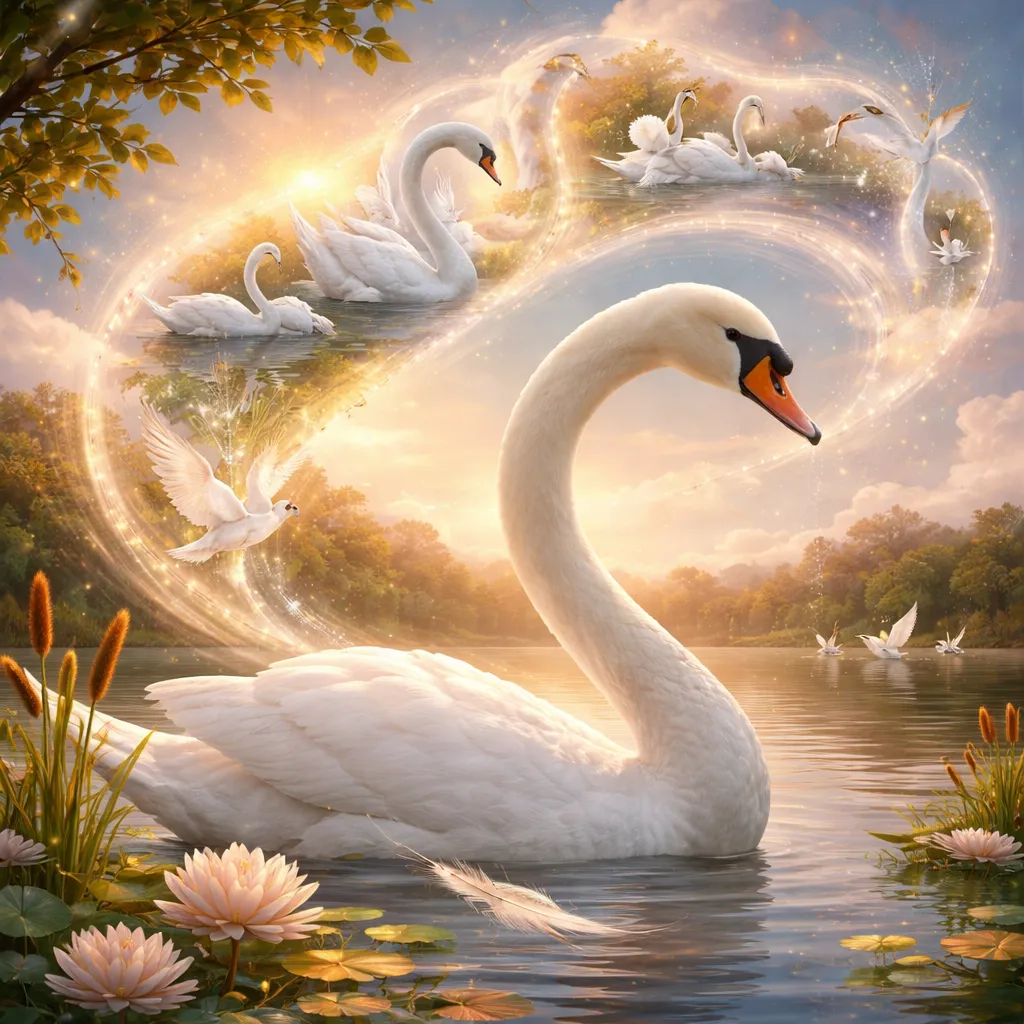

Have you ever seen a swan gliding across a pond in a park? With their long, curved necks and pure white feathers, they look like living sculptures moving on the water. Swans are often in stories and songs as symbols of beauty and grace. Learning about swans is a peaceful adventure that takes us to calm lakes and rivers. Let’s begin our journey of learning about swan elegance and life.
English Language Learning
Vocabulary and Spelling Our graceful water friend is called a swan. The word "swan" is a noun. A noun names a person, place, or thing. So, a swan is a thing—a large, beautiful water bird. Spelling "swan" is short: S-W-A-N. The 'S' starts the word, the 'W' and 'A' are in the middle, and it ends with 'N'. S-W-A-N spells swan.
Sound and Pronunciation Let’s say the word correctly. It sounds like this: /swɑːn/. We can say it in one clear part. First, say the sound "sw". It’s the sound at the start of "swing". Then, say "ahn". It rhymes with "on" or "dawn". Now, blend it together! "Sw" "ahn". Swan! Great! The word "swan" has just one beat, or one syllable. Clap your hands once: Swan! It’s a soft, smooth word.
Related Words Learning about swans is more fun with new words! Here are some important ones. Baby: A baby swan is called a cygnet. Group: A group of swans on the water is called a bevy. A group flying together is a wedge. Home: The water home of a swan is a pond, lake, or river.
A Famous Saying People often say: "As graceful as a swan." This means someone moves with smooth, beautiful, and elegant motions. It comes from the way swans glide so calmly on the water. It reminds us to move with care and beauty in our actions. Say the saying with me: "As graceful as a swan." Can you walk as gracefully as a swan swims?
Now you know the word "swan"! Are you ready to glide into some amazing facts? Let’s swim from words to wonderful knowledge!
Animal Knowledge
Who Are They? – Family and Group What kind of animal is a swan? Swans are birds. They are warm-blooded, have feathers, and lay eggs. They are part of the waterfowl family, called Anatidae. Their close cousins are ducks and geese. Swans are the largest members of this family. The most famous are the Mute Swan and the Trumpeter Swan.
What Do They Look Like? – Amazing Bodies Swans are very large birds, with a wingspan as wide as a tall person is tall! They usually have white feathers, but some species, like the Black Swan, are black. Their most famous features are their very long, flexible necks and their strong, broad wings. Their long neck is a super tool! It helps them reach underwater plants to eat. They can also curve it into a beautiful 'S' shape. Their powerful wings are used for flying and can look intimidating if they feel threatened. Swans have special adaptations. They have webbed feet for powerful swimming. A layer of soft down feathers under their outer feathers keeps them warm in cold water. They are strong fliers and can migrate long distances.
Where Do They Live and How? – Home and Habits Swans live in many parts of the world, like North America, Europe, Asia, and Australia. Their homes are freshwater lakes, slow rivers, ponds, and sometimes coastal bays. They need calm water with plants to eat. Swans are herbivores. This means they mostly eat plants. They are dabblers and up-enders, which means they tip their bodies up to reach underwater plants with their long necks. They also eat grains and grasses from the land. Swans are often seen in pairs or small family groups. They are active during the day. They spend their time swimming, feeding, and preening their feathers. They are usually not aggressive but will protect their nest and young bravely.
A Swan’s Life Story – Growing Up A baby swan is called a cygnet. Swans are birds, so cygnets hatch from eggs. Swans usually lay between three to eight eggs in a large nest made of reeds and grasses near the water. Both parents take care of the cygnets. The mother swan, called a pen, keeps the eggs warm. The father swan, called a cob, guards the nest. After hatching, the cygnets can swim and feed themselves almost right away, but the parents protect them. Cygnets are born with gray or brown fluffy feathers. They often ride on their mother’s back for safety and warmth. They stay with their parents for their first year. As they grow, their feathers turn white (or black, depending on the species). Swans often mate for life.
How Do They "Talk"? – Communication Swans are not very loud, but they do have voices. The Mute Swan is mostly quiet but can hiss and grunt. The Trumpeter Swan has a loud, trumpet-like call. They use a lot of body language. An angry or scared swan might arch its wings and lower its head. They also communicate with gentle touches and synchronized swimming with their mate. Their best senses are their excellent eyesight and hearing. They have good vision to see both in the air and underwater. Their ears are sensitive to sounds around their home.
Are They Okay? – Taking Care of Them Many swan species are doing well now because they are protected. But in the past, some were hunted too much. Some species, like the Bewick’s Swan, are threatened. The main threats are loss of wetland homes, pollution in the water, and sometimes lead poisoning from old fishing weights. They can also get hurt by fishing lines or hit by boats. You can be a swan friend! You can enjoy watching them from a distance. You can help keep ponds and lakes clean by not littering. If you fish, make sure to collect all your line and hooks. Support groups that protect wetlands.
Life Connections and Inspiration
How to Be With Them – Safety and Love Swans are large, wild birds. They are usually calm but can be defensive, especially near their nest. We must always admire them from a safe distance. The rule is: Watch quietly and do not approach. If you see a swan on a lake, watch from the shore. Never try to touch, chase, or feed a swan. If a swan hisses or spreads its wings, it is telling you to back away. Always give them space, especially in the spring when they have nests and cygnets. We show our love by protecting the clean, peaceful waterways they call home. We can be voices for wetlands and wild spaces.
Super Qualities We Learn from Them Swans teach us beautiful lessons. One super quality is grace under pressure. On the surface, a swan glides calmly, but underneath the water, its feet are paddling hard. This teaches us that staying calm and graceful on the outside, even when we are working hard, is a wonderful skill. Another quality is loyalty and lasting partnership. Swans often stay with the same mate for their whole life, raising their young together. This reminds us of the importance of commitment, caring for our family, and being a loyal friend. Think about it: How can you stay calm and graceful when you have a lot of work to do? How can you show loyalty and be a good friend or family member?
Take Action! – Your "Swan Lake" Project Let’s do a graceful and creative activity! Your project is to create a peaceful "swan lake" diorama. Find a shallow box or a plate. Use blue paper or paint to make water. Create a shoreline with pebbles, grass, or green paper. Make a simple swan: you can mold one from white clay or paper, or fold a paper swan. Place your swan on the water. You can add a nest with cotton ball cygnets. Make your scene peaceful and beautiful, just like a real swan’s home.
Closing Learning about swan grace is a beautiful and calming adventure! We learned the word "swan" and how to say its soft, one-syllable name. We discovered amazing facts about their long necks, their loyal partnerships, and their life on the water. We know that swans are elegant, strong birds who need clean lakes to thrive. You can use your new words to share stories about these majestic birds. You can use your knowledge to appreciate the importance of wetlands and loyal relationships. The animal world is full of graceful and loyal teachers. Always remember to respect wildlife from a safe distance, move through life with grace, and be a loyal and caring friend. Keep exploring with gentle curiosity, glide towards your goals with calm effort, and be a friend to the wild. Your thoughtful actions and graceful heart make you a true friend to the amazing swan.