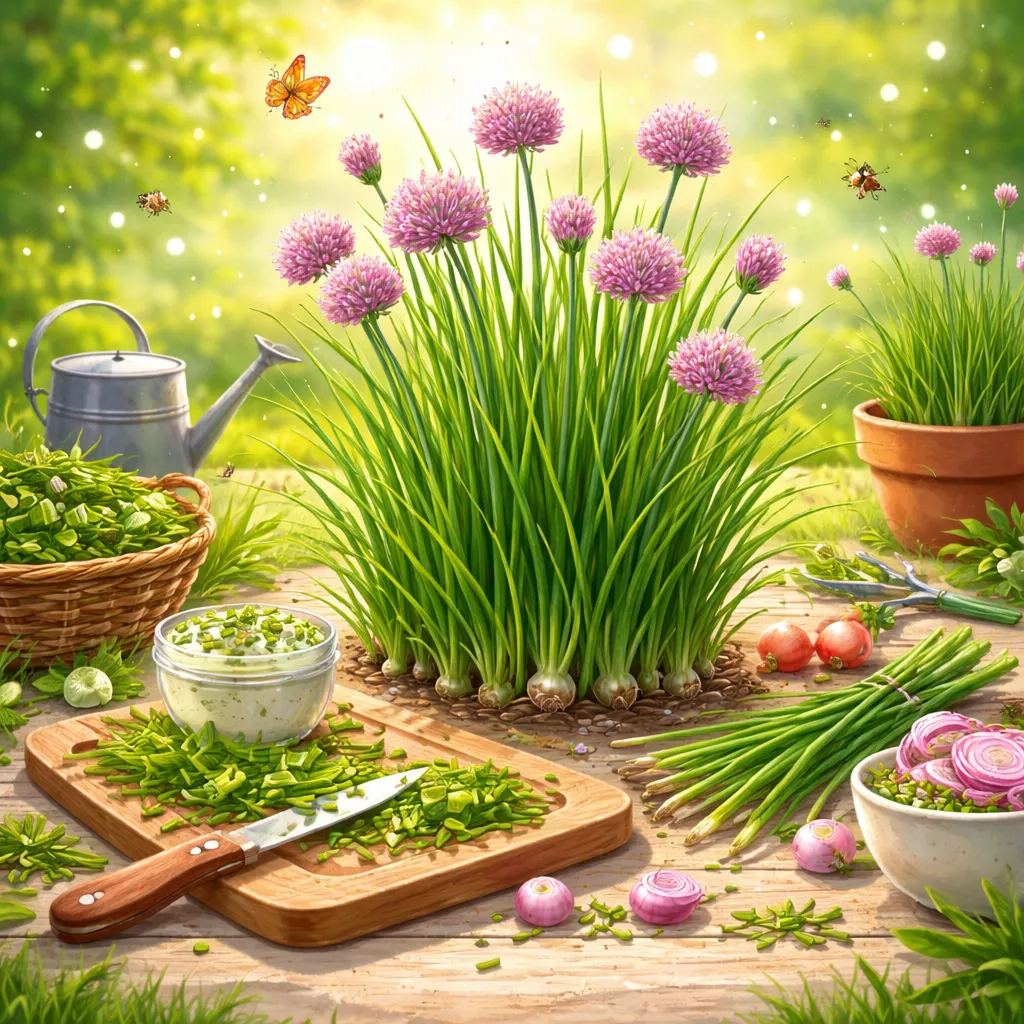

Have you ever seen a pot on a windowsill filled with what looks like thick, green grass? If you snip a piece and taste it, it has a delicious, mild, oniony flavor! This friendly plant is the smallest member of the onion family. It doesn’t make a big bulb underground. Instead, it grows in a neat clump of hollow, green tubes. In the spring, it surprises everyone with a beautiful ball of purple flowers. Let’s get ready to learn about the delightful and easy Chive plant.
Let’s Learn the Word! – Open the Treasure Box of Language
Formal Name and Pronunciation This grassy herb is called a Chive. Its scientific name is Allium schoenoprasum. You can say it like this: /tʃaɪv/ (ch-eye-v). It rhymes with “hive” and “drive.” Chive. Say it: Chive. It’s a short, snappy word.
The Etymology Tale The word “Chive” comes from the Latin word “cepa,” which means “onion.” Over a very long time, this word changed in French to “cive” and then in English to “chive.” So, its name literally means “little onion,” which is exactly what it is! Its name is a direct link to its onion family.
Nicknames and Friendly Aliases Chives are often called by names that describe their looks. Because of their leaves, they are called Onion Grass or Rush Leek. The common type is Common Chives or Garden Chives. The type with garlic flavor is Garlic Chives or Chinese Chives. Because they are so useful, they are simply a Culinary Herb.
Building Your Word Web: Core Parts Let’s learn the words for a Chive plant’s simple body. The Leaf is the long, thin, hollow, green tube we eat. The Clump is the whole bunch of leaves growing together. The Bulb is a very tiny, underground part. The Flower is a beautiful, round, purple puffball. The Scape is the tall, thin stem that holds the flower. A Sprig is a few leaves cut together. A Pot of chives is a chive plant.
Action and State Words Chive plants are neat and tidy. They grow in a clump. You can snip or shear the leaves with scissors. The plant regrows quickly. It flowers in late spring. The leaves are chopped for a garnish. A chive plant is hollow, mild, perennial, and clump-forming.
Ecosystem Friends Vocabulary A chive plant in bloom is a pollinator party! The beautiful purple flowers are a favorite restaurant for bees, butterflies, and other beneficial insects. The strong oniony smell of the leaves can help deter some pest insects from bothering nearby plants. It is a helpful and pretty friend in the garden ecosystem.
Cultural Imprint in Language Chives are a symbol of usefulness, practicality, and spring. They are not in many old sayings, but they are in many modern kitchens! They represent the idea that good things don’t have to be big or complicated. The phrase “fine as chives” could mean something is delicate and perfect. They are the friendly, reliable herb that is always there to make a meal look and taste better.
Ready for Discovery We know its oniony, grassy name. Are you ready to be a garden detective and discover the sweet secret of this plant’s purple flowers? Let’s explore the world of the Chive plant.
Discover the Plant’s Secrets! – A Nature Detective’s Notebook
The Plant Passport Chives belong to the Amaryllidaceae family. Their genus is Allium, the onion family. They are a small, bulb-forming perennial herb. The leaves are cylindrical, hollow, and deep green. The flowers are pretty, globe-shaped clusters of tiny purple blossoms on a single stalk. They grow wild in cool areas across Europe, Asia, and North America. They love full sun but can handle a little shade.
Survival Smarts Chives are tough and clever. They grow in dense clumps. This helps them hold each other up and share resources. Their small bulbs store energy to survive winter and sprout again early in spring. The onion flavor in their leaves is a mild chemical defense, protecting them from being eaten by deer and rabbits. After flowering, they make lots of tiny black seeds to spread new plants.
Its Role and Gifts In a garden, a chive plant is a beautiful, edible flower for pollinators. Its greatest gift is its leaf. Fresh chives have a gentle onion flavor. They are almost always used fresh, snipped over potatoes, soups, eggs, and salads to add a bright green color and a mild, tasty kick. The flowers are also edible and make a beautiful, tasty garnish. The whole plant is useful and pretty.
Human History and Cultural Symbol Chives have been used for over 5,000 years. The Chinese used them as early as 3000 BC. Marco Polo wrote about finding them in China. In medieval gardens, they were a common herb. They were brought to the Americas by European settlers. Today, they are a must-have in any kitchen herb garden. They represent ancient cooking, simplicity, and the joy of growing your own food.
Fun “Wow!” Facts Get ready for a flower fact! Each pretty purple puffball on a chive plant is actually made of hundreds of tiny, individual, star-shaped flowers! And here’s a kitchen fact: Chives are best added at the very end of cooking or used raw. Heat makes their lovely, mild flavor disappear.
From Windowsill Clump to Your Plate The story of the Chive plant is one of easy, reliable growth. Would you like to grow your own never-ending supply of fresh snippings? You can grow chives in a pot very easily! Let’s see how.
Let’s Grow It Together! – A Little Guardian’s Action Guide
Good for Home Growing? Perfect! Chives are one of the absolute best plants for children to grow. They are tough, grow quickly, and live for years. You can grow a big, happy clump in a small pot on a sunny windowsill, balcony, or doorstep. You can start snipping in just a few weeks. It’s the perfect first herb.
Little Gardener’s Toolkit You will need a packet of chive seeds or a small chive plant from a garden center. Get a small to medium pot with drainage holes. Use regular potting soil. Have a watering can, a pair of scissors, and a sunny spot ready.
Step-by-Step Growing Guide
Planting Your Tasty Grass You can plant seeds or a small plant in spring or fall. If using seeds, sprinkle them on the soil and press them in lightly. Water with a gentle spray. If using a plant, make a hole, place it in, and cover the roots. Water it well. Place the pot in a spot that gets at least 4-6 hours of sun.
Care Calendar Keep the soil moist but not soggy. Chives like consistent water. They love sunshine. You can feed them with a little liquid fertilizer once a month during the growing season. The most important care is to snip them! Cut leaves from the outside of the clump, about an inch from the soil. They will grow back in just a week or two.
Watch and Be Friends Watch for the first thin, green spikes. They will grow into a thick clump. Gently squeeze a leaf—it’s hollow! In late spring, watch for a tall, round bud that will open into a beautiful purple flower ball. Watch the bees visit. Snip leaves often for your meals. Your plant will be your green friend for years.
Problem Diagnosis If the leaves turn yellow, you might be overwatering. Let the soil dry a little. If the plant gets tall and floppy, it needs more sun. Chives have very few pests because of their onion smell. The most common “problem” is not cutting them enough, which can make the center of the clump get old. Just keep snipping!
Your Rewards and Gifts Your gift is an endless supply of fresh, homegrown flavor. You are learning about perennial plants, simple care, and the instant reward of harvesting. Caring for chives teaches gentle responsibility, daily observation, and the pride of growing something you can eat right away. You become a grower of instant gratification.
Creative Fun Start a Snip-and-Grow Journal. Draw your chive clump. Press a purple flower. Make a leaf stamp by dipping the end of a hollow leaf in paint. With an adult, make a simple cream cheese and chive spread. Create a pollinator menu card showing a bee’s favorite foods, with chive flowers at the top. Build a tiny “fairy ring” of chive plants in a small pot. Write a recipe for “Magic Green Dust” (dried, chopped chives) to sprinkle on food.
Growing a Pot of Perfection By planting chives, you are not just growing an herb. You are growing a lesson in simplicity, a bee café, and a living, edible decoration. You are a cultivator of easy, reliable joy.
Conclusion and Forever Curiosity What a simple, tasty, and wonderful journey! You started to learn about the Chive plant, you discovered its secrets as the hollow-leaved, purple-flowered cousin of the onion, and you learned how to grow and care for your own perfect clump. You now know the Chive plant is not just a garnish; it is a pollinator’s delight, a lesson in perennial growth, a whisper of ancient kitchens, and a symbol of friendly, useful simplicity. Remember, its power is in its gentle, reliable giving. Your curiosity helps you appreciate the small, perfect wonders that are easy to grow and wonderful to share. Keep snipping, tasting, and planting seeds of simple happiness. Your adventure to learn about the Chive plant shows us that the most delightful things are often the simplest, right at your fingertips.