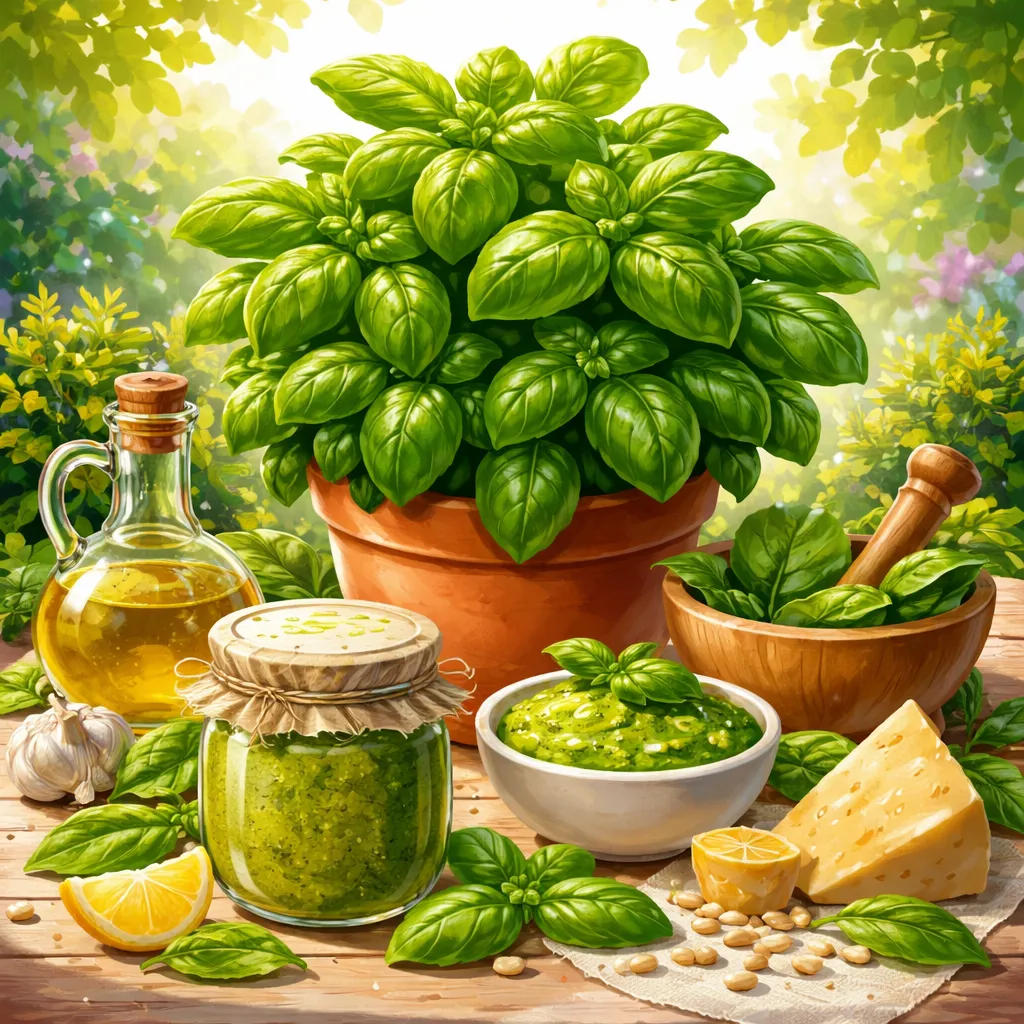

Have you ever eaten a plate of spaghetti with a delicious, bright green sauce called pesto? Or have you smelled a wonderful, fresh, almost spicy-sweet scent coming from a pot on a sunny windowsill? That amazing smell and taste come from a very popular herb. Its leaves are soft, green, and full of flavor. People all over the world love to cook with it. Let’s pinch a leaf and begin to learn about the tasty Basil plant.
Let’s Learn the Word! – Open the Treasure Box of Language
Formal Name and Pronunciation
This tasty herb is called Basil. Its scientific name is Ocimum basilicum. You can say it like this: /ˈbæz.əl/ (BA-zul). The “Ba” sounds like “cat,” and “sil” rhymes with “hill.” Ba-sil. Say it: Basil. It’s a regal-sounding word.
The Etymology Tale
The word “Basil” has royal roots! It comes from the Greek word “basileus,” which means “king” or “royal.” In ancient times, people thought this plant was so noble and important, they named it the “royal herb.” Its scientific name keeps this idea. What a kingly name for a kitchen herb!
Nicknames and Friendly Aliases
Basil has many delicious names. The most common type is Sweet Basil. The one for making pesto is Genovese Basil. There is also Thai Basil, Lemon Basil, Purple Basil, and Holy Basil. Because it’s used in cooking, it is often called a Culinary Herb. In India, holy basil is called Tulsi.
Building Your Word Web: Core Parts
Let’s learn the words for a Basil plant’s tasty body. The Leaf is the star—soft, oval, and gently textured. The Stem is square and can be green or purple. The Flower is small, white, or pink, and grows on a spike. The Node is the point on the stem where leaves grow. Pinching is the action of removing the top leaves to make the plant bushy. The Scent is the wonderful smell from the leaves. A Plant ready for picking is a basil plant.
Action and State Words
Basil plants are sun-loving growers. They sprout from tiny seeds. They grow quickly in warm soil. You pinch off the top to encourage branching. The leaves are harvested or picked. They are chopped or torn for cooking. A basil plant is aromatic, tender, sun-loving, and annual.
Ecosystem Friends Vocabulary
A basil plant on a patio is a small habitat. Bees love to visit the flowers. The strong smell of the leaves can help repel some nuisance insects like flies and mosquitoes from your sitting area. In the garden, it is a famous friend to tomato plants, helping to keep pests away. It is a helpful companion.
Cultural Imprint in Language
Basil is a herb of love, protection, and good food. In Italy, it is a symbol of love—giving a pot of basil was once a romantic gesture! An Italian saying is, “Where basil grows, love flows.” In many cultures, it is believed to bring good luck. The phrase “as fresh as basil” means something is wonderfully new and vibrant.
Ready for Discovery
We know its kingly, aromatic name. Are you ready to be a kitchen-garden detective and discover the secrets of this royal herb? Let’s explore the life of the Basil plant.
Discover the Plant’s Secrets! – A Nature Detective’s Notebook
The Plant Passport
Basil belongs to the mint family, Lamiaceae. Its genus is Ocimum. It is a tender annual herb. The stems are square, a classic mint family trait. The leaves are bright green, smooth, and can be large or small depending on the type. The flowers are small and grow in whorls. It is a tropical plant that loves heat and sunshine and does not like the cold.
Survival Smarts
Basil’s trick is in its leaves. They are packed with essential oils that give the plant its powerful scent and taste. In nature, this strong smell confuses pest insects or makes the leaves less tasty to them, protecting the plant. Another smart move is fast growth. It grows quickly in the summer heat, produces lots of leaves and seeds, and completes its life cycle in one season.
Its Role and Gifts
In the garden, basil is a companion plant. Its scent can mask the smell of nearby vegetables like tomatoes, tricking pests. Its flowers feed pollinators. Its greatest gift is its leaf. Fresh basil is the soul of Italian pesto, Caprese salad, and many Thai curries. Dried basil flavors sauces and soups. It is a cornerstone of culinary traditions around the world.
Human History and Cultural Symbol
Basil is native to tropical regions from Africa to Southeast Asia. It has been cultivated for over 5,000 years. In ancient Egypt, it was used in embalming. In India, holy basil (Tulsi) is a sacred plant in Hinduism, grown in temple courtyards. It traveled the Silk Road to Europe, where it became a kitchen staple. It represents a journey of flavor, faith, and tradition.
Fun “Wow!” Facts
Get ready for a variety fact! There are over 150 varieties of basil! They can taste like lemon, cinnamon, licorice, or even spicy Thai peppers. And here’s a kitchen fact: To keep the flavor best, add fresh basil leaves at the very end of cooking. Heat makes the lovely essential oils disappear!
From Sunny Pot to Your Plate
The story of the Basil plant is one of instant reward. Would you like to grow your own mini-forest of flavor? You can grow basil easily in a pot! Let’s see how.
Let’s Grow It Together! – A Little Guardian’s Action Guide
Good for Home Growing?
Absolutely perfect! Basil is one of the best herbs to grow at home. It loves a sunny spot and grows quickly from seed. You can grow a big, bushy plant in a medium-sized pot on a sunny windowsill, balcony, or doorstep. You can start picking leaves in just a few weeks. It’s a tasty, fast reward.
Little Gardener’s Toolkit
You will need a packet of basil seeds. Get a medium pot with drainage holes. Use good-quality potting soil. Have a watering can, a sunny spot, and your fingers ready for pinching.
Step-by-Step Growing Guide
Planting Your Kingly Herb
Plant basil seeds in late spring, after all danger of frost. The soil must be warm. Sprinkle the tiny seeds on top of the soil in your pot. Lightly cover them with a sprinkle of more soil. Water gently with a spray bottle. Place the pot in the sunniest, warmest spot you have.
Care Calendar
Keep the soil moist but not soggy until the seeds sprout. Once the plants are a few inches tall, water when the top soil feels dry. Basil loves full sun—at least 6 hours a day. When the plant has 6-8 leaves, pinch off the very top set. This makes it grow two new branches instead of one tall stem! Pick leaves regularly to keep it growing.
Watch and Be Friends
Watch for the first two tiny leaves (seed leaves), then the true basil leaves. See how the stem is square. Rub a leaf and smell your fingers. Watch it get bushier every time you pinch it. The most exciting part is when you can pick your first few leaves to add to a meal. You grew that flavor!
Problem Diagnosis
If the plant gets tall and skinny with few leaves, it needs more sun. If leaves turn yellow, you might be overwatering. Let the soil dry a bit. If you see tiny holes, look for slugs or beetles at night; pick them off. The main enemy is cold weather—it will turn the leaves black.
Your Rewards and Gifts
Your gift is the taste of summer. You are learning about seed growth, plant care, and where your food comes from. Caring for basil teaches daily attention, the reward of harvest, and the pride of cooking with something you grew yourself. You become a grower of flavor.
Creative Fun
Start a Chef Gardener’s Journal. Draw your plant each week. Make a leaf print by painting a leaf and pressing it on paper. With an adult, make a simple pesto or add fresh leaves to a pizza. Research a country that uses basil in its cooking and draw its flag next to a basil plant. Write a recipe for “Magical Basil Lemonade.” Create a “scent wheel” by smelling different herbs from your garden or store.
Growing a Pot of Flavor
By planting basil, you are not just growing an herb. You are growing a connection to world cuisines, a lesson in botany, and a delicious, edible reward. You are a cultivator of taste.
Conclusion and Forever Curiosity
What a fragrant, fast, and flavorful journey! You started to learn about the Basil plant, you discovered its secrets as the sun-worshipping, aromatic king of the herb garden, and you learned how to grow and harvest your own bushy plant. You now know the Basil plant is not just for pesto; it is a member of the mint family, a natural protector, a traveler through history, and a symbol of fresh, vibrant taste. Remember, its power is in the oils held in its soft leaves, released by your touch. Your curiosity helps you connect the dots between the garden and your plate. Keep exploring the world of herbs, tasting with an adventurous spirit, and planting seeds of delicious knowledge. Your adventure to learn about the Basil plant shows us that you can grow a whole world of flavor in just one little pot.