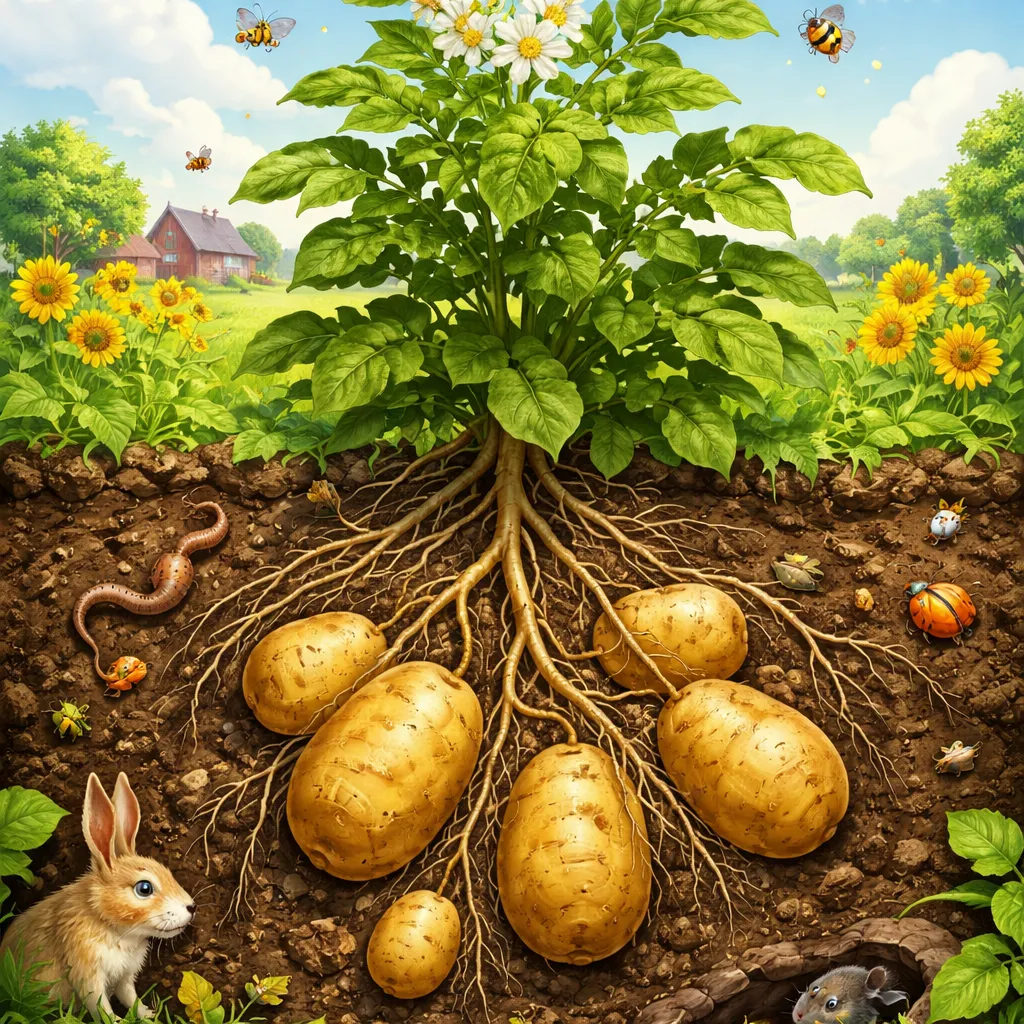

Think about a plate of crispy French fries, creamy mashed potatoes, or a hot baked potato. That delicious, starchy comfort food doesn’t start in the kitchen. It starts in the dark, cool soil. A leafy green plant grows above, with pretty flowers, but its secret treasure is hiding below. This amazing plant stores its energy in special, round lumps called tubers. People all over the world depend on this humble, powerful vegetable. Let’s dig in and learn about the incredible Potato plant.
Let’s Learn the Word! – Open the Treasure Box of Language
Formal Name and Pronunciation
This underground wonder is the Potato. Its scientific name is Solanum tuberosum. You can say it like this: /pəˈteɪ.təʊ/ (puh-TAY-toe). The “Po” sounds like “puh,” and “tato” rhymes with “plateau.” Po-ta-to. Say it: Potato. It’s a sturdy, round-sounding word.
The Etymology Tale
The word “Potato” traveled across an ocean! Spanish explorers in the 1500s found this plant in the Andes Mountains. They heard the local Taino word “batata” for a sweet potato. They used that word, and it changed in English to “potato.” Its name is a souvenir from ancient South American cultures.
Nicknames and Friendly Aliases
Potatoes have many fun, friendly names. A common nickname is Spud. People also call them Taters. The small, round ones are New Potatoes. The type for frying is a Russet or Idaho Potato. Because they are a staple food, they are called Earth Apples or the Humble Tuber.
Building Your Word Web: Core Parts
Let’s learn the words for a Potato plant’s secret body. The Tuber is the star—the stumpy, brown, edible part that grows underground. The Eye is the little dimple on the tuber where a new plant can sprout. The Stem is the green, above-ground part. The Leaf is compound, with many small leaflets. The Flower can be white, pink, or purple. The Root system spreads out from the stem. A Hill is the mound of soil where tubers form. A Field of potatoes is a potato field.
Action and State Words
Potato plants are patient hiders. You plant a seed tuber. The plant sprouts and grows bushy. The stems photosynthesize and send energy down. The tubers form and swell underground. The plant is harvested by digging. Potatoes are stored in a cool, dark place. A potato plant is starchy, underground, perennial (grown as annual), and productive.
Ecosystem Friends Vocabulary
A potato field is a busy place. Earthworms help aerate the soil the potatoes grow in. The Colorado potato beetle is a famous pest that eats the leaves. Some birds might eat the beetles. The plant is a food source, but it also has natural defenses. It is a central part of the farm ecosystem, feeding many people.
Cultural Imprint in Language
Potatoes are symbols of sustenance, hard work, and simplicity. A famous proverb says, “You can’t make French fries without peeling potatoes,” meaning big results require hard work. The term “couch potato” means someone who sits and watches TV a lot. Calling something a “hot potato” means it’s a difficult or controversial issue. The potato represents everyday life, nourishment, and sometimes, trouble!
Ready for Discovery
We know its earthy, sustaining name. Are you ready to be a soil detective and unearth the secrets of this underground marvel? Let’s explore the hidden world of the Potato plant.
Discover the Plant’s Secrets! – A Nature Detective’s Notebook
The Plant Passport
The Potato belongs to the nightshade family, Solanaceae. Its genus is Solanum, making it a cousin to tomatoes, peppers, and eggplants. It is a herbaceous perennial grown as an annual. The plant grows about 2 feet tall. The leaves are compound with paired leaflets. The flowers are five-pointed stars. The edible part is the tuber, a swollen underground stem that stores starch. It grows best in cool climates with deep, loose soil.
Survival Smarts
The potato’s genius is its tuber. The plant uses its leaves to collect sunlight and make sugar. It sends this energy down to the ends of special underground stems, which swell into tubers. These tubers store energy to help the plant survive winter and sprout again in spring. The plant also makes a natural toxin called solanine in its leaves and green tubers to protect itself from insects and animals.
Its Role and Gifts
In nature, the potato plant is part of the Andean mountain ecosystem. Its greatest gift to people is the tuber. Potatoes are a powerhouse of carbohydrates, vitamins, and minerals. They can be baked, boiled, fried, mashed, and roasted. They are the fourth-largest food crop in the world. They are also used to make starch, alcohol, and even bioplastics. It is a very versatile plant.
Human History and Cultural Symbol
Potatoes were first domesticated in the Andes over 7,000 years ago. Spanish conquistadors brought them to Europe in the 1500s. They slowly spread, becoming a crucial food that helped populations grow. The Great Irish Famine in the 1840s showed how dependent people had become on this one crop. Today, it is a global staple. It represents resilience, the dangers of relying on one crop, and the power of simple food.
Fun “Wow!” Facts
Get ready for a space fact! In 1995, potato plants were the first to be grown in space aboard the Space Shuttle Columbia! And here’s a variety fact: There are over 4,000 varieties of potatoes, coming in white, yellow, red, purple, and even blue!
From Eye to Underground Treasure
The story of the Potato plant is one of hidden growth. Would you like to grow your own buried treasure? You can grow potatoes in a bag, box, or garden! Let’s see how.
Let’s Grow It Together! – A Little Guardian’s Action Guide
Good for Home Growing?
Yes, it’s a fun and magical project! You don’t even need a garden. You can grow potatoes in a large bag, a deep bucket, or a special potato-growing container on a patio. The excitement is waiting and then dumping out the container to find your hidden potatoes. It’s like a treasure hunt!
Little Gardener’s Toolkit
You will need seed potatoes from a garden store (don’t use grocery store ones). Get a large, deep container (like a 20-gallon fabric bag or a trash can with holes). Use loose, rich potting soil or a compost mix. Have a watering can and a sunny spot ready.
Step-by-Step Growing Guide
Planting Your Hidden Treasure
Plant in early spring. Place a few inches of soil in your container. Take your seed potatoes (small ones whole, cut big ones so each piece has 2-3 eyes). Place them on the soil, eyes up. Cover with 3-4 inches of soil. Water well. Place the container in full sun.
Care Calendar
Keep the soil moist but not soggy. When the green stems grow about 8 inches tall, cover them halfway with more soil. This is called “hilling.” It encourages more tubers to form. Keep doing this as the plant grows. They need full sun. Water regularly, especially when tubers are forming.
Watch and Be Friends
Watch for the first green shoots. The plant will grow into a small bush. You might see flowers. The magic is happening below! After the plant flowers and the leaves start to turn yellow, stop watering. Wait a week, then get ready for the harvest. Gently dump out your container or dig with your hands to find the potatoes. It’s a wonderful surprise!
Problem Diagnosis
If leaves have holes, look for Colorado potato beetles (yellow and black striped); pick them off. If leaves turn yellow and wilt early, it might be a disease; remove the plant. The most common problem is overwatering, which can rot the tubers. Let the soil dry a bit between waterings. Green tubers have solanine; don’t eat them, just plant them deeper next time.
Your Rewards and Gifts
Your gift is the joy of the harvest hunt. You are learning about plant growth, food production, and patience. Caring for potatoes teaches responsibility, observation, and the thrill of discovering food you grew yourself. You become a grower of your own sustenance.
Creative Fun
Start a Underground Explorer’s Journal. Draw your plant’s growth. Make potato prints by carving a shape into a halved potato, dipping it in paint, and stamping. With an adult, cook your homegrown potatoes—they taste amazing! Research the Inca Empire and draw a picture of their terraced potato farms. Weigh your harvest. Write a “Diary of a Potato” from planting to plate. Build a simple circuit with a potato to power a tiny LED light (a classic science experiment!).
Growing a Bag of Surprises
By planting potatoes, you are not just growing a vegetable. You are growing a history lesson, a science experiment, and a delicious reward for your patience. You are a cultivator of curiosity and food.
Conclusion and Forever Curiosity
What a humble, hidden, and world-changing journey! You started to learn about the Potato plant, you discovered its secrets as the tuber-forming, starch-storing hero of the underground, and you learned how to grow your own bag of buried treasure. You now know the Potato plant is not just a side dish; it is a lesson in botany, a chapter in human history, a survivor’s food, and a symbol of simple, powerful nourishment. Remember, its true value is hidden from view, waiting for the right time to be discovered. Your curiosity is the shovel that helps you dig up the most amazing stories. Keep exploring the roots of your food, asking about the plants that feed the world, and planting seeds of wonder that yield delicious knowledge. Your adventure to learn about the Potato plant shows us that the greatest treasures are often buried, waiting for a curious gardener to find them.