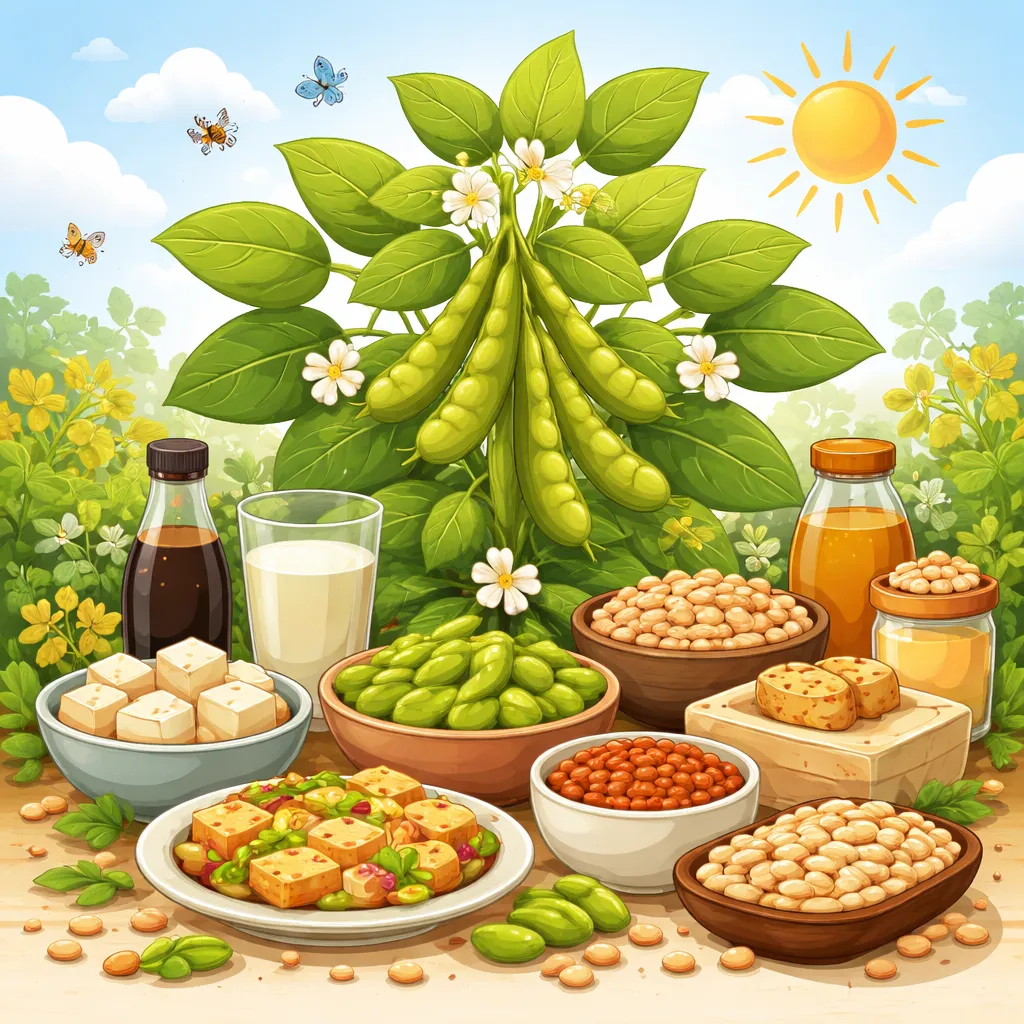

Do you know what is in your veggie burger, your soy milk, or even the sauce on your sushi? Many of these foods start as a small, green plant growing in a sunny field. This plant is a bushy, leafy friend that grows clusters of fuzzy little pods. Inside each pod are two to four small, round beans. These beans are super-powered! They are packed with protein and can be turned into milk, oil, sauce, and even meat substitutes. Let’s dig into the amazing world of the Soybean plant.
Let’s Learn the Word! – Open the Treasure Box of Language
Formal Name and Pronunciation This versatile plant is called the Soybean. Its scientific name is Glycine max. You can say it like this: /ˈsɔɪ.biːn/ (SOY-bean). The “Soy” rhymes with “toy,” and “bean” is, well, bean! Soy-bean. Say it: Soybean. It’s a simple, solid-sounding word.
The Etymology Tale The word “Soy” comes from the Japanese word “shōyu,” which means soy sauce! The bean was named after its most famous product. The word traveled from Asia to Europe. The “bean” part was added because that’s what it is. So, its name means “the bean for making soy sauce.” It’s a name that tells you about its most delicious job.
Nicknames and Friendly Aliases Soybeans have many names. The young, green pods you eat as a snack are Edamame. The dried, mature beans are often just called Soya Beans or Soy. Because they are so rich in protein, they are called the Miracle Bean or the Protein King. In farming, they are a vital Cash Crop or Oilseed Crop.
Building Your Word Web: Core Parts Let’s learn the words for a Soybean’s productive body. The Plant is bushy and leafy. The Leaf is compound, made of three smaller leaflets, and looks a bit like a clover or a mitten. The Flower is small, white, or purple, and grows in clusters. The Pod is the fuzzy, green house that holds the beans. Each Bean is the seed inside the pod. The Root has special nodules that look like tiny bumps, home to helpful bacteria. A Field of soybeans is a soybean field.
Action and State Words Soybeans are busy and beneficial. They fix nitrogen from the air into the soil with their root nodules. They grow quickly in the summer heat. Farmers harvest the dry, brown pods. The beans are processed into many foods. A soybean plant is nutritious, nitrogen-fixing, versatile, and annual.
Ecosystem Friends Vocabulary The soybean field is a habitat. Bees visit the flowers. Deer and other animals sometimes nibble on the plants. The most important friends are underground—the Rhizobia bacteria. These tiny helpers live in the root nodules and take nitrogen from the air, turning it into plant food. This partnership feeds the soybean and enriches the soil for the next crop.
Cultural Imprint in Language Soybeans are central to food culture in Asia. A Chinese proverb says, “One who has soybeans has food.” This means soybeans are a foundation of life and cooking. In Japan, the arrival of the first soybeans is celebrated. Soy represents transformation, health, and the ingenuity of turning a simple bean into a hundred different nourishing foods.
Ready for Discovery We know its protein-packed, saucy name. Are you ready to be a farm detective and discover how this little bean feeds the world in so many ways? Let’s explore the secrets of the Soybean plant.
Discover the Plant’s Secrets! – A Nature Detective’s Notebook
The Plant Passport Soybeans belong to the legume family, Fabaceae, the same family as peas, beans, and peanuts. Its genus is Glycine. It is an annual plant that grows about 2 to 3 feet tall. The leaves are trifoliate (three-part). The flowers are small and not very showy. The fruit is the pod, containing 2-4 beans. The beans can be yellow, green, black, or brown. It grows in warm climates with a long growing season and is a major crop in the Americas and Asia.
Survival Smarts The soybean’s superpower is in its roots. The root nodules host special bacteria. These bacteria grab nitrogen, a gas from the air, and “fix” it into a form the plant can use as food. This is like the plant having its own built-in fertilizer factory! This means soybeans can grow in soil that isn’t very rich, and they actually improve the soil for the next plants that grow there. Another trick is its quick growth, which helps it outcompete weeds.
Its Role and Gifts Soybeans are environmental and nutritional heroes. As a legume, they enrich farm soil, reducing the need for chemical fertilizers. Their most famous gift is the bean. It is crushed for oil (used in cooking and many products). The leftover meal is high-protein feed for animals. For people, the whole bean is turned into tofu, tempeh, soy milk, miso, and soy sauce. It is one of the most useful plants on Earth.
Human History and Cultural Symbol Soybeans were first domesticated in China over 3,000 years ago. They were considered one of the five sacred grains. Knowledge of soy foods like tofu and soy sauce spread across East Asia. In the 20th century, soybeans became a major global crop, especially for animal feed and vegetable oil. Today, they are a symbol of global agriculture, plant-based protein, and food science innovation.
Fun “Wow!” Facts Get ready for a number fact! One acre of soybeans can produce enough protein to feed a person for over 2,000 days! And here’s a space fact: Soybeans were the first seeds to be successfully sprouted, grown, and harvested in space aboard a space station. They are truly an out-of-this-world plant!
From Ancient Field to Your Garden The story of the Soybean plant is one of incredible usefulness. Would you like to grow your own protein-packed beans? You can grow soybeans in your garden or a pot! Let’s see how.
Let’s Grow It Together! – A Little Guardian’s Action Guide
Good for Home Growing? Yes, you can! Soybeans are easy and fun to grow. They need a warm, sunny spot and a long summer. You can grow a productive patch in a garden bed. For pots, choose a “bush” type and use a large, deep container. You can even grow them to eat as fresh, green edamame! It’s a tasty project.
Little Gardener’s Toolkit You will need a packet of soybean seeds (look for varieties labeled for “edamame” or “vegetable soybean”). Get a few large, deep pots or find a sunny garden spot. Use rich, well-draining potting soil. Have a watering can, some compost, and a sunny spot ready.
Step-by-Step Growing Guide
Planting Your Protein Powerhouse Plant soybeans in late spring, after the last frost and when the soil is warm. Plant the seeds about 1 inch deep and 3-4 inches apart. If in pots, plant 2-3 seeds per large pot. Water the soil well. They need warmth to sprout happily.
Care Calendar Keep the soil moist until the seedlings pop up. Once growing, water them regularly, especially when they are flowering and making pods. They love full sun. You can give them a little compost as a treat, but they don’t need much fertilizer because they make their own nitrogen! Weed carefully around them when they are small.
Watch and Be Friends Watch for the first two leaves, then the three-part “mitten” leaves. The plants will get bushy. Look for the small white or purple flowers. Then, watch the tiny, fuzzy pods form. For edamame, harvest the pods when they are bright green, plump, and almost filling the pod. For dry beans, let the pods turn brown and dry on the plant.
Problem Diagnosis If leaves turn yellow, it might be overwatering or a nutrient issue, but check the roots first for the healthy pink nodules! If you see holes in leaves, look for beetles; pick them off. The most common problem is not enough sun or planting too early in cold soil. Be patient for warm weather.
Your Rewards and Gifts Your gift is growing one of the world’s most important foods. You are learning about plant partnerships, patience, and the journey from seed to a protein-rich meal. Caring for soybeans teaches responsibility, observation, and a deep appreciation for the plants that nourish our bodies and our planet. You become a grower of health and sustainability.
Creative Fun Start a Transformation Journal. Draw your plant and all the foods that can come from it. When you harvest edamame, boil the pods (with adult help) and have a fun pod-popping snack, drawing the experience. Make a collage of pictures showing soy foods from around the world. Research the journey of the soybean from ancient China to your plate and make a simple timeline. Write a recipe for your own imaginary “Super Soy Smoothie.”
Growing Food and Knowledge By planting soybeans, you are not just growing beans. You are growing a lesson in agriculture, nutrition, and global connections. You are a cultivator of understanding.
Conclusion and Forever Curiosity What a protein-packed, global journey! You started by learning the word “Soybean,” you discovered its secrets as the nitrogen-fixing, protein-rich miracle bean, and you learned how to grow your own patch of this versatile plant. You now know the Soybean plant is not just for tofu; it is a soil enricher, a cornerstone of global food systems, a marvel of food science, and a symbol of transformation. Remember, its power is in its partnerships and its incredible usefulness. Your curiosity helps you see the amazing potential in a single seed. Keep asking about where your food comes from, tasting new things, and planting seeds of discovery. Your adventure to learn about the Soybean plant shows us that small, humble beans can hold the power to feed, fuel, and shape our world.