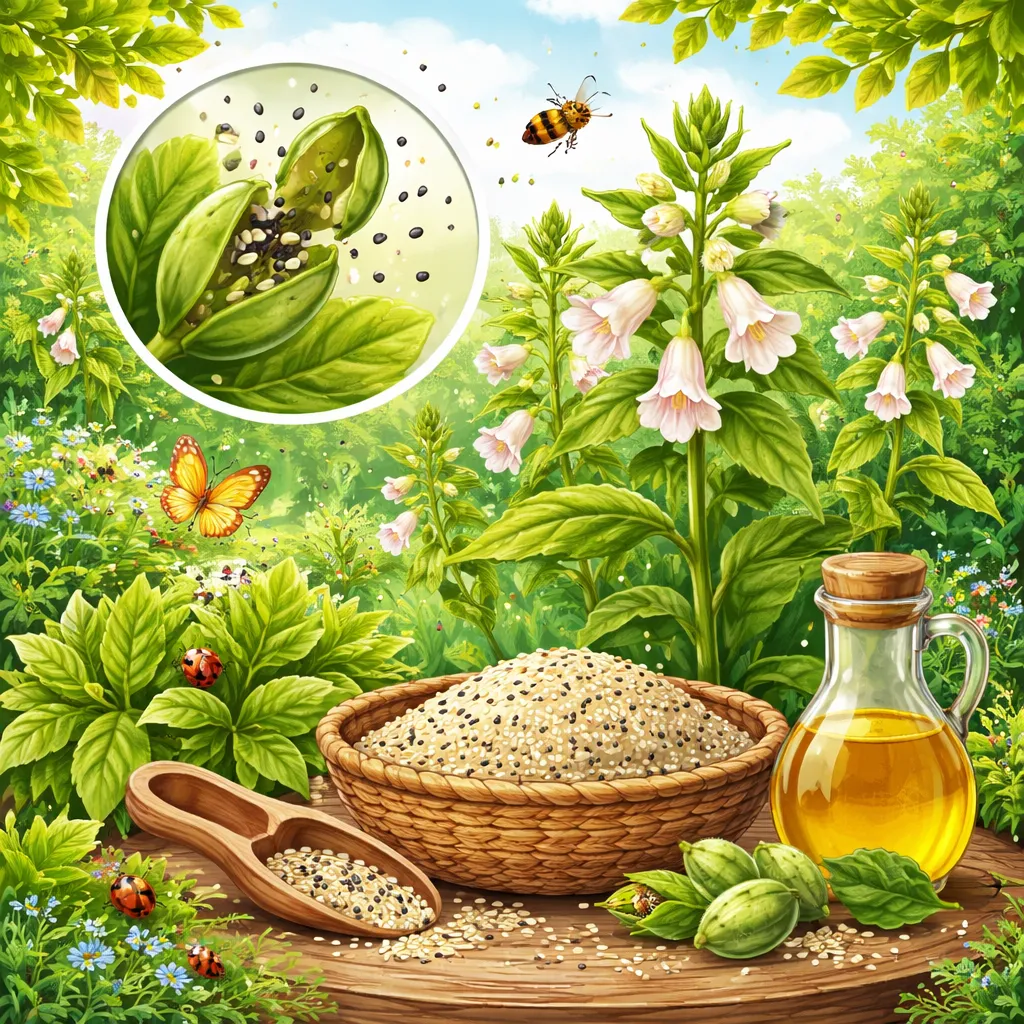

Have you ever taken a bite of a warm, soft bagel or a hamburger bun and noticed tiny, crunchy seeds on top? Or maybe you’ve had a sweet candy bar that was both chewy and a little nutty? Those tiny seeds are sesame seeds! They are so small you could fit dozens on your thumbnail, but they are full of flavor and oil. The plant they come from is tall, green, and has pretty bell-shaped flowers. When the seed pods are ready, they dry and pop open with a soft click! Let’s discover the small but mighty Sesame plant.
Let’s Learn the Word! – Open the Treasure Box of Language
Formal Name and Pronunciation
This ancient seed bearer is called Sesame. Its scientific name is Sesamum indicum. You can say it like this: /ˈses.ə.mi/ (SESS-uh-mee). The “Se” sounds like “yes,” and “same” is like the word. Sess-a-me. Say it: Sesame. It’s a smooth, almost magical-sounding word.
The Etymology Tale
The word “Sesame” has a long journey! It comes from the Arabic word “simsim,” which passed into Greek as “sēsamon,” then into Latin, and finally into English. Its name traveled along ancient trade routes with the precious seeds. The scientific name “indicum” means “from India,” one of the places it has been grown for thousands of years.
Nicknames and Friendly Aliases
Sesame is known by beautiful names around the world. In India, it is called Til. In West Africa, it is Benne. In other places, it is called Gingelly or Simsim. Because of its famous oil, it is often called the Queen of Oilseeds. The phrase “Open Sesame!” from the story of Ali Baba makes it a seed of magic and surprise.
Building Your Word Web: Core Parts
Let’s learn the words for a Sesame plant’s body. The Plant is an tall, upright annual, often 3 to 6 feet high. The Leaf is long, oval, and can be smooth or a bit fuzzy. The Flower is bell-shaped, tubular, and can be white, pink, or pale purple. The Capsule or Pod is the fruit that holds the seeds; it is rectangular and has grooves. A single Seed is the tiny, flat, oval sesame seed. The Oil is the precious liquid pressed from the seeds. The Root system is strong and helps the plant stand tall.
Action and State Words
Sesame plants are tough and patient. They grow tall in hot weather. The flowers bloom along the stem. The green pods dry and turn brown. When completely dry, the pods split or dehisce open with a pop! Farmers must harvest the plants carefully before all the pods burst open. Sesame is drought-tolerant, oil-rich, fragile when dry, and ancient.
Ecosystem Friends Vocabulary
A sesame field is a sunny, buzzing place. Bees and other pollinators love to visit the nectar-rich flowers. The flowers provide important food for them. The tall plants can give a little shade to the soil, helping keep it moist. After harvest, the leftover stalks can be used as mulch or feed, returning nutrients to the earth.
Cultural Imprint in Language
Sesame is wrapped in story and tradition. The most famous phrase is “Open Sesame!” from One Thousand and One Nights—a magical command that opens a treasure cave, just as the ripe pod opens to reveal its seed treasure. In Hindu tradition, sesame seeds symbolize immortality and are used in rituals. In many cultures, eating foods with sesame in the New Year brings good luck and prosperity. It is a seed of magic, blessing, and long life.
Ready for Discovery
We know its ancient, magical name. Are you ready to be a farm detective and discover how this tall plant protects its tiny treasure? Let’s explore the secrets of the Sesame plant.
Discover the Plant’s Secrets! – A Nature Detective’s Notebook
The Plant Passport
Sesame belongs to the Pedaliaceae family. Its genus is Sesamum. It is an annual plant that loves heat. It grows straight up on a square, hairy stem. The leaves are broad at the bottom and narrower higher up. The flowers grow directly from the stem, and each one can become a seed capsule. The capsule is about an inch long and has sections that split open when dry. The seeds inside can be white, golden, brown, or black. It needs a long, hot, frost-free growing season.
Survival Smarts
Sesame is a champion of hot, dry places. Its deep taproot helps it find water far underground, so it can survive droughts where other plants might wilt. Its most famous trick is in its seed pod. The capsules dry on the plant. When they are completely dry, the seams split open suddenly! This is called dehiscence. In the wild, this scatters the seeds away from the parent plant. For farmers, it means they must harvest at just the right time—before all the pods “shatter” and spill the seeds on the ground.
Its Role and Gifts
Sesame plants help break up soil with their deep roots. Their greatest gift is the seed. Sesame seeds are incredibly rich in oil (up to 50-60%) and protein. The oil is used for cooking, in salads, and even in cosmetics. The seeds are eaten whole on bread, in candy (like halva and brittle), and ground into a delicious paste called tahini. The seed meal left after pressing oil is used as animal feed. It is a plant of zero waste.
Human History and Cultural Symbol
Sesame is one of the oldest oilseed crops known, grown in India and the Middle East over 5,000 years ago. It was highly valued in ancient Babylon and Assyria. The seeds were carried along the Silk Road and traded across continents. Today, it remains a vital crop in tropical and subtropical regions worldwide. It symbolizes ancient trade, resilience in tough climates, and the rich, hidden value within small things.
Fun “Wow!” Facts
Get ready for a shatter fact! The phrase “Open Sesame!” is perfect because ripe sesame pods can burst open with a tiny, audible pop or click when touched, scattering their seeds. And here’s an oil fact: Sesame oil is so stable it resists going rancid (spoiling) for a long time, which is why it was so valuable to ancient people before refrigeration.
From Ancient Trade to Your Garden
The story of the Sesame plant is one of heat, oil, and careful timing. Would you like to try growing your own tall stalks of this ancient seed? You can grow sesame in a warm, sunny garden! Let’s see how.
Let’s Grow It Together! – A Little Guardian’s Action Guide
Good for Home Growing?
Yes, if you have a long, hot summer! Sesame needs 3-4 months of warm to hot, frost-free weather. It’s perfect for a sunny garden bed. You can also grow one or two plants in a very large, deep pot. They grow tall and make pretty flowers. The challenge—and fun—is catching the pods before they pop open!
Little Gardener’s Toolkit
You will need a packet of sesame seeds from a garden store (not grocery store seeds, which are often toasted). Get a large, deep pot with good drainage or find a sunny garden spot. Use well-draining, sandy loam soil if you can. Have a watering can and a very sunny spot ready.
Step-by-Step Growing Guide
Planting Your Ancient Seed
Wait until the soil is very warm, after the last frost. Plant the seeds about half an inch deep and 6-12 inches apart. They are tiny, so scatter them carefully. Cover lightly with soil, pat down gently, and water well. Place in the sunniest, hottest spot in your garden.
Care Calendar
Keep the soil moist until the seedlings are a few inches tall. Once established, sesame is quite drought-tolerant. Water it only when the soil is dry. It loves blazing hot sun and heat. You don’t need to fertilize much; too much food makes lots of leaves but fewer seeds. Thin the seedlings so the strongest plants have space.
Watch and Be Friends
Watch for the first pair of leaves. The plant will grow tall and sturdy. Look for the beautiful bell-shaped flowers along the stem. After the flowers fade, small green capsules will form. Watch them swell and slowly change from green to yellow, then to brown. This is the exciting part! Gently touch a dry brown pod—you might feel it start to split! Listen closely for a tiny click.
Problem Diagnosis
If the plant stays small and doesn’t flower, it’s not hot enough. If leaves turn yellow, it might be overwatered. Let the soil dry out. The biggest “problem” is the pods shattering. You can place a clean sheet or bag under the plants to catch seeds from open pods, or harvest the whole plant when the lower pods are brown but the upper ones are still yellowish-green.
Your Rewards and Gifts
Your gift is growing a piece of living history. You are learning about seed dispersal, patience, and the precise timing of harvest. Caring for sesame teaches observation, responsibility, and the thrill of collecting your own tiny, oil-rich seeds. You become a grower of ancient treasures.
Creative Fun
Start a Magic Seed Journal. Draw your tall plant. Press a leaf and a flower. When pods are dry, carefully open one over a plate and count the seeds. Use a few of your homegrown seeds to make a picture by gluing them on paper. With an adult, make a simple tahini sauce or sprinkle seeds on a salad. Research the story of Ali Baba and the phrase “Open Sesame!” and draw your own treasure cave. Write a short poem about the quiet pop of a seed pod.
Growing a Jar of Magic
By planting sesame, you are not just growing a plant. You are growing a connection to ancient stories, a lesson in careful harvesting, and an appreciation for the mighty power of tiny seeds. You are a cultivator of magic and history.
Conclusion and Forever Curiosity
What a tall, sunny, and surprising journey! You started to learn about the Sesame plant, you discovered its secrets as the drought-tolerant, pop-open seed bearer, and you learned how to grow and carefully harvest your own. You now know the Sesame plant is not just a topping; it is a child of the hot sun, a master of timing, a treasure chest of oil, and a seed of legend and magic. Remember, its power is held tight until the exact right moment. Your curiosity is the key that opens all sorts of wonderful doors in nature. Keep looking closely at the small things, listening for tiny sounds, and wondering about the ancient stories of the plants we eat. Your adventure to learn about the Sesame plant shows us that sometimes, the greatest magic is knowing just when to listen for the pop.