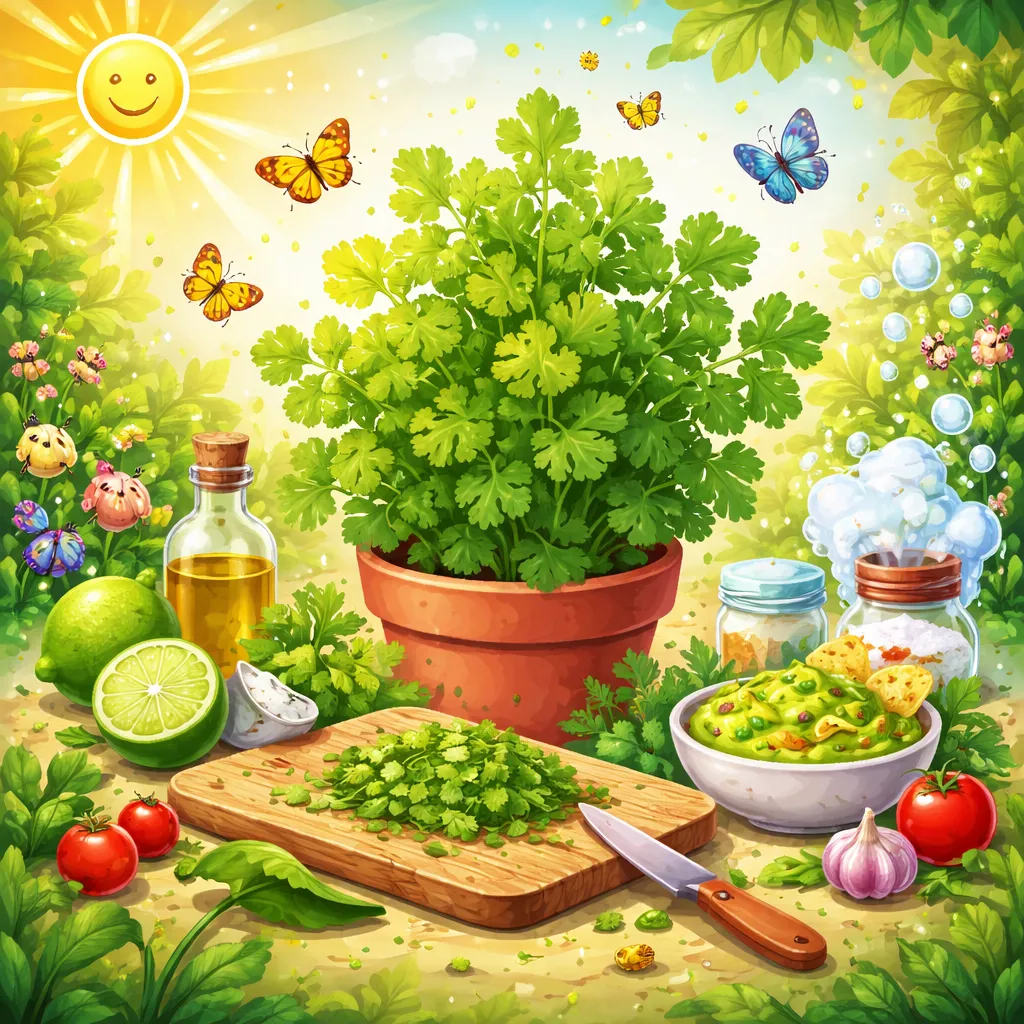

Have you ever eaten a fresh, crunchy taco with salsa or a bowl of spicy curry? There’s a good chance a very special leafy green herb was sprinkled on top. This plant has a bright, bold, and unique flavor. Some people say it tastes like fresh, citrusy sunshine, while others think it tastes a bit like soap! This amazing plant is also two foods in one: its leaves are called cilantro, and its dried seeds are called coriander. Let’s explore the surprising world of the Cilantro plant.
Let’s Learn the Word! – Open the Treasure Box of Language
Formal Name and Pronunciation
This double-duty plant is called Cilantro. Its scientific name is Coriandrum sativum. You can say it like this: /sɪˈlæn.trəʊ/ (sih-LAN-troh). The “Ci” sounds like “si” in “silly,” and “lant” rhymes with “plant.” Ci-lan-tro. Say it: Cilantro. In many places, the leaves and plant are called Coriander.
The Etymology Tale
The word “Cilantro” comes from the Spanish word for the plant, which came from the Latin word “coriandrum.” That Latin word came from the ancient Greek word “koris,” which means “bedbug”! Why? Because some people long ago thought the fresh leaves smelled a bit like bedbugs! The name “coriander” is used for the seeds. Its name has a funny, ancient history.
Nicknames and Friendly Aliases
This plant is known by its two main parts. The fresh, green leaves are Cilantro (in the Americas) or Coriander Leaves (in the UK and Asia). The dried, round seeds are Coriander Seeds. The whole plant is Chinese Parsley or Dhania. Because it’s used so much, it’s simply a Culinary Herb.
Building Your Word Web: Core Parts
Let’s learn the words for a Cilantro plant’s body. The Leaf is the delicate, lacy, flat part we chop for salsa. The Stem is thin, hollow, and grooved. The Flower is tiny, white, or pale pink, and grows in an umbrella-shaped cluster. The Seed is the small, round, beige coriander seed. The Root is a taproot. A Sprig is a small stem with leaves. A Bunch is many sprigs together. A Patch of plants is a cilantro patch.
Action and State Words
Cilantro plants are fast but brief. They grow quickly from seed. They bolt (send up a tall flower stalk) when the weather gets hot. The leaves are harvested by cutting. The seeds are harvested when brown and dried. The plant is chopped for fresh eating or the seeds are ground for spice. A cilantro plant is fast-growing, bolt-prone, aromatic, and annual.
Ecosystem Friends Vocabulary
A cilantro patch attracts helpful friends. The lacy flowers are adored by parasitic wasps, hoverflies, and other beneficial insects. These tiny visitors are garden heroes because they eat pests like aphids. The plant is a great companion in the vegetable garden, helping to keep other plants healthy by inviting these protectors.
Cultural Imprint in Language
Cilantro is a global traveler and a taste of home. In Mexican cooking, it’s essential for salsa and tacos. In Thai food, it’s in soups and curries. In Indian cooking, both the leaves (dhania) and ground seeds are key. The phrase “a love-it-or-hate-it herb” is often used for cilantro because of its strong, unique taste. It represents bold flavor, cultural identity, and culinary adventure.
Ready for Discovery
We know its two-named, globally loved (or debated!) name. Are you ready to be a taste detective and discover the science behind this plant’s surprising flavor? Let’s explore the secrets of the Cilantro plant.
Discover the Plant’s Secrets! – A Nature Detective’s Notebook
The Plant Passport
Cilantro belongs to the Apiaceae family, the carrot and parsley family. Its scientific name is Coriandrum sativum. It is a fast-growing annual herb. The lower leaves are broad and lobed (like parsley), while the upper leaves are feathery and fine. The stems are slender. The flowers are small and white, forming compound umbels. It grows best in cool spring or fall weather and bolts quickly in summer heat. It is grown in gardens all over the world.
Survival Smarts
Cilantro’s main strategy is speed. It grows very fast from seed, produces lots of leaves, and then quickly “bolts” (sends up a flower stalk) to make seeds, especially when days get long and hot. This ensures it produces the next generation before conditions get too harsh. The chemicals that give it its strong flavor, like aldehydes, are a natural defense against pests. Interestingly, these are the same chemicals that some people’s taste buds interpret as a “soapy” flavor!
Its Role and Gifts
In the garden, cilantro’s flowers are a powerhouse for attracting beneficial insects that act as natural pest control. Its greatest gifts are its leaves and seeds. Fresh cilantro leaves add a bright, citrusy punch to salsas, chutneys, salads, and curries. The dried coriander seeds have a warm, nutty, citrusy flavor and are a key spice in garam masala, pickling, and sausages. One plant gives two totally different flavors!
Human History and Cultural Symbol
Cilantro is one of the oldest known herbs. Seeds have been found in ancient Egyptian tombs! It was used in ancient Greek and Roman medicine and cooking. It was brought to the Americas by Spanish colonists. Today, it is indispensable in Latin American, Southeast Asian, Indian, and Middle Eastern cuisines. It represents ancient trade, cultural fusion, and the vibrant diversity of global food.
Fun “Wow!” Facts
Get ready for a genetics fact! Whether cilantro tastes like fresh citrus or soap to you is partly written in your genes! Some people have a genetic trait that makes them super-sensitive to the aldehydes in the leaves. And here’s a seed fact: Coriander seeds are sometimes used in brewing certain styles of beer to add a spicy, citrusy note.
From Cool-Weather Seed to Your Salsa
The story of the Cilantro plant is one of speedy growth. Would you like to grow your own quick crop of flavor? You can grow cilantro easily in a pot! Let’s see how.
Let’s Grow It Together! – A Little Guardian’s Action Guide
Good for Home Growing?
Yes, it’s perfect for a first-time gardener! Cilantro grows very fast from seed. The trick is to plant it in cool weather. You can grow a nice patch in a wide, shallow pot on a sunny windowsill, balcony, or garden bed. You’ll be harvesting leaves in just a few weeks. Just be ready for it to flower and make seeds quickly when it gets warm.
Little Gardener’s Toolkit
You will need a packet of cilantro/coriander seeds from the garden store. Get a wide, shallow pot with drainage holes. Use good-quality potting soil. Have a watering can, a sunny spot, and scissors for harvesting ready.
Step-by-Step Growing Guide
Planting Your Speedy Herb
For leaves, plant in early spring or early fall. Cilantro hates transplanting, so plant the seeds directly in their pot. Scatter the seeds on the soil and cover them lightly with about ¼ inch of soil. Water gently. Place the pot in a spot that gets full sun in cool weather, or a bit of afternoon shade if it’s warm.
Care Calendar
Keep the soil moist until the seedlings are up. Once growing, water when the top inch of soil feels dry. It likes sunshine but not blazing heat. You don’t need to fertilize much. The key is to plant new seeds every 2-3 weeks for a continuous harvest, as each plant doesn’t last long before bolting.
Watch and Be Friends
Watch for the two seed leaves, then the first true parsley-like leaves. The plant grows quickly! Start harvesting the outer leaves when the plant is about 6 inches tall. Snip, don’t pull. Watch for the center stem starting to elongate—that’s “bolting.” Soon, you’ll see delicate white flowers and then green, then brown seeds. You can let the seeds dry on the plant and collect them as coriander!
Problem Diagnosis
If the plant is tall and skinny, it needs more sun. If leaves turn yellow, it might need a little fertilizer or more consistent water. Aphids might visit; spray them off with a jet of water. The most common “issue” is the plant bolting too fast in hot weather. That’s just its nature! Enjoy the flowers and collect the seeds.
Your Rewards and Gifts
Your gift is a fast-growing taste of the world. You are learning about plant life cycles, seed saving, and global flavors. Caring for cilantro teaches observation, the rhythm of succession planting, and the joy of harvesting something you can eat just weeks after planting. You become a grower of quick, bold flavors.
Creative Fun
Start a Global Tastes Journal. Draw your cilantro plant. Press a lacy leaf. With an adult, make a simple salsa or guacamole with your homegrown leaves. Taste a fresh leaf and a dried coriander seed—describe how different they are! Research a country that uses cilantro heavily and find it on a map. Make a “family tree” of herbs showing cilantro, parsley, and carrots as cousins. Write a funny poem about the “great cilantro debate.”
Growing a World of Flavor
By planting cilantro, you are not just growing an herb. You are growing a lesson in genetics and taste, a bridge to world cultures, and a fascinating example of a plant with two delicious personalities. You are a cultivator of culinary curiosity.
Conclusion and Forever Curiosity
What a fast, flavorful, and fascinating journey! You started to learn about the Cilantro plant, you discovered its secrets as the speedy, bolt-happy herb that gives us both lively leaves and warm seeds, and you learned how to grow your own patch of this global favorite. You now know the Cilantro plant is not just a controversial leaf; it is a lesson in plant speed, a genetic puzzle, a cornerstone of world cuisines, and a symbol of how one plant can offer two completely different gifts. Remember, its true nature is to grow fast, flower, and give you both a fresh bite and a warm spice. Your curiosity helps you explore the amazing links between our genes, our taste buds, and the plants on our plates. Keep tasting bravely, asking why people like different things, and planting seeds that connect you to kitchens around the world. Your adventure to learn about the Cilantro plant shows us that the most interesting flavors often come with a side of science and a great story.