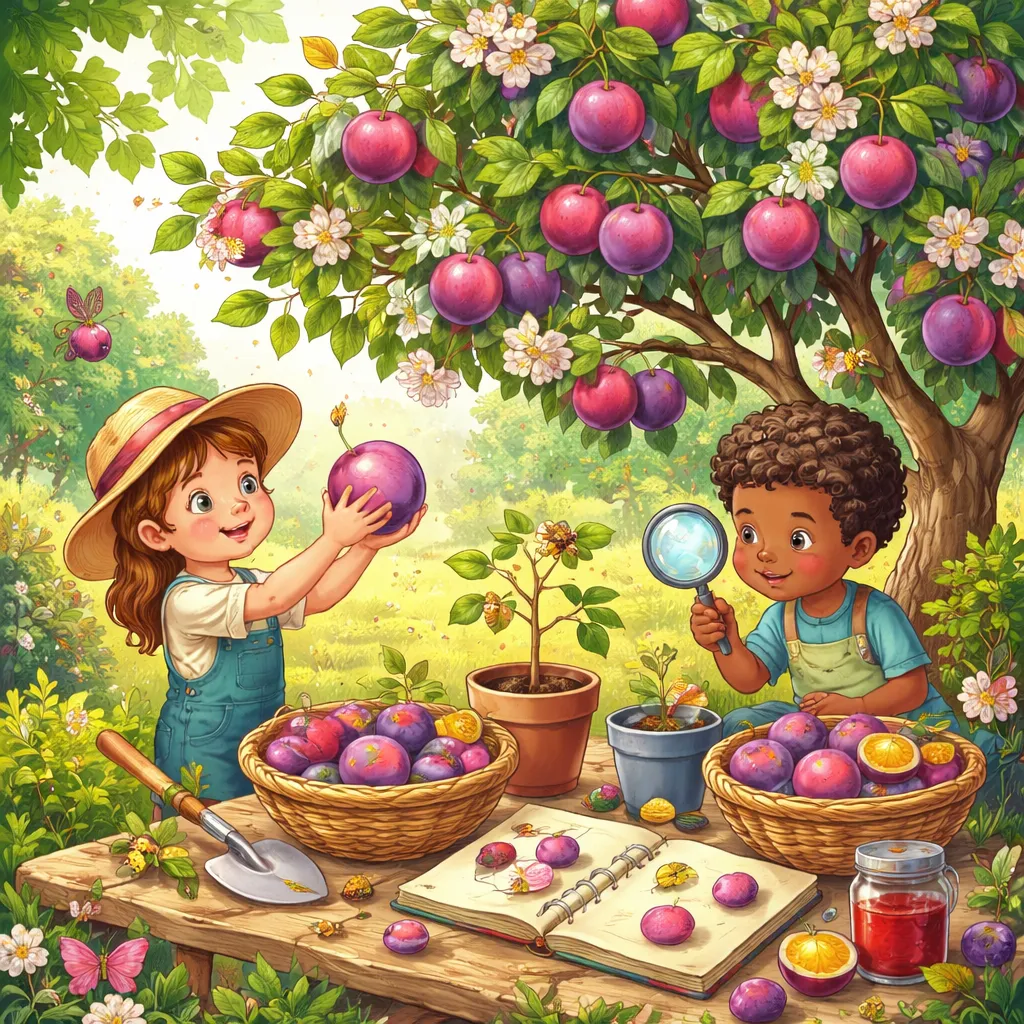

Have you ever wandered through a garden in early spring and seen clouds of pale white and pink flowers floating on the breeze? Have you bitten into a small, sweet fruit in summer with smooth skin and juicy flesh that tastes like sunshine? That delightful fruit comes from a charming plant, and today we will learn about plum tree plant together.
Children often pause to admire its delicate blossoms but never uncover the wonderful stories hidden within its branches. It changes its appearance with each season and offers sweet gifts to all living things around it. Let us begin our exciting adventure to explore this gentle and fruitful tree.
Let‘s Learn the Word! – Open the Treasure Box of Language
Formal Name and Pronunciation The full name of this plant is plum tree, pronounced /plʌm triː/. You can make a small popping sound when saying “plum” to mimic the juicy bite of the fruit. Say the two parts slowly, plum followed by tree, to master the pronunciation easily.
Word Origin Story The word “plum” comes from the Old English word “plūme”, which came from Latin “prūnum”. Ancient Greeks and Romans first grew and named this fruit thousands of years ago. The word traveled across Europe and kept its soft sound as it became part of the English language. “Tree” comes from Old English terms that describe tall, woody plants that stand strong through seasons.
Nicknames and Other Names Gardeners call it a stone fruit tree because of its hard inner seed at the center. Kids often call it “Snowy Blossom Tree” for its pale spring flowers that look like fresh snow. It is also known as a wild plum tree when it grows freely in forests and open fields.
Core Plant Parts Vocabulary Trunk stands straight like a brown wooden pillar supporting the entire plum tree. Branches stretch outward like thin arms holding clusters of flowers and small plums. Blossoms are delicate white or pink flowers with five soft petals each. Roots spread underground like hidden threads absorbing water and nutrients from soil. Leaves are oval-shaped and bright green, with tiny sharp edges along the sides. Fruits are small and round, turning from green to purple, red or yellow when ripe. Stone is the hard seed inside the plum that holds the life of a new plum tree plant. Buds are tiny tight knots that wake up in spring to become flowers or new leaves.
Action and State Words Bloom describes the moment plum blossoms open and fill the air with a light, sweet scent. Ripen means small green plums grow sweet and colorful under the warm summer sun. Wilt shows leaves drooping and curling when the tree does not receive enough water. Smooth describes the soft, hairless skin that covers every ripe plum. Fragrant tells the light, sweet smell that drifts from blooming plum flowers in spring.
Ecosystem Related Vocabulary Honeybees flit between blossoms to collect nectar and help the tree produce fruit. Butterflies hover around pale flowers, adding bright colors to the plum tree branches. Sparrows build nests in thick branches and eat insects that harm the tree’s leaves. Squirrels collect ripe plums and bury the stones to grow new trees in different places.
Cultural Imprints in Language A wise saying tells that good things come to those who wait for plums to ripen fully. It teaches children that patience brings sweet and wonderful rewards in life. A simple nursery rhyme sings, “Plum blossoms white, dance in the light, bees come flying day and night.” It shows the lively connection between the tree and busy insects during springtime. The phrase “plum job” means a wonderful and satisfying job that everyone enjoys.
Now we hold all the important words to explore further, and we can learn about plum tree plant’s hidden natural secrets.
Discover the Plant’s Secrets! – Nature Detective’s Exploration Notes
Plant Passport The plum tree belongs to the Rosaceae family, the same family as roses, apples and peaches. Its scientific genus is Prunus, which includes hundreds of different plum varieties worldwide. It has a slender trunk with smooth, grayish-brown bark that wrinkles as it grows older. Its leaves are oval and glossy, like small green spoons catching sunlight each day. In early spring, it grows dense clusters of white or pale pink flowers before leaves appear.
The plum tree follows a beautiful seasonal cycle every single year. Buds swell and burst into blossoms when spring warmth arrives. Tiny green plums form and grow steadily throughout the hot summer months. Fruits ripen into deep purple, red or golden yellow in late summer. Leaves turn yellow and fall in autumn, and the tree rests through cold winter.
Survival Wisdom Plum trees can survive colder temperatures better than many other fruit trees. They have strong root systems that spread wide to collect water from dry soil. They grow best in sunny locations with well-drained soil across Europe, Asia and North America. Some plum varieties can even grow in mountainous areas with cool climates. They produce fruit earlier than most fruit trees, giving sweet treats in mid-summer.
Ecological Niche and Contributions As a key producer, the plum tree makes its own food using sunlight, water and air. Bees gain sweet nectar from blossoms and help the tree pollinate in return. Birds find safe shelter on its branches and raise their young in hidden nests. Its roots hold soil firmly and prevent erosion during heavy rainstorms. Leaves absorb carbon dioxide and release fresh oxygen for all living things to breathe. Fallen leaves decompose and enrich the soil, helping other plants grow strong.
Human History and Cultural Symbols In Chinese culture, plum blossoms symbolize courage and hope, as they bloom in late winter. Ancient Chinese poets wrote countless poems about plum blossoms’ beauty and strength. In European folklore, plum trees represent abundance and good harvests for families. People eat fresh plums, dry them into prunes, make jams and bake sweet plum pies. Plum wood is hard and durable, used to make small crafts and musical instruments.
Fun Wow Facts Plum blossoms often bloom in late winter, even when there is still a little snow on the ground. Some plum trees can live for more than fifty years and produce fruit every summer. Plums are one of the oldest fruits cultivated by humans, dating back over 2,000 years.
We have uncovered all the amazing secrets of this special tree, and now we can grow a plum tree plant with our own hands.
Let’s Grow It Together! – Little Guardian’s Action Guide
Suitability for Home Planting Dwarf plum trees grow perfectly in large pots on balconies or small home gardens. Full-sized plum trees need a spacious yard for their roots and branches to spread. It needs an open spot with full sunlight, blocked by no tall buildings or large trees. Even young children can care for it with simple steps and gentle daily attention.
Little Gardener’s Tool Kit A young dwarf plum sapling works better than seeds for faster fruit production. A large ceramic pot with drainage holes at the bottom to avoid rotting roots. Loose, fertile loamy soil mixed with compost to provide plenty of nutrients. A small watering can with a narrow spout to water the soil gently and evenly. Organic fruit tree fertilizer and a small hand shovel for digging planting holes.
Step-by-Step Planting and Care Plant the sapling in early spring when frost fades and the air turns warm. Fill the pot with soil, dig a hole, place the sapling and cover its roots completely. Pour water slowly until the soil is fully moist for the first planting session.
Check the top layer of soil every day, and water only when it feels dry to touch. Place the pot in full sunlight, as sunshine helps plums grow sweet and juicy. Apply organic fertilizer once a month during spring and summer for healthy growth.
Observe the tree daily and draw its changes in a special observation notebook. Record the days when buds open, flowers bloom and small plums start to form.
Problem Diagnosis Room Yellow leaves usually mean too much water, so stop watering and let the soil dry out. Tiny green aphids on leaves can be wiped away using mild soapy water gently. Few flowers show the tree needs more sunlight, so move it to a brighter location. Droopy leaves mean the tree is thirsty, so give it a slow, deep drink of clean water.
Harvest and Growth Gifts Wait two to three years, and you can pick your own fresh, sweet plums at home. Harvesting ripe fruit teaches children the value of patience and consistent care. Caring for the tree builds responsibility and a deep love for nature and living things. Sharing home-grown plums with family and friends creates warm and happy memories.
Creative Extension Activities Create a growth diary to draw and write about the tree’s changes each week. Make leaf rubbings with paper and crayons to keep the shape of plum leaves forever. Paint a four-season picture of your plum tree using bright and vibrant colors. Learn poems about plum blossoms and recite them while standing under the tree. Make homemade plum jam with your harvested fruits and share it with your family.
Nurturing a plum tree helps us connect closely with nature and truly learn about plum tree plant each passing day.
Conclusion and Eternal Curiosity Today we have completed a wonderful journey with the charming plum tree plant. We learned useful English vocabulary, discovered natural secrets and learned to grow and care for the tree. This remarkable tree gives us delicate blossoms, sweet fruits and supports countless small creatures. It teaches us that strength and beauty can exist even in the coldest days of winter.
Always keep your eyes open when you walk through parks, gardens or forests. Look closely at every tree and flower, and you will find new magic every single day. Never stop asking questions about nature, because the world holds endless wonders waiting for you to discover.