
What Is This Plant?
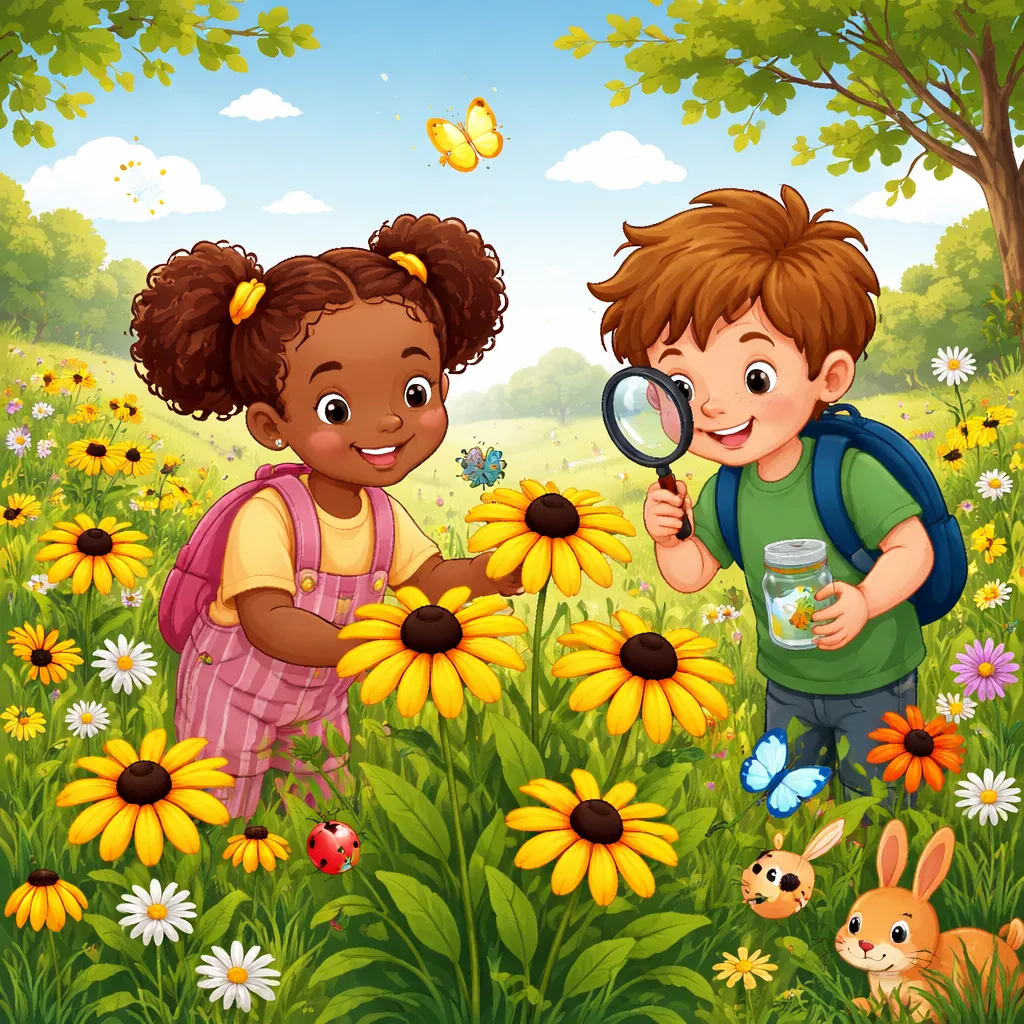
The black-eyed Susan plant is a cheerful wildflower with bright yellow petals and a dark brown center. It grows as a bushy plant with rough, hairy stems. The leaves are dark green and rough. They are oval-shaped with a pointed tip. The flowers are the treasure. They are daisy-like with bright yellow petals. The center is dark brown or black. It looks like a dark eye. That is how the plant got its name. The flowers bloom from summer until fall. They grow in fields, meadows, and gardens. For children, black-eyed Susans are like smiling faces. The yellow petals look like sunshine. The dark center looks like an eye. Parents can plant black-eyed Susan seeds in spring. Children love the bright colors and the name. This plant teaches children about native wildflowers and the beauty of prairies.
English Learning About This Plant
The English name “black-eyed Susan” describes the flower. It has a black center like an eye. The pronunciation is “black-eyed soo-zan.” The International Phonetic Alphabet (IPA) is /blæk aɪd ˈsuːzən/. Children can say it: black-eyed soo-zan. When we learn about black-eyed Susan plant, we learn words for its parts. The leaf is the rough, oval, dark green part. The stem is the hairy, branching part that holds the leaves and flowers. The flower is the daisy-like, yellow blossom. The petal is the bright yellow, ray-like part. The center is the dark brown, cone-shaped part that holds the seeds. These words help children describe this cheerful wildflower.
There is a saying about black-eyed Susans. They are the state flower of Maryland. Another saying goes, “Black-eyed Susans are the smile of the prairie.” Parents can share these words with their child. They become gentle lessons about finding joy in nature. The name comes from an old English poem about a woman named Susan.
Plant Facts and Scientific Knowledge
The black-eyed Susan plant belongs to the species Rudbeckia hirta. It is a member of the daisy family, Asteraceae. It is native to North America. It grows in prairies, meadows, and along roadsides. It is the state flower of Maryland.
Black-eyed Susan flowers have bright yellow petals. The petals are ray flowers. They surround a dark brown center. The center is cone-shaped. It contains many tiny disk flowers. The flowers bloom from summer until fall. They are very heat and drought tolerant.
The leaves are dark green and rough. They are covered with tiny hairs. The stems are also hairy. The plant can grow one to three feet tall. Some varieties are shorter.
Black-eyed Susans are biennials or short-lived perennials. They self-seed easily. They will come back year after year. The seeds are small and dark. They are eaten by birds in winter.
Black-eyed Susans have symbolic meaning. They represent encouragement, justice, and motivation. The bright flower encourages people to keep going. They are flowers of the prairie and symbols of the American landscape.
How to Grow and Care for This Plant
Growing a black-eyed Susan plant is easy for families. Plant seeds in spring or fall. Choose a sunny spot. Black-eyed Susans need full sun. They need well-drained soil. They grow well in poor soil. They are heat and drought tolerant.
Scatter the seeds on the soil surface. Cover lightly with soil. Black-eyed Susan seeds need light to germinate. Press them gently into the soil. Water gently. Children can help by scattering the seeds. The seeds are small. Mix them with sand to see them better.
Water black-eyed Susans regularly until established. Once established, they are very drought-tolerant. Do not overwater. They need little fertilizer. Too much fertilizer makes them tall and floppy.
Black-eyed Susans self-seed easily. Let some flowers go to seed. They will come back next year. In fall, cut the stems back. Leave the seed heads for the birds. They will eat the seeds in winter.
Benefits of Growing This Plant
Growing a black-eyed Susan plant brings many gifts to a family. First, the bright yellow flowers are cheerful. They bring sunshine to the garden. Second, black-eyed Susans are native plants. They support local wildlife.
Black-eyed Susans attract pollinators. Bees and butterflies love the flowers. Children can watch them all summer. Goldfinches eat the seeds in winter. Children can watch the birds visit the seed heads.
The plant provides cut flowers. Children can cut stems for bouquets. They last about a week in a vase.
Black-eyed Susans also teach about native plants. Children learn that native plants are important. They provide food and shelter for wildlife.
What Can We Learn From This Plant
A black-eyed Susan plant teaches children about encouragement. The flower’s message is encouragement. Children learn that they can encourage others. A kind word can help someone keep going.
Black-eyed Susans also teach about being native. The plant belongs to the prairie. Children learn that native plants are special. They are part of the local landscape.
Another lesson is about persistence. The plant blooms all summer. It comes back year after year. Children learn that persistence pays off. They can keep trying.
Black-eyed Susans also teach about the eye. The dark center looks like an eye. Children learn to see beauty in details. They can look closely at flowers.
Fun Learning Activities
There are many simple activities to help children learn about black-eyed Susan plant. One activity is a face study. Look at a black-eyed Susan flower. See the yellow petals like hair. See the dark center like an eye. Draw a face around the flower. This builds creativity.
Another activity is a seed head activity. In fall, leave the seed heads on the plant. Watch for goldfinches. See them eat the seeds. This builds observation and connection to wildlife.
A nature journal works well for black-eyed Susans. Draw the rough, hairy leaves. Draw the daisy-like flowers with yellow petals. Draw the dark center. Label the parts: leaf, stem, flower, petal, center. Write the date when the first flower opened.
For art, try painting black-eyed Susans. Use bright yellow paint for the petals. Use dark brown for the center. Add the rough, green leaves. This creates a cheerful prairie picture.
Vocabulary games are fun too. Write the words black-eyed Susan, leaf, stem, flower, petal, and center on cards. Say each word. Ask your child to point to the part on the plant. Practice saying black-eyed Susan together. Clap the syllables: black-eyed soo-zan.
Finally, try an encouragement activity. Talk about how black-eyed Susans encourage people. Ask your child to encourage someone. Write a note. Draw a black-eyed Susan on it. This connects the plant to kindness and encouragement.
Through these activities, children build a deep connection with a native wildflower that brings sunshine to the prairie. They learn new words, watch birds, and discover the joy of encouragement. The black-eyed Susan plant becomes a symbol of persistence and cheerfulness. Each summer when the yellow flowers bloom, children remember that they can encourage others. They remember that native plants are important. This cheerful wildflower opens a world of prairie beauty, bird watching, and the lasting lesson that a flower with a dark eye can bring sunshine to any day.