
What Is This Plant?
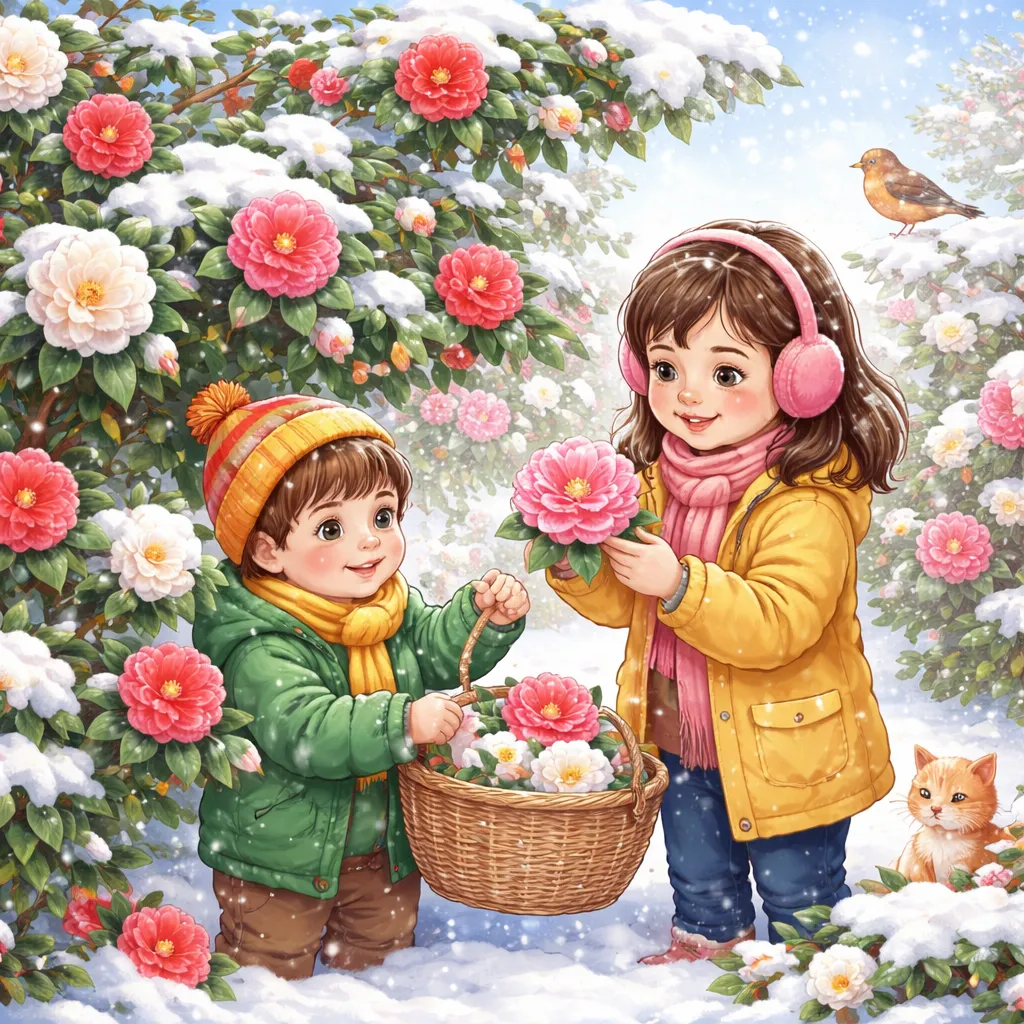
The camellia plant is an evergreen shrub that produces some of the most perfect flowers in the garden. It grows as a dense shrub with glossy, dark green leaves. The leaves are oval-shaped with a pointed tip. They are thick and leathery. They stay green all year. The flowers are the main treasure. They bloom in winter and early spring when most other plants are sleeping. The flowers are large and symmetrical. They look like roses. Some have single layers of petals. Others have hundreds of petals arranged in perfect spirals. The flowers come in white, pink, red, and sometimes yellow. For children, camellias are like a surprise gift. When the garden is quiet and gray, the camellia opens its perfect flowers. Parents can plant camellias in the garden. Children can check them on cold winter days. Finding a camellia flower in winter feels like discovering hidden treasure.
English Learning About This Plant
The English name “camellia” honors the botanist Georg Joseph Kamel. He studied plants in the Philippines. The pronunciation is “ka-meel-ya.” The International Phonetic Alphabet (IPA) is /kəˈmiːliə/. The word has three syllables. Children can say it: ka-meel-ya. When we learn about camellia plant, we learn words for its parts. The leaf is the glossy, dark green, oval part. The stem is the woody part that holds the leaves and flowers. The bud is the round, tight part that will become a flower. The flower is the large, rose-like blossom. The petal is the soft, perfect part of the flower. These words help children describe this winter treasure.
There is a famous saying about camellias. It goes, “Camellias are the queens of winter.” They bloom when nothing else does. Another saying says, “A camellia flower is a perfect gift from nature.” Parents can share these words with their child. They become gentle lessons about finding beauty in quiet times. Camellias are also important in tea production. Tea comes from a relative, Camellia sinensis.
Plant Facts and Scientific Knowledge
The camellia plant belongs to the genus Camellia. There are about 100 to 300 species. Camellias are native to eastern and southern Asia, especially China, Japan, and Korea. They are members of the tea family, Theaceae. Camellias have been cultivated for thousands of years.
There are two main camellias grown in gardens. Camellia japonica has large, showy flowers. It blooms in winter and early spring. Camellia sasanqua has smaller flowers. It blooms in fall and early winter. It is more sun-tolerant.
Camellia flowers can be single, semi-double, or double. Single flowers have one row of petals. Double flowers have many rows. The flowers can be two to five inches across. They come in white, pink, red, and variegated patterns. Some varieties have yellow flowers.
Camellia leaves are thick and glossy. They are used in teas. Camellia sinensis is the tea plant. All true tea comes from this species. The leaves are dried and processed to make green, black, and oolong tea.
Camellias have deep symbolic meaning. In China and Japan, camellias represent love, faithfulness, and longevity. White camellias represent adoration. Pink camellias represent longing. Red camellias represent passion. In the language of flowers, a camellia means “perfect beauty.”
How to Grow and Care for This Plant
Growing a camellia plant is a rewarding family project. Plant in spring or fall. Choose a spot with partial shade. Morning sun and afternoon shade is ideal. Camellias need protection from hot afternoon sun. They need well-drained, acidic soil.
Dig a hole twice as wide as the root ball. Do not plant too deep. The top of the root ball should be slightly above the soil. Place the plant in the hole. Fill with soil mixed with peat moss or compost. Water well. Children can help by holding the plant straight while you fill the hole.
Water camellias regularly. They need consistent moisture. Do not let the soil dry out. Mulch around the base with pine needles or bark. This keeps the soil moist and acidic.
Do not fertilize heavily. A light feeding in spring after flowering is enough. Use fertilizer made for camellias or acid-loving plants. Prune camellias after flowering. Remove dead or crossing branches. Light shaping keeps the plant tidy.
Camellias are hardy but need protection from cold winds. In very cold climates, choose hardy varieties. Protect young plants with burlap in winter.
Benefits of Growing This Plant
Growing a camellia plant brings many gifts to a family. First, it provides winter color. When the garden is bare, camellias bloom. The perfect flowers lift the spirits. Second, camellias are evergreen. They provide green color all year.
Camellias attract few pests. They are reliable plants. Children can enjoy them without much worry. The glossy leaves are beautiful even without flowers.
The plant teaches about winter gardening. Children learn that some plants bloom in the cold. They learn to appreciate the quiet season.
Camellias also connect to tea culture. Parents can share how tea comes from a relative of the camellia. This connects the plant to food and tradition.
What Can We Learn From This Plant
A camellia plant teaches children about finding beauty in quiet times. The flowers bloom in winter when other plants rest. Children learn that beauty exists even in quiet seasons. They can find joy in winter.
Camellias also teach about patience. The buds form in summer. They wait through fall. They open in winter. Children learn that waiting leads to something perfect.
Another lesson is about perfection. Camellia flowers are symmetrical and perfect. Children learn that striving for perfection is good. But they also learn that imperfect flowers are still beautiful.
Camellias also teach about endurance. The leaves stay green through winter. The plant endures cold. Children learn that they can endure. They can stay strong through hard times.
Fun Learning Activities
There are many simple activities to help children learn about camellia plant. One activity is a winter walk. On a cold winter day, go outside together. Look for camellia flowers. Count how many are open. See the bright colors against the gray sky. This builds appreciation for winter beauty.
Another activity is a bud watch. In fall, check the camellia for buds. They start as small, green dots. They grow larger. They show color. Count the days from first bud to first flower. This builds patience and observation.
A nature journal works well for camellias. Draw the glossy, oval leaves. Draw the perfect, rose-like flowers. Draw the buds. Label the parts: leaf, stem, bud, flower, petal. Write the date when the first flower opened.
For art, try painting camellias. Use white, pink, and red paint. Paint the perfect, symmetrical flowers. Add the glossy, dark green leaves. This creates a beautiful winter picture.
Vocabulary games are fun too. Write the words camellia, leaf, stem, bud, flower, and winter on cards. Say each word. Ask your child to point to the part on the plant. Practice saying camellia together. Clap the syllables: ka-meel-ya.
Finally, try a tea connection activity. Show your child tea leaves. Explain that tea comes from a cousin of the camellia. Make a cup of tea together. Taste it. Talk about how the leaves in the cup are like camellia leaves. This connects the plant to food and tradition.
Through these activities, children build a deep connection with a plant that brings perfect flowers to the winter garden. They learn new words, watch buds patiently, and discover the joy of finding beauty in quiet times. The camellia plant becomes a symbol of patience and perfection. Each winter when the camellias bloom, children remember that beauty exists even in the cold. They remember that waiting leads to something perfect. This elegant shrub opens a world of winter wonder, patient observation, and the lasting joy of discovering treasure when the garden sleeps.