
What Is This Plant?
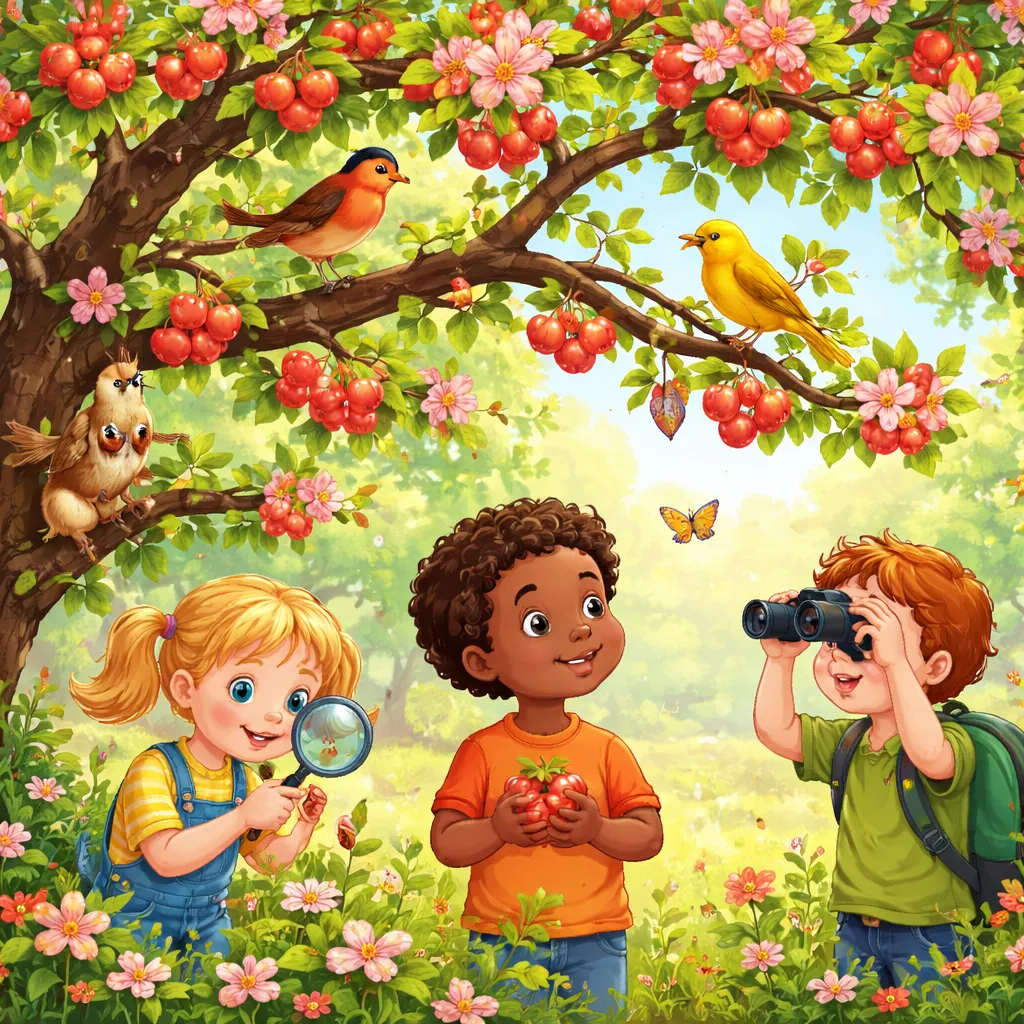
The crabapple plant is a small flowering tree that puts on a spectacular show in spring. It grows as a rounded tree with spreading branches. In spring, the branches become covered in masses of flowers. The blossoms come in many colors. You can find white, pink, red, and even deep magenta crabapple flowers. Some flowers are single with five petals. Others are double with many layers of petals. After the flowers fade, small leaves appear. They are green and oval-shaped with tiny teeth along the edges. In summer, small fruits called crabapples develop. They are tiny apples, usually less than two inches across. The fruits can be red, yellow, or orange. They stay on the tree into winter. For children, crabapple trees are full of interest all year. Parents can plant a crabapple in the yard or visit one in a park. The tree offers flowers, fruits, and visiting birds to watch together.
English Learning About This Plant
The English name “crabapple” combines two words. Crab refers to the small, tart fruit. Apple describes the fruit’s family. The pronunciation is “krab-ap-ul.” The International Phonetic Alphabet (IPA) is /ˈkræbˌæpəl/. The word has three syllables. Children can say it: crab-ap-ple. When we learn about crabapple plant, we learn words for its parts. The trunk is the main woody stem of the tree. The branch is the part that holds the flowers and leaves. The bark is the rough outer covering. The flower is the colorful blossom with five or more petals. The fruit is the small, round crabapple that grows in summer. These words help children describe this cheerful tree.
There is a lovely saying about crabapples. It goes, “Crabapples may be small, but they bring big joy.” This means even small things can give great pleasure. Another thought comes from the naturalist Henry David Thoreau. He wrote about crabapple trees and their beauty in spring and fall. He said they were like jewels in the landscape. Parents can share these words with their child. They become gentle lessons about appreciating small gifts and finding beauty in all seasons.
Plant Facts and Scientific Knowledge
The crabapple plant belongs to the genus Malus. This is the same genus as the common apple. There are over 30 species of crabapples. They are native to North America, Europe, and Asia. Crabapples have been grown for thousands of years.
Crabapple flowers come in many colors. White, pink, red, and purple are common. Some varieties have flowers that change color as they age. They start dark pink and fade to pale pink. The flowers bloom in mid to late spring. The bloom time lasts about one to two weeks.
The fruit of the crabapple tree is small. Most crabapples are less than two inches in diameter. They are tart and not usually eaten fresh. But they make wonderful jellies and preserves. The fruits are an important food source for birds in winter.
Crabapple trees are prized for their year-round interest. In spring, they bloom. In summer, they have green leaves. In autumn, the leaves turn yellow, orange, or red. In winter, the colorful fruits hang on the branches. Birds visit to eat them.
Crabapples have symbolic meaning. They represent beauty and endurance. The tree gives flowers in spring and food for birds in winter. It is a symbol of generosity and lasting beauty.
How to Grow and Care for This Plant
Growing a crabapple plant is a rewarding family project. Choose a sunny spot. Crabapple trees need at least six hours of direct sunlight each day. The soil should be well-drained. They can grow in many soil types.
Plant a young crabapple tree in spring or fall. Dig a hole twice as wide as the root ball. Place the tree in the hole. The graft union, which looks like a bump near the base, should be above the soil. Fill with soil. Water well. Children can help by holding the tree straight while you fill the hole.
Water the young tree regularly. Deep watering once a week helps the roots grow strong. Once established, crabapples are quite drought-tolerant. Mulch around the base keeps the soil moist and prevents weeds.
Prune crabapple trees in late winter while the tree is still dormant. Remove dead, diseased, or crossing branches. Good air circulation helps prevent disease. Children can help by collecting the pruned branches.
Crabapple trees do not need much fertilizer. A light feeding in spring is enough. Too much fertilizer creates leaves but fewer flowers. Choose varieties that are disease-resistant. This makes care easier.
Benefits of Growing This Plant
Growing a crabapple plant brings many gifts to a family. First, it provides spectacular spring color. The flowers cover the tree in bright pink, red, or white. Second, crabapple blossoms attract bees and butterflies. Children can watch pollinators at work.
The tree offers food for wildlife. In winter, birds eat the small fruits. Children can watch cardinals, robins, and other birds visit the tree. This teaches about the connection between plants and animals.
The tree provides beauty in every season. In spring, flowers. In summer, green leaves. In autumn, colorful leaves. In winter, bright fruits on bare branches. Families can watch the tree change throughout the year.
Crabapples also provide fruit for making jelly. Children can help harvest the tiny fruits. Parents can make crabapple jelly together. This connects gardening to cooking and family traditions.
What Can We Learn From This Plant
A crabapple plant teaches children about giving. The tree gives flowers in spring and food for birds in winter. It gives beauty all year. Children learn that they can give in many ways. They can share their time, their kindness, and their talents.
Crabapples also teach about small things having value. The fruits are small, but they feed birds through winter. Children learn that small actions matter. A small kindness can mean a lot.
Another lesson is about patience through seasons. The tree looks different in each season. Sometimes it is full of flowers. Sometimes it is bare. Children learn that life has seasons. There are times of blooming and times of resting.
Crabapples also teach about resilience. The fruits stay on the tree through winter cold. They feed birds when other food is scarce. Children learn that they can be strong and helpful even when times are hard.
Fun Learning Activities
There are many simple activities to help children learn about crabapple plant. One activity is a flower color hunt. When the tree blooms, go outside. Look at the flower colors. Are they white, pink, or red? Count how many different shades you can see. This builds observation skills.
Another activity is bird watching. In winter, watch the crabapple tree. See which birds come to eat the fruits. Use a bird guide to identify them. Keep a list of birds that visit. This connects the tree to wildlife.
A nature journal works well for crabapples. Draw the tree in spring with its flowers. Draw the leaves in summer. Draw the fruits in fall. Draw the bare branches with fruits in winter. Label the parts: trunk, branch, flower, fruit. Write the date when the first flower opens.
For art, try painting crabapple blossoms. Use pink, red, or white paint. Paint the branches first. Then use a small brush to add the flowers. Add small green leaves after the flowers. This creates a beautiful spring picture.
Vocabulary games are fun too. Write the words crabapple, trunk, branch, flower, fruit, and bird on cards. Say each word. Ask your child to point to the part on the tree. Practice saying crabapple together. Clap the syllables: crab-ap-ple.
Finally, try a jelly-making activity. When the crabapples ripen, harvest them with your child. Wash them. Cook them with sugar and water. Strain the juice. Make jelly together. Taste it on bread. This connects the tree to food and family traditions.
Through these activities, children build a deep connection with a tree that gives beauty and food in every season. They learn new words, observe nature, and discover the joy of sharing with wildlife. The crabapple plant becomes a symbol of generosity and resilience. Each time they see crabapples, they remember that small things have great value. They remember that giving happens in many seasons. This cheerful tree opens a world of year-round wonder, wildlife connection, and the simple joy of watching flowers turn into fruits that feed the world around them.