
What Is This Plant?
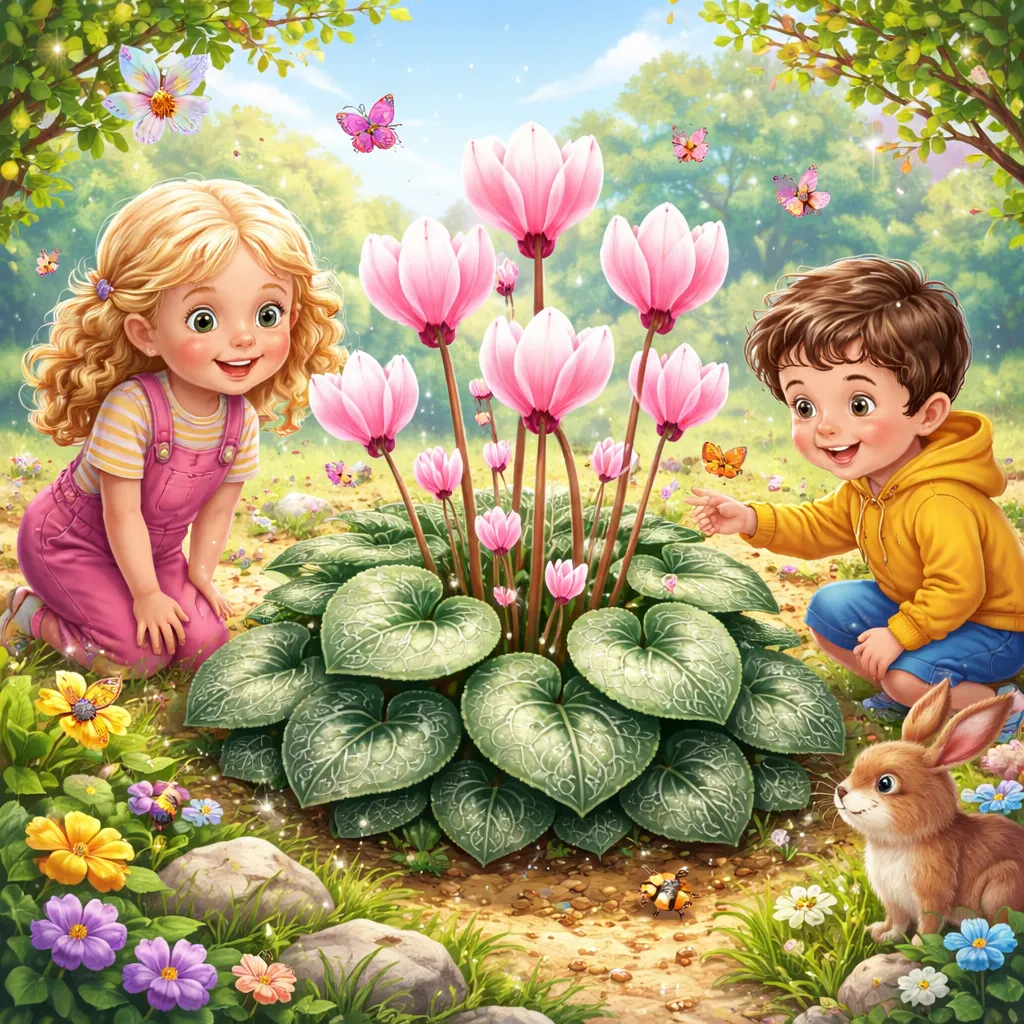
The cyclamen plant is a charming, delicate flower with petals that look like whirling butterflies or little wings. It grows from a round, flat tuber. The leaves grow from the base. They are heart-shaped and beautiful. Many cyclamen leaves have silver patterns on them. They look like someone painted swirls and hearts on the green. The flowers are the treasure. They rise above the leaves on slender stems. The petals fold backward like a butterfly resting with wings up. The flowers come in shades of pink, red, white, and purple. Cyclamen blooms in winter and early spring. They brighten the house when the garden is sleeping. For children, cyclamen flowers look like butterflies or dancing fairies. The silver patterns on the leaves are like secret drawings. Parents can plant cyclamen in pots or in the garden. Children love the butterfly flowers and the painted leaves. This plant teaches children about winter beauty and the joy of hidden patterns.
English Learning About This Plant
The English name “cyclamen” comes from the Greek word “kyklos.” It means circle. The tuber is round. The pronunciation is “sik-la-men.” The International Phonetic Alphabet (IPA) is /ˈsɪkləmən/. The word has three syllables. Children can say it: sik-la-men. When we learn about cyclamen plant, we learn words for its parts. The tuber is the round, flat, underground part that stores food. The leaf is the heart-shaped, silver-patterned part. The stem is the slender, upright part that holds the flower. The flower is the butterfly-shaped, backward-folding blossom. The petal is the colorful, wing-like part. These words help children describe this magical plant.
There is a famous saying about cyclamen. They are also called “sowbread” because pigs ate the tubers. Another saying goes, “Cyclamen flowers are butterflies that landed on the earth.” Parents can share these words with their child. They become gentle lessons about winter beauty and the magic of patterns. Cyclamen are native to the Mediterranean region.
Plant Facts and Scientific Knowledge
The cyclamen plant belongs to the genus Cyclamen. There are about 20 species. Cyclamen are native to Europe, the Mediterranean, and parts of Asia. They are members of the primrose family, Primulaceae. They grow in woodlands and rocky areas.
Cyclamen flowers have a unique shape. The petals fold backward. This is called reflexed. The flowers look like butterflies or little wings. They come in shades of pink, red, white, and purple. The flowers rise above the leaves on slender stems. They bloom in winter and early spring.
The leaves are heart-shaped. Many have silver patterns. The patterns can be swirls, hearts, or intricate designs. The leaves are beautiful even without flowers. The leaves grow from the tuber at the base.
Cyclamen grow from tubers. The tuber is round and flat. It stores water and food. The plant goes dormant in summer. It rests until cool weather returns. In fall, new leaves appear. In winter, flowers bloom.
Cyclamen have symbolic meaning. They represent sincerity, love, and goodbyes. They are flowers of winter. They bring beauty when the garden is quiet.
How to Grow and Care for This Plant
Growing a cyclamen plant requires care. Plant tubers in fall. Choose a spot with bright, indirect light. Cyclamen need cool temperatures. They do not like heat. They need well-drained soil.
Plant the tuber with the flat side down. The top of the tuber should be just below the soil surface. Do not bury it too deep. Cover lightly with soil. Water gently. Children can help by placing the tuber in the hole.
Water cyclamen carefully. Water when the soil feels dry. Do not water the center of the plant. Water around the edge. Overwatering causes rot. Cyclamen like to be watered from the bottom. Place the pot in a saucer of water. Let the soil soak up the water.
Cyclamen need cool temperatures. They like 50 to 65 degrees Fahrenheit. They do not like heat. Place them in a cool room. In summer, they go dormant. Stop watering. Let the tuber rest. In fall, start watering again.
Cyclamen are often grown as houseplants. They also grow outdoors in mild climates. They are perfect for winter color.
Benefits of Growing This Plant
Growing a cyclamen plant brings many gifts to a family. First, the butterfly flowers are magical. They brighten winter days. Second, the silver-patterned leaves are beautiful. Children love to look at the patterns.
Cyclamen attract attention. The unusual flowers are conversation starters. Children can share the butterfly story.
The plant teaches about dormancy. It rests in summer. It wakes in winter. Children learn that rest is part of growth.
Cyclamen also teach about careful watering. They need water but not too much. Children learn to be gentle.
What Can We Learn From This Plant
A cyclamen plant teaches children about rest. The plant rests in summer. It saves energy for winter blooms. Children learn that rest is important. They need quiet times to grow.
Cyclamen also teach about hidden beauty. The silver patterns on the leaves are like secret drawings. Children learn to look closely. There is beauty in details.
Another lesson is about uniqueness. The flowers fold backward. They are different from other flowers. Children learn that being different is beautiful.
Cyclamen also teach about winter. They bloom when the garden is quiet. Children learn that beauty exists in every season.
Fun Learning Activities
There are many simple activities to help children learn about cyclamen plant. One activity is a pattern study. Look at a cyclamen leaf. Find the silver patterns. Trace the patterns. See if they look like hearts or swirls. This builds observation.
Another activity is a butterfly study. Look at a cyclamen flower. See how the petals fold backward. Draw the flower as a butterfly. This builds imagination.
A nature journal works well for cyclamen. Draw the heart-shaped, silver-patterned leaves. Draw the butterfly-shaped flowers. Label the parts: tuber, leaf, stem, flower, petal. Write the date when the first flower opened.
For art, try painting cyclamen. Use pink, red, and white paint. Paint the butterfly-shaped flowers with backward-folding petals. Add the silver patterns on the leaves. This creates a magical winter picture.
Vocabulary games are fun too. Write the words cyclamen, tuber, leaf, stem, flower, and butterfly on cards. Say each word. Ask your child to point to the part on the plant. Practice saying cyclamen together. Clap the syllables: sik-la-men.
Finally, try a rest activity. Talk about how cyclamen rest in summer. Ask your child about times they rest. Draw a picture of a resting cyclamen. This connects the plant to self-care.
Through these activities, children build a deep connection with a plant that brings butterfly flowers to winter. They learn new words, study silver patterns, and discover the joy of rest. The cyclamen plant becomes a symbol of hidden beauty and winter magic. Each winter when the butterfly flowers bloom, children remember that rest leads to beauty. They remember to look closely for hidden patterns. This magical plant opens a world of winter wonder, careful care, and the lasting lesson that beauty comes in many shapes, even folded-back wings and silver-swirled hearts.