
What Is This Plant?
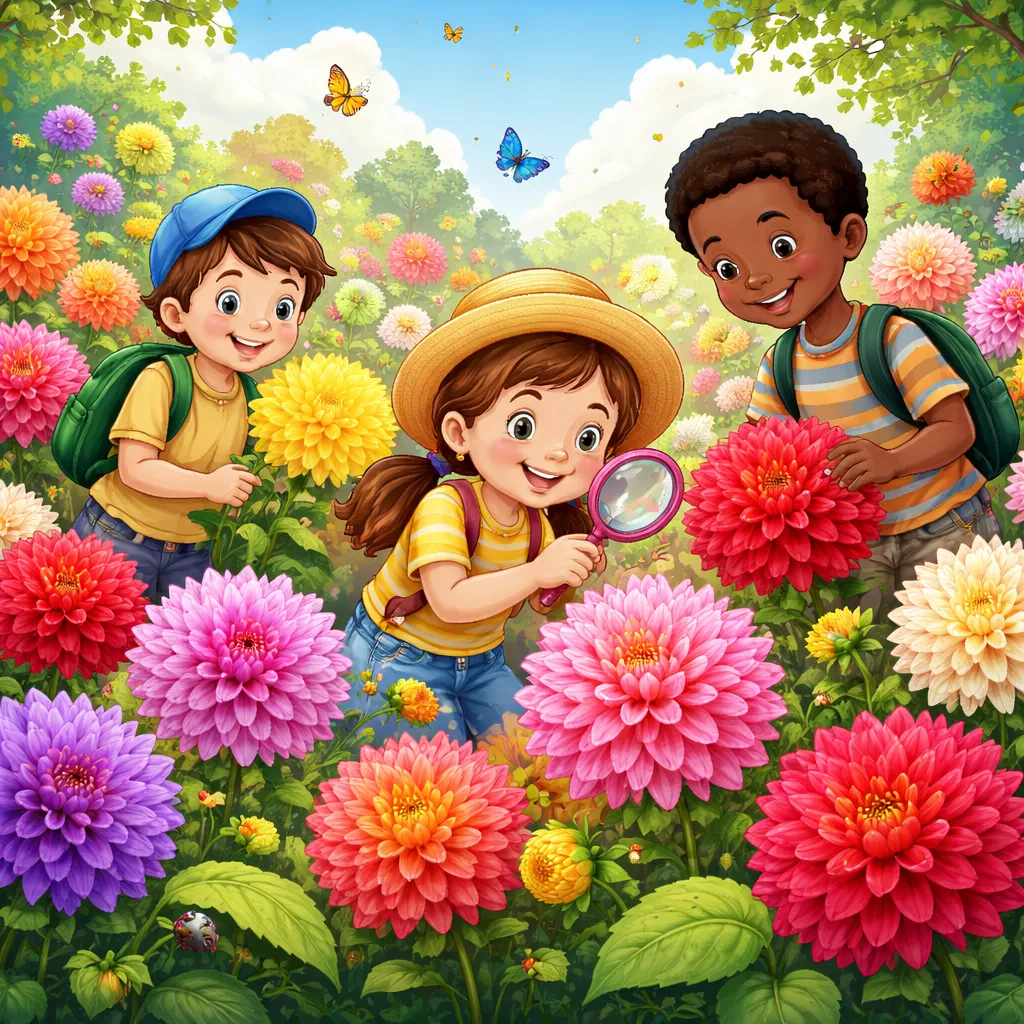
The dahlia plant is a stunning flower that comes in an amazing variety of shapes, sizes, and colors. It grows from a tuber, which is like a thick, underground root. The stems are sturdy and hollow. They can be short or very tall. The leaves are dark green and divided into leaflets. They grow in pairs along the stem. The flowers are the main attraction. Some dahlias have flowers as small as a button. Others have flowers as large as a dinner plate. Some have single petals. Others have hundreds of petals arranged in perfect spirals. The flowers come in almost every color except blue. You can find red, pink, orange, yellow, purple, white, and even nearly black dahlias. They bloom from mid-summer until frost. For children, dahlias are like magic. Each flower looks different. Parents can plant dahlia tubers in spring. Children watch the plants grow tall. When the flowers open, they discover a new shape or color almost every day.
English Learning About This Plant
The English name “dahlia” honors the Swedish botanist Anders Dahl. The pronunciation is “dal-ya” or “dah-lee-a.” The International Phonetic Alphabet (IPA) is /ˈdæljə/ or /ˈdɑːliə/. The word has three syllables. Children can say it: dal-ya. When we learn about dahlia plant, we learn words for its parts. The tuber is the thick, underground part that stores food. The stem is the sturdy, hollow part. The leaf is the dark green, divided part. The flower is the large, showy blossom. The petal is the colorful part that can be flat, curled, or twisted. These words help children describe this spectacular plant.
There is a saying about dahlias. It goes, “Dahlias are the stars of the autumn garden.” They bloom when other flowers fade. Another saying says, “A dahlia is a promise that summer will last a little longer.” Parents can share these words with their child. They become gentle lessons about lasting beauty and the joy of late-season color.
Plant Facts and Scientific Knowledge
The dahlia plant belongs to the genus Dahlia. There are about 40 species. Dahlias are native to Mexico and Central America. They are members of the daisy family, Asteraceae. The Aztecs grew dahlias for food and decoration. Spanish explorers brought them to Europe in the 1700s.
Dahlias have a unique flower structure. What looks like one flower is actually a cluster of tiny flowers. The center contains disk flowers. The outer petals are ray flowers. Dahlias are classified into many groups based on flower shape. There are cactus dahlias with curled petals. There are pompom dahlias with round, ball-like flowers. There are dinnerplate dahlias with enormous flowers.
Dahlia tubers look like clusters of small potatoes. They store food for the plant. In warm climates, tubers stay in the ground year-round. In cold climates, gardeners dig them up in fall and store them indoors for winter.
Dahlia flowers come in a wide range of colors. They do not have true blue. Breeders have created thousands of varieties. Some have flowers with two colors. Some have flowers with petals that change color as they age.
Dahlias have symbolic meaning. They represent dignity, elegance, and lasting commitment. In the language of flowers, a dahlia means “I will always be yours.” They are also the national flower of Mexico.
How to Grow and Care for This Plant
Growing a dahlia plant is a wonderful family project. Plant the tubers in spring after the last frost. Choose a sunny spot. Dahlias need at least six hours of sunlight each day. The soil should be well-drained.
Dig a hole about six inches deep. Place the tuber horizontally. Cover with soil. Do not water until the shoots appear. This prevents rot. Children can help by placing the tubers in the holes.
When the shoots are about six inches tall, pinch off the growing tip. This makes the plant bushy. Tall dahlias need support. Place a stake next to the plant. Tie the stem loosely to the stake. Children can help by holding the stake.
Water dahlias regularly. They like consistent moisture. Water deeply once or twice a week. Mulch around the base keeps the soil moist. Fertilize every few weeks. Use a low-nitrogen fertilizer. Too much nitrogen creates leaves but fewer flowers.
In fall after frost, cut the stems back. Dig up the tubers carefully. Let them dry. Store them in a cool, dry place. Replant them next spring. Children can help by gently brushing off the soil from the tubers.
Benefits of Growing This Plant
Growing a dahlia plant brings many gifts to a family. First, the flowers are spectacular. They come in so many shapes and colors. Second, dahlias bloom for a long time. They start in mid-summer and continue until frost. They fill the garden when other flowers are fading.
Dahlias attract pollinators. Bees and butterflies visit the flowers. Children can watch them throughout the late summer and fall.
The flowers are excellent for cutting. Children can pick blooms to put in a vase. They last several days indoors. This brings the garden inside.
Dahlias also teach about tubers and underground storage. Children learn that plants store food in roots. They learn about digging, storing, and replanting.
What Can We Learn From This Plant
A dahlia plant teaches children about diversity. The flowers come in so many shapes. Some are round. Some are spiky. Some are flat. Children learn that differences are beautiful. There is no one right way to be a flower.
Dahlias also teach about lasting beauty. They bloom late into the season. They do not fade quickly. Children learn that they can have lasting impact. Their actions can continue to give.
Another lesson is about the cycle of seasons. The tubers are planted in spring. They grow in summer. They bloom in fall. They rest in winter. Children learn that life has seasons. Rest is part of growth.
Dahlias also teach about care. They need staking, watering, and feeding. They reward care with spectacular flowers. Children learn that care leads to beautiful results.
Fun Learning Activities
There are many simple activities to help children learn about dahlia plant. One activity is a shape hunt. Look at different dahlia flowers. Find a round one. Find a spiky one. Find a flat one. Find a tiny one. Find a giant one. This builds observation and classification skills.
Another activity is a tuber inspection. Show your child a dahlia tuber. Let them hold it. Feel the texture. Explain that this is where the plant stores food. Compare it to a potato. This builds understanding of plant storage.
A nature journal works well for dahlias. Draw the different flower shapes. Draw the divided leaves. Label the parts: tuber, stem, leaf, flower, petal. Write the date when the first flower opened. Draw the different shapes you find.
For art, try painting dahlias. Use bright colors like pink, orange, and purple. Paint the different shapes. Paint the spiky cactus dahlias. Paint the round pompom dahlias. Paint the large dinnerplate dahlias. This creates a garden of shapes.
Vocabulary games are fun too. Write the words dahlia, tuber, stem, leaf, flower, and shape on cards. Say each word. Ask your child to point to the part on the plant. Practice saying dahlia together. Clap the syllables: dal-ya.
Finally, try a tuber storage activity. In fall, help your child dig up dahlia tubers. Let them gently brush off the soil. Place the tubers in a box with peat moss. Store them in a cool place. In spring, let them plant the tubers again. This teaches about the full cycle of growth and care.
Through these activities, children build a deep connection with a plant that rewards patience with spectacular blooms. They learn new words, explore shapes, and discover the joy of storing and replanting. The dahlia plant becomes a symbol of diversity and lasting beauty. Each time they see dahlias, they remember that differences make the garden beautiful. They remember that care leads to spectacular results. This magnificent flower opens a world of shape, color, and the lasting joy of watching tubers transform into stars of the autumn garden.