
What Is This Plant?
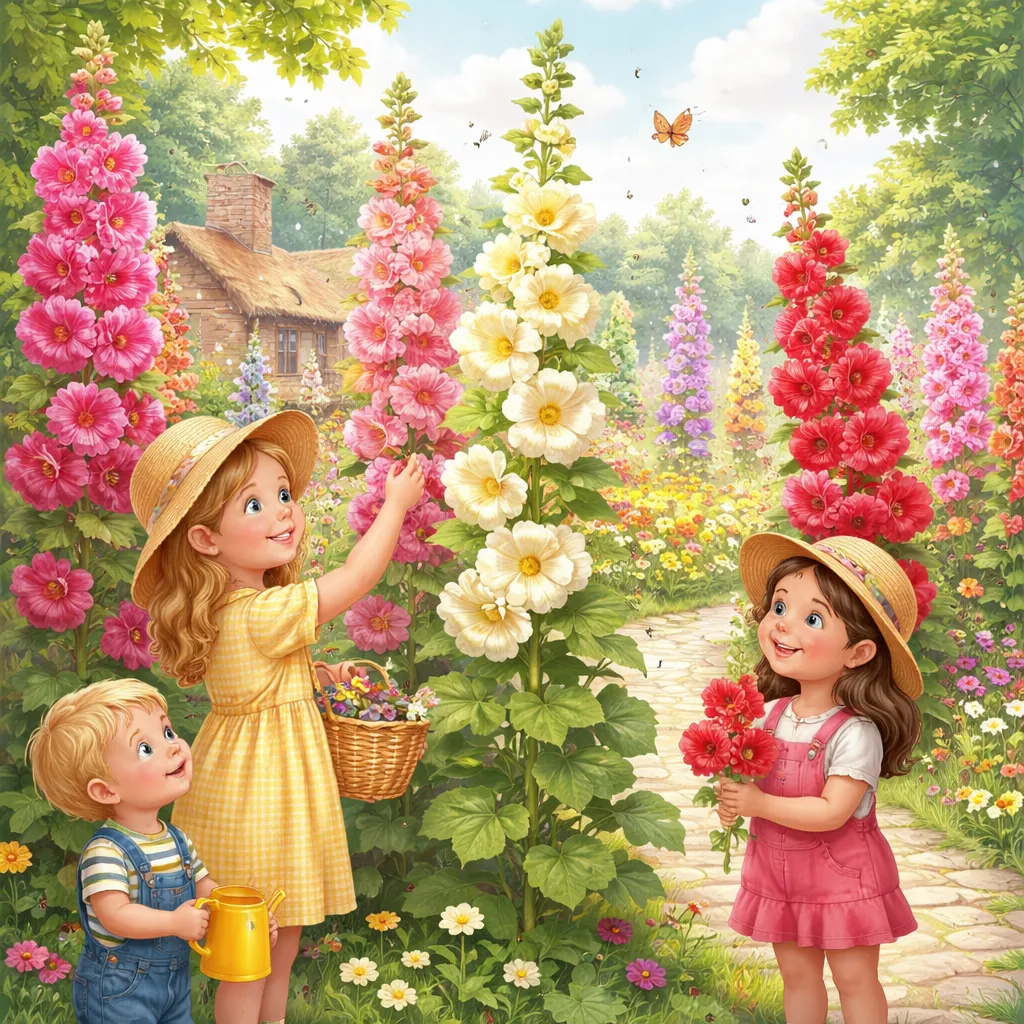
The hollyhock plant is a tall, stately flower that stands like a sentinel in the garden. It grows as a single, upright stem that can reach five to eight feet tall. The leaves are large and rounded. They are dark green and slightly rough. The flowers are the treasure. They grow along the tall stem. They are large and ruffled. They look like crepe paper. The flowers come in many colors. You can find pink, red, yellow, white, purple, and almost black hollyhocks. The flowers can be single with five petals or double with many ruffled petals. They bloom from the bottom of the stem upward. They bloom in summer. For children, hollyhocks are like giant towers of flowers. The tall stems can grow taller than a child. Parents can plant hollyhock seeds in spring or fall. Children love watching the stem grow taller and the flowers open one by one. This plant teaches children about reaching high and the charm of old-fashioned gardens.
English Learning About This Plant
The English name “hollyhock” comes from old words. “Holly” means holy. “Hock” means mallow. The plant was brought to Europe from the Holy Land. The pronunciation is “hol-ee-hok.” The International Phonetic Alphabet (IPA) is /ˈhɑːliˌhɑːk/. The word has two syllables. Children can say it: hol-ee-hock. When we learn about hollyhock plant, we learn words for its parts. The leaf is the large, rounded, dark green part. The stem is the tall, sturdy part that holds the leaves and flowers. The flower is the large, ruffled, crepe-paper-like blossom. The petal is the soft, colorful part. The seed pod is the round, flat part that holds the seeds. These words help children describe this towering plant.
There is a famous saying about hollyhocks. They are the quintessential cottage garden flower. Another saying goes, “Hollyhocks stand tall at the back of the garden, watching over the flowers below.” Parents can share these words with their child. They become gentle lessons about standing tall and being a protector. Hollyhocks have been grown in gardens for centuries.
Plant Facts and Scientific Knowledge
The hollyhock plant belongs to the species Alcea rosea. It is a member of the mallow family, Malvaceae. This is the same family as hibiscus and okra. Hollyhocks are native to Asia and the Mediterranean. They have been grown in gardens for over 500 years. They were brought to Europe from the Holy Land.
Hollyhock flowers are large and showy. They can be three to five inches across. The flowers have five petals in single varieties. Double varieties have many ruffled petals. The flowers come in many colors. Pink and red are most common. They bloom from the bottom of the stem upward. The stem can have dozens of flowers.
The leaves are large and rounded. They are dark green and slightly rough. The plant grows five to eight feet tall. The stems are sturdy but may need staking in windy areas.
Hollyhocks are biennials or short-lived perennials. In the first year, they grow leaves. In the second year, they send up tall flower spikes. Then they set seed and die. But they self-seed easily. They often come back year after year.
Hollyhocks have symbolic meaning. They represent ambition, fertility, and abundance. The tall stems represent reaching for goals. They are flowers of the old-fashioned cottage garden.
How to Grow and Care for This Plant
Growing a hollyhock plant requires patience. Plant seeds in spring or fall. Choose a sunny spot. Hollyhocks need full sun. They need well-drained soil. They grow well in rich soil. They need protection from strong wind.
Hollyhock seeds are large and flat. Plant seeds about one-quarter inch deep. Cover lightly with soil. Water gently. Children can help by planting the seeds. The seeds are easy for small fingers to handle.
Water hollyhocks regularly. They need consistent moisture. Do not let the soil dry out. They need fertilizer. Feed every few weeks during the growing season.
Hollyhocks need support. Their tall stems can bend in wind. Place stakes next to the plants. Tie the stems loosely to the stakes. Children can help by holding the stakes.
Hollyhocks are biennials. They will not flower in the first year. In the second year, they send up tall flower spikes. After flowering, let some flowers go to seed. The plant will self-seed. New plants will appear next year.
Benefits of Growing This Plant
Growing a hollyhock plant brings many gifts to a family. First, the tall towers of ruffled flowers are spectacular. They add height and drama to the garden. Second, hollyhocks attract pollinators. Bees and butterflies love the large flowers. Children can watch them crawl inside the ruffled petals.
The plant provides cut flowers. Children can cut the tall stems for bouquets. They last about a week in a vase. They make dramatic arrangements.
Hollyhocks also teach about reaching high. The tall stems stand above the garden. Children learn to reach for their goals.
What Can We Learn From This Plant
A hollyhock plant teaches children about reaching high. The tall stems reach for the sky. Children learn that they can reach high. They can aim for their dreams.
Hollyhocks also teach about patience. The plant takes two years to bloom. Children learn that good things take time. They can wait for beauty.
Another lesson is about abundance. The stems have dozens of flowers. Children learn that abundance is beautiful. They can give abundantly.
Hollyhocks also teach about old-fashioned charm. They have been grown for centuries. Children learn that some things are timeless. They can appreciate tradition.
Fun Learning Activities
There are many simple activities to help children learn about hollyhock plant. One activity is a height measurement. Plant hollyhocks. Measure the stems each week. See how tall they grow. Compare them to the child’s height. This builds measurement skills.
Another activity is a flower study. Look at a hollyhock flower. Count the petals. Feel the ruffled texture. Look at the seed pods. This builds observation.
A nature journal works well for hollyhocks. Draw the large, rounded leaves. Draw the tall flower spike. Draw the ruffled flowers. Label the parts: leaf, stem, flower, petal. Write the date when the first flower opened.
For art, try painting hollyhocks. Use pink, red, and purple paint. Paint the tall towers of ruffled flowers. Add the large, rounded leaves. This creates a charming cottage garden picture.
Vocabulary games are fun too. Write the words hollyhock, leaf, stem, flower, petal, and tall on cards. Say each word. Ask your child to point to the part on the plant. Practice saying hollyhock together. Clap the syllables: hol-ee-hock.
Finally, try a patience activity. Plant hollyhock seeds. Mark the spot. In the first year, only leaves appear. In the second year, celebrate the flowers. This teaches about patience and the reward of waiting.
Through these activities, children build a deep connection with a towering plant that brings old-fashioned charm to the garden. They learn new words, measure height, and discover the joy of patience. The hollyhock plant becomes a symbol of reaching high and timeless beauty. Each summer when the ruffled towers bloom, children remember that good things take time. They remember that they can reach for the sky. This stately flower opens a world of cottage garden beauty, patient waiting, and the lasting lesson that standing tall and waiting for your time are both acts of strength.