
What Is This Plant?
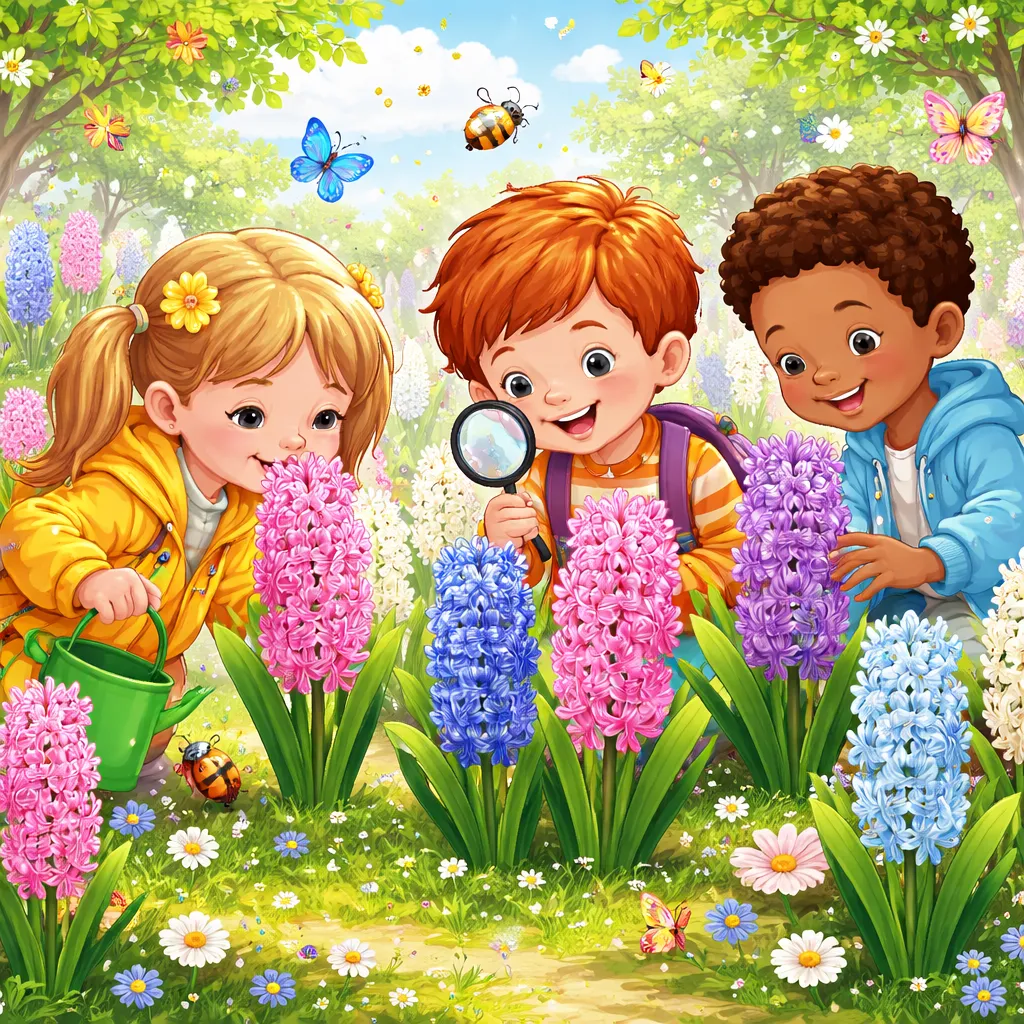
The hyacinth plant is a spring-flowering bulb that fills the garden with bright color and powerful scent. It grows from a bulb that rests underground through winter. In early spring, thick green leaves push through the soil. The leaves are long and strap-like. They form a neat clump. From the center, a thick stem rises. It looks like a green spike. The stem becomes covered in tiny flowers. They grow in a dense cluster. The cluster looks like a small column of bells. The flowers come in many colors. You can find hyacinths in purple, pink, white, blue, yellow, and red. Each tiny flower has a sweet, heavy scent. One hyacinth plant can scent an entire room. For children, hyacinths are exciting. The bright colors and strong smell make them impossible to ignore. Parents can plant hyacinth bulbs in fall. In spring, children watch the spike emerge. When the flowers open, the scent announces that spring has truly arrived.
English Learning About This Plant
The English name “hyacinth” comes from Greek mythology. Hyacinthus was a young man loved by the god Apollo. When he died, Apollo created the flower from his blood. The pronunciation is “hy-a-sinth.” The International Phonetic Alphabet (IPA) is /ˈhaɪəsɪnθ/. The word has three syllables. Children can say it: hy-a-sinth. When we learn about hyacinth plant, we learn words for its parts. The bulb is the round part underground that stores food. The leaf is the long, strap-like green part. The stem is the thick spike that holds the flowers. The flower cluster is the group of tiny flowers on the stem. The floret is one small flower in the cluster. These words help children describe this fragrant spring plant.
There is a famous myth about hyacinths. The Greek myth tells how the flower grew from tears. But the flower also represents joy and play. Another saying goes, “Hyacinths speak the language of scent.” This means hyacinths communicate through their fragrance. They tell us that spring is here. Parents can share the myth with their child. It becomes a gentle story about love, loss, and how beauty can come from sadness.
Plant Facts and Scientific Knowledge
The hyacinth plant belongs to the species Hyacinthus orientalis. It is part of the asparagus family, Asparagaceae. Hyacinths are native to the eastern Mediterranean, including Turkey, Syria, and Lebanon. They have been cultivated for over 400 years.
Hyacinth flowers grow in dense spikes. Each spike can have 20 to 50 individual flowers. The flowers are star-shaped with curled-back petals. They open from the bottom of the spike upward. The flowers come in many colors. Some have single flowers. Others have double flowers with more petals.
The scent of hyacinths is very strong. It is sweet and spicy. The fragrance is most intense on warm days. Hyacinths are one of the most fragrant spring flowers. Their scent can travel far.
Hyacinths grow from bulbs. The bulbs are large and round. They produce one flower spike per bulb. After flowering, the leaves stay green for several weeks. They make food for next year’s flower. The bulbs can multiply underground. Over time, one bulb becomes a cluster.
Hyacinths have symbolic meaning. They represent playfulness, joy, and sincerity. In the language of flowers, blue hyacinths mean constancy. Purple hyacinths mean sorrow or apology. Pink hyacinths mean playfulness. White hyacinths mean beauty.
How to Grow and Care for This Plant
Growing a hyacinth plant is a wonderful family project. Plant the bulbs in fall, before the ground freezes. Choose a sunny spot. Hyacinths need at least four to six hours of sunlight each day. The soil should be well-drained.
Dig a hole about four to six inches deep. Place the bulb with the pointy end up. Cover with soil. Water well. Children can help by placing the bulbs in the holes. They can cover them with soil.
Water after planting. Then wait. In spring, the green shoots appear. Water if the weather is dry. Hyacinths do not like soggy soil. The bulbs can rot if the soil stays wet.
After the flowers fade, cut off the flower spike. Leave the leaves. Let them turn yellow and wither. The leaves make food for next year’s bulb. Children can help by removing the dead leaves when they are brown and dry.
Hyacinths can also grow indoors. This is called forcing. Plant bulbs in pots in fall. Place them in a cool, dark place for 10 to 12 weeks. Then bring them into a sunny room. They will bloom indoors. Children love watching this process.
Benefits of Growing This Plant
Growing a hyacinth plant brings many gifts to a family. First, the scent fills the garden. It announces spring in a way that no other flower can. Second, the bright colors bring joy. The purple, pink, and blue flowers lift the mood after winter.
Hyacinths are also good for cutting. Children can cut a few flower spikes and put them in a small vase. One spike will scent a whole room. This brings spring indoors.
The plant teaches about bulbs and how they store energy. Children learn that a dry bulb can produce a beautiful flower. This builds wonder about nature.
Hyacinths also offer a sensory experience. Children can smell the flowers, touch the thick leaves, and see the bright colors. This engages all the senses.
What Can We Learn From This Plant
A hyacinth plant teaches children about the power of scent. The flowers are small. But their smell is strong. Children learn that they do not need to be big to be noticed. Their voice, their kindness, their presence can be felt even if they are quiet.
Hyacinths also teach about patience. The bulb waits underground all winter. Then it sends up leaves and flowers. Children learn that waiting is part of growth. The waiting makes the bloom more special.
Another lesson is about sharing. The hyacinth shares its scent with everyone nearby. It does not keep it for itself. Children learn that sharing their gifts makes the world sweeter.
Hyacinths also teach about color. The bright colors bring happiness. Children learn that adding color to the world is a good thing. They can share their own colors through art, words, and kindness.
Fun Learning Activities
There are many simple activities to help children learn about hyacinth plant. One activity is a scent test. When the hyacinth blooms, close your eyes. Smell the flower. Describe the scent. Is it sweet? Is it strong? How far away can you smell it? This builds sensory language.
Another activity is a flower spike count. When the hyacinth blooms, count how many tiny flowers are on the spike. Count from the bottom to the top. This builds observation and counting skills.
A nature journal works well for hyacinths. Draw the bulb. Draw the green shoots. Draw the flower spike. Draw the tiny flowers up close. Label the parts: bulb, leaf, stem, flower cluster. Write the date when the first flower opens.
For art, try painting hyacinths. Use purple, pink, blue, or white paint. Paint the tall spike first. Then add many tiny dots for the individual flowers. Add long green leaves at the base. This creates a beautiful spring picture.
Vocabulary games are fun too. Write the words hyacinth, bulb, leaf, stem, flower cluster, and scent on cards. Say each word. Ask your child to point to the part on the plant. Practice saying hyacinth together. Clap the syllables: hy-a-cinth.
Finally, try a forcing activity. In fall, plant a hyacinth bulb in a small pot. Place it in a dark, cool place. Check it every week. When the shoot is about two inches tall, bring it into a sunny room. Watch it bloom indoors. This teaches about how plants grow and respond to light.
Through these activities, children build a deep connection with a plant that announces spring with scent and color. They learn new words, use their senses, and discover the magic of bulbs. The hyacinth plant becomes a symbol of joy and sharing. Each time they smell hyacinth, they remember that small things can have a big presence. They remember that waiting makes the bloom sweeter. This fragrant flower opens a world of sensory learning, patience, and the simple joy of sharing beauty with everyone around.