
What Is This Plant?
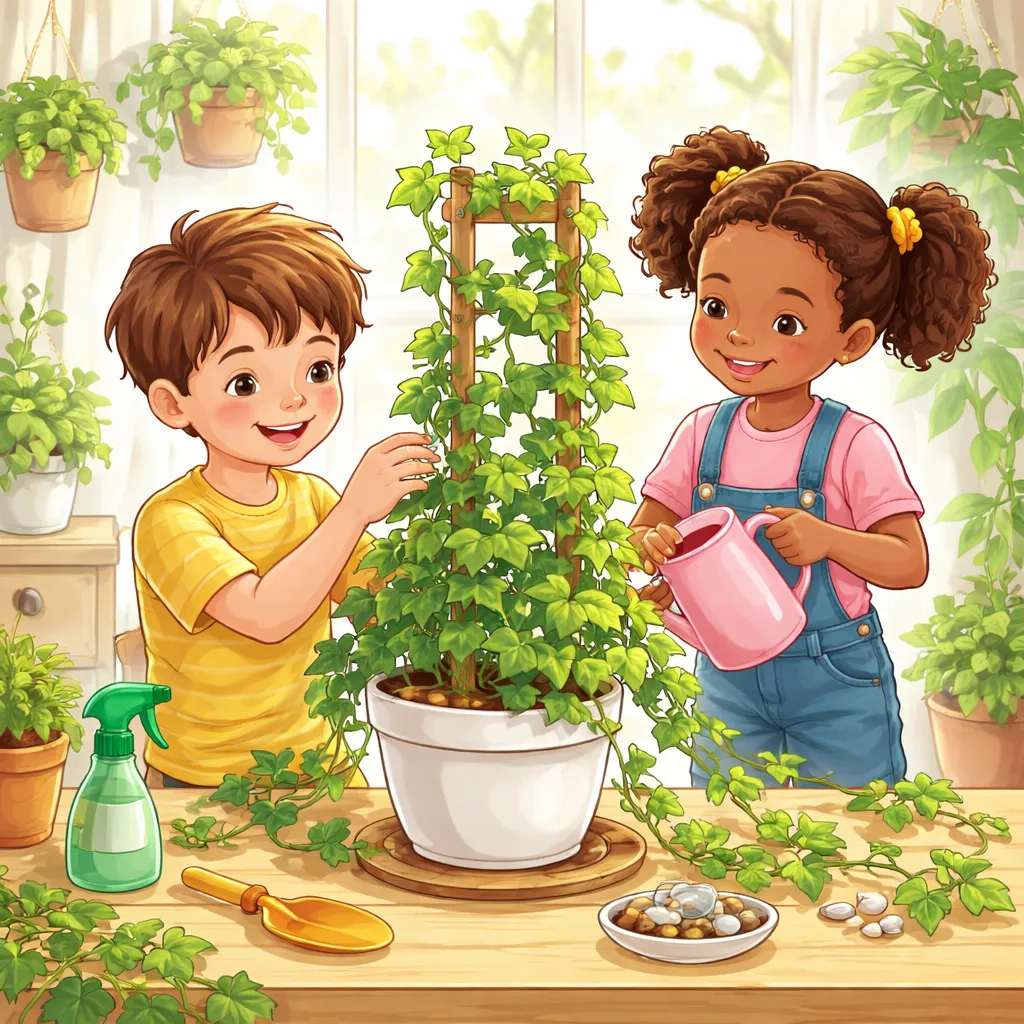
The ivy plant is a classic climbing vine with beautiful, star-shaped leaves. It grows as a vine that can climb walls, trellises, or trail from pots. The stems are thin and woody. They produce tiny roots that attach to surfaces. The leaves are the main attraction. They come in many shapes. Some ivies have five-lobed leaves that look like stars. Others have heart-shaped or rounded leaves. The leaves can be solid green or variegated with white, yellow, or cream. Some have wavy edges. Others are ruffled. Ivies can grow very long. They can cover walls or fill hanging baskets. Mature ivy plants may produce small, greenish-yellow flowers and black berries. For children, ivy is like a plant that can climb anywhere. It attaches to walls and trellises. Parents can grow ivy in pots or hanging baskets. Children love the star-shaped leaves and the way the vines grow. This plant teaches children about climbing, persistence, and the beauty of evergreen foliage.
English Learning About This Plant
The English name “ivy” comes from an old English word. The pronunciation is “eye-vee.” The International Phonetic Alphabet (IPA) is /ˈaɪvi/. The word has two syllables. Children can say it: eye-vee. When we learn about ivy plant, we learn words for its parts. The leaf is the star-shaped, lobed, or heart-shaped part. The vine is the long, climbing stem. The aerial root is the tiny root that attaches to surfaces. The variegation is the pattern of different colors on the leaves. The berry is the small, black fruit that grows on mature plants. These words help children describe this climbing plant.
There is a famous saying about ivy. It is a symbol of friendship and fidelity. Another saying goes, “Ivy clings to what it loves.” Parents can share these words with their child. They become gentle lessons about loyalty and persistence. Ivy is native to Europe, Asia, and North Africa.
Plant Facts and Scientific Knowledge
The ivy plant belongs to the species Hedera helix. It is a member of the ginseng family, Araliaceae. It is native to Europe, Asia, and North Africa. It has been grown in gardens for centuries. It is one of the most popular climbing plants in the world.
Ivy leaves come in many shapes. Juvenile leaves are usually lobed and star-shaped. Adult leaves are often unlobed and heart-shaped. The leaves can be solid green or variegated. Variegated ivies have white, yellow, or cream edges or centers. The leaves are glossy and leathery.
Ivy stems produce aerial roots. These tiny roots attach to walls, trees, and other surfaces. This allows the vine to climb. Ivy can grow 20 to 30 feet tall. It can also be grown as a ground cover.
Mature ivy plants produce small, greenish-yellow flowers in fall. The flowers are followed by black berries. The berries are eaten by birds. Ivy is toxic if eaten.
Ivy has symbolic meaning. It represents fidelity, friendship, and eternal life. Because it stays green all year, it is a symbol of immortality. It is often used in wedding decorations.
How to Grow and Care for This Plant
Growing an ivy plant is easy for families. Choose a spot with bright, indirect light. Variegated ivies need more light to keep their color. Green ivies tolerate lower light. Ivy needs well-drained soil.
Plant ivy in a pot with drainage holes. Place the plant in the pot. Fill with soil. Water well. Children can help by putting the plant in the pot and adding soil.
Water ivy when the soil feels dry. It likes consistent moisture but does not like soggy soil. Water thoroughly, then let the soil dry slightly. In winter, water less. Ivy likes humidity. Misting is beneficial.
Ivy needs little fertilizer. Feed once a month in spring and summer with balanced fertilizer. Do not overfeed. Prune to keep it full and to control growth. Pinch back the growing tips to encourage bushiness.
Ivy can be propagated from stem cuttings. Cut a stem with a few leaves. Place it in water or soil. It will root easily. Children can do this themselves.
Benefits of Growing This Plant
Growing an ivy plant brings many gifts to a family. First, the star-shaped leaves are beautiful. Children love the different shapes and colors. Second, ivy is a classic plant. It connects to history and tradition.
Ivy cleans the air. It removes toxins. Children learn that plants help us breathe better.
The plant climbs and trails. Children can watch it grow up a trellis or down from a hanging basket. This builds observation.
Ivy is easy to propagate. Children can make new plants from cuttings. They can share them with friends.
What Can We Learn From This Plant
An ivy plant teaches children about persistence. The vine keeps climbing. It attaches to whatever it can. Children learn that they can be persistent. They can keep going.
Ivy also teaches about loyalty. The plant clings to what it loves. Children learn that loyalty is important. They can be loyal to friends and family.
Another lesson is about adaptation. Ivy grows in many conditions. It adapts. Children learn that they can adapt. They can grow in different places.
Ivy also teaches about evergreen beauty. The plant stays green all year. Children learn that beauty can last through all seasons.
Fun Learning Activities
There are many simple activities to help children learn about ivy plant. One activity is a leaf shape study. Look at different ivy leaves. Find star-shaped, heart-shaped, and lobed leaves. Count how many different shapes you have. This builds observation.
Another activity is a propagation activity. Cut an ivy stem with a few leaves. Place it in a glass of water. Watch the roots grow. Then plant it in soil. This teaches about plant reproduction.
A nature journal works well for ivy. Draw the star-shaped, lobed leaves. Draw the variegated patterns. Draw the climbing vine with aerial roots. Label the parts: leaf, vine, aerial root. Write the date when you started your cutting.
For art, try painting ivy. Use green, white, and yellow paint. Paint the star-shaped leaves with variegation. Paint the climbing vine. This creates a classic garden picture.
Vocabulary games are fun too. Write the words ivy, leaf, vine, aerial root, climb, and persist on cards. Say each word. Ask your child to point to the part on the plant. Practice saying ivy together. Clap the syllables: eye-vee.
Finally, try a persistence activity. Talk about how ivy keeps climbing. Ask your child about something they kept trying at. Celebrate their persistence. This connects the plant to personal growth.
Through these activities, children build a deep connection with a classic plant that climbs and clings. They learn new words, propagate cuttings, and discover the joy of persistence. The ivy plant becomes a symbol of loyalty and evergreen beauty. Each time they see the climbing vines, children remember that they can keep going. They remember that they can cling to what they love. This timeless plant opens a world of climbing wonder, leaf shapes, and the lasting lesson that persistence and loyalty are the roots of growth.