
What Is This Plant?
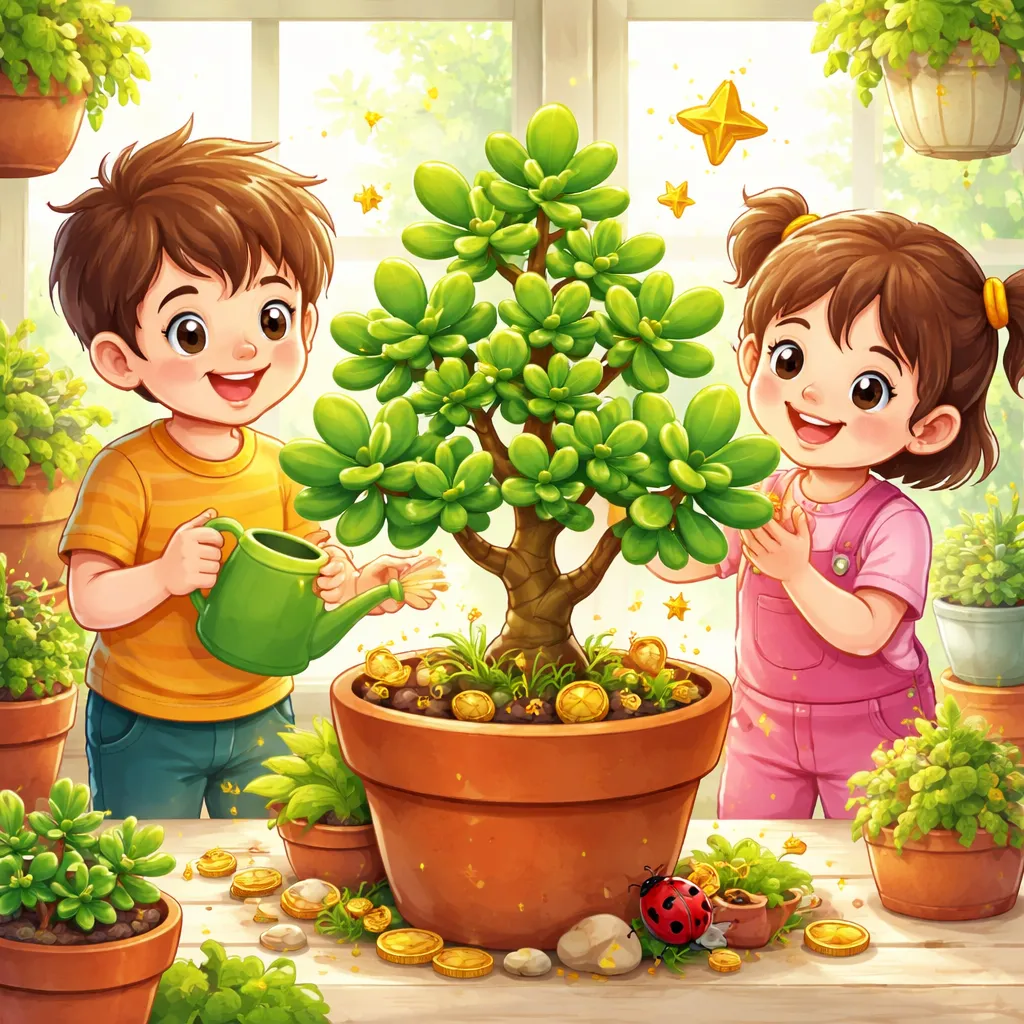
The jade plant is a popular succulent that looks like a miniature tree with thick, glossy leaves. It grows as a small shrub with woody stems. The leaves are oval and fleshy. They are bright green and shiny. The edges of the leaves often turn red in strong sunlight. The plant grows slowly. Over time, it develops a thick trunk and branches. It looks like a tiny tree. In winter, mature jade plants may produce clusters of small, star-shaped flowers. The flowers are white or pink. For children, the jade plant is like a tree from a fairy tale. It fits in a pot on a windowsill. The leaves are plump and fun to touch. Parents can grow jade plants in pots. Children love the miniature tree shape. This plant teaches children about slow growth, patience, and the meaning of good luck.
English Learning About This Plant
The English name “jade plant” comes from the green color of the leaves. Jade is a green gemstone. The pronunciation is “jade plant.” The International Phonetic Alphabet (IPA) is /dʒeɪd plænt/. Children can say it: jade plant. When we learn about jade plant plant, we learn words for its parts. The leaf is the thick, glossy, oval part that stores water. The stem is the woody part that becomes a trunk. The branch is the part that holds the leaves. The flower cluster is the group of small, star-shaped flowers. The root is the part underground that takes in water. These words help children describe this miniature tree.
There is a famous saying about jade plants. They are called “money plants” or “lucky plants” in some cultures. Another saying goes, “A jade plant brings good fortune to the home.” Parents can share these words with their child. They become gentle lessons about patience and the value of growing something slowly. Jade plants are native to South Africa.
Plant Facts and Scientific Knowledge
The jade plant belongs to the species Crassula ovata. It is a member of the stonecrop family, Crassulaceae. It is native to South Africa. It grows in dry, rocky areas. It is a succulent. It stores water in its leaves and stems.
Jade plant leaves are thick and fleshy. They are bright green and glossy. In strong sun, the edges turn red. This is called “stress coloring.” It is not harmful. The leaves can live for many years. They are smooth and plump.
The jade plant grows slowly. It can live for decades. Old jade plants can become very large. They develop thick trunks and many branches. They can be trained as bonsai.
Jade plants bloom in winter when they are mature. The flowers are small and star-shaped. They grow in clusters. The flowers are white or pink. They have a sweet scent. Not all jade plants bloom indoors. They need cool nights and bright light to flower.
Jade plants have symbolic meaning. They represent good luck, prosperity, and friendship. They are often given as housewarming gifts. They are believed to bring positive energy.
How to Grow and Care for This Plant
Growing a jade plant is easy for families. Choose a sunny spot. Jade plants need bright light. A south-facing window is ideal. They need well-drained soil. Use cactus soil or mix sand with potting soil.
Plant jade in a pot with drainage holes. Place the plant in the pot. Fill with soil. Water well. Children can help by putting the plant in the pot and adding soil.
Water jade when the soil feels dry. Do not overwater. Jade plants rot in wet soil. Water deeply, then let the soil dry completely. In winter, water very little. The plant rests in winter.
Jade plants need little fertilizer. Feed once in spring with cactus fertilizer. Do not overfeed. Prune to shape the plant. Remove dead leaves. The plant can be propagated from leaves or stem cuttings.
Benefits of Growing This Plant
Growing a jade plant brings many gifts to a family. First, the miniature tree shape is beautiful. Children love the tiny tree. Second, jade plants are very easy to care for. They survive neglect. This builds confidence.
Jade plants teach about slow growth. Children learn that some things take time. They can watch the plant grow over years.
The plant is long-lived. It can become a family heirloom. Children can pass it to their own children.
Jade plants also teach about luck and positivity. The plant is believed to bring good fortune. Children learn about traditions.
What Can We Learn From This Plant
A jade plant teaches children about patience. The plant grows very slowly. It takes years to become a tree. Children learn that good things take time. They can be patient.
Jade plants also teach about resilience. They survive with little water. They store what they need. Children learn that they can be resilient. They can prepare for hard times.
Another lesson is about longevity. Jade plants live for decades. Children learn that some things last. They can care for something that will grow with them.
Jade plants also teach about giving. They are given as gifts to bring luck. Children learn that giving is good. They can share plants with friends.
Fun Learning Activities
There are many simple activities to help children learn about jade plant plant. One activity is a growth study. Measure the jade plant each month. See how slowly it grows. Mark the height. This builds patience.
Another activity is a propagation activity. Gently remove a leaf from the jade plant. Let it dry for a day. Place it on soil. Water lightly. Watch it grow roots and a new plant. This teaches about plant reproduction.
A nature journal works well for jade plants. Draw the thick, glossy leaves. Draw the woody stem. Draw the miniature tree shape. Label the parts: leaf, stem, branch. Write the date when you got the plant.
For art, try painting jade plants. Use green paint for the glossy leaves. Add red on the edges. Paint the woody stem. This creates a miniature tree picture.
Vocabulary games are fun too. Write the words jade plant, leaf, stem, branch, lucky, and patience on cards. Say each word. Ask your child to point to the part on the plant. Practice saying jade plant together. Clap the syllables: jade plant.
Finally, try a luck activity. Talk about why jade plants are called lucky. Ask your child what brings them good luck. Make a lucky charm for the plant. This connects the plant to tradition and positivity.
Through these activities, children build a deep connection with a plant that grows slowly and brings luck. They learn new words, propagate leaves, and discover the joy of patience. The jade plant becomes a symbol of patience and good fortune. Each time they see the miniature tree, children remember that good things take time. They remember that they can be resilient. This lucky succulent opens a world of slow growth, family tradition, and the lasting lesson that the plants we care for over many years become part of the family.