
What Is This Plant?
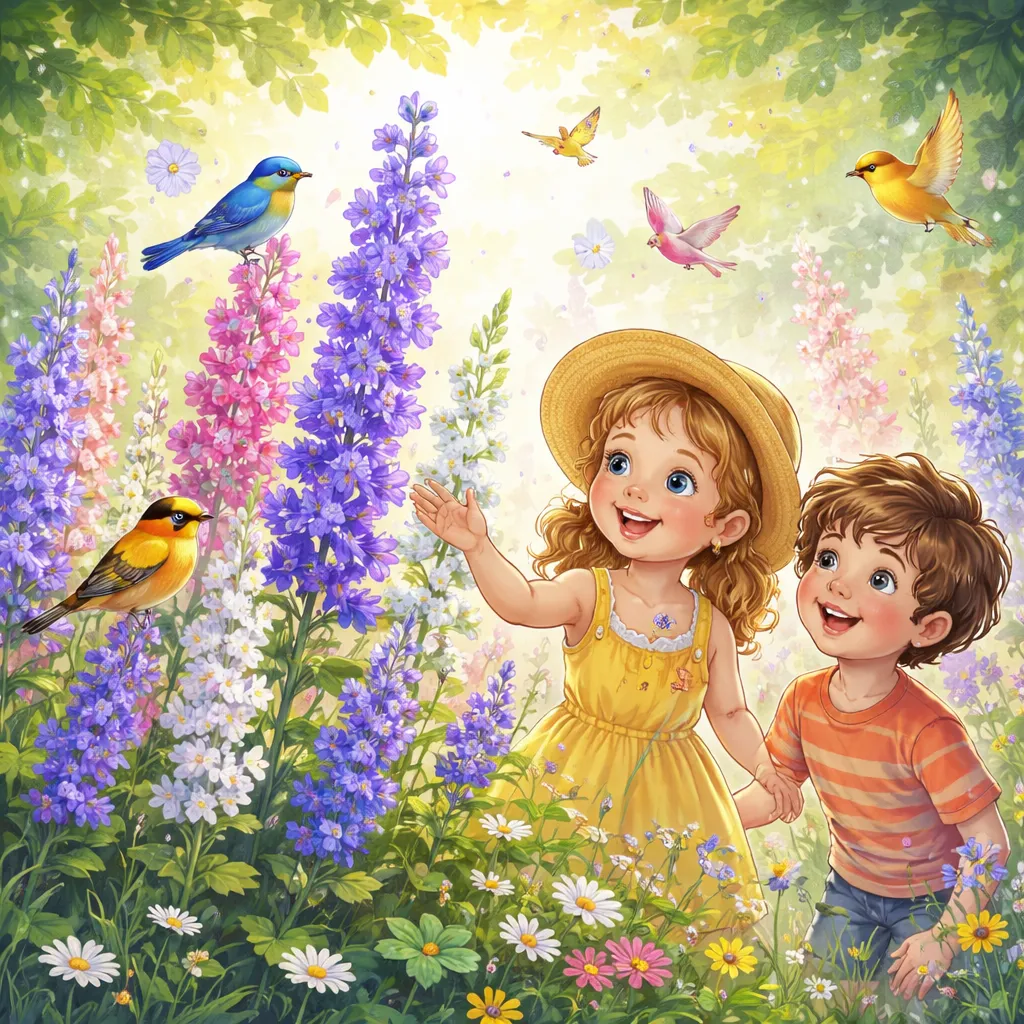
The larkspur plant is a delicate, airy flower with tall spikes of colorful blossoms. It grows as a slender plant with branching stems. The leaves are finely divided and lacy. They look like fern leaves. The flowers are the treasure. They grow on tall spikes that can reach two to four feet high. The flowers are shaped like little birds. That is how the plant got its name. The name “larkspur” comes from the shape of the flower. It looks like a lark’s spur. Each flower has five petals. One petal has a long spur. The flowers come in many colors. You can find blue, purple, pink, white, and red larkspur. The flowers bloom in early summer. For children, larkspurs are like colorful bird spikes. The delicate flowers look like tiny birds perched on stems. Parents can plant larkspur seeds in spring or fall. Children love the name and the delicate flowers. This plant teaches children about the beauty of delicate things and the connection between flowers and birds.
English Learning About This Plant
The English name “larkspur” comes from the shape of the flower. It looks like the spur of a lark, a type of songbird. The pronunciation is “lark-spur.” The International Phonetic Alphabet (IPA) is /ˈlɑːrkˌspɜːr/. The word has two syllables. Children can say it: lark-spur. When we learn about larkspur plant, we learn words for its parts. The leaf is the finely divided, lacy, bright green part. The stem is the slender, branching part that holds the flower spike. The flower spike is the tall tower of flowers. The flower is the bird-shaped, colorful blossom. The spur is the long, hollow part at the back of the flower. These words help children describe this delicate plant.
There is a famous saying about larkspurs. They are also called “delphiniums” in some places. Another saying goes, “Larkspurs are the songbirds of the garden.” Parents can share these words with their child. They become gentle lessons about lightness and grace. Larkspurs are often used in cottage gardens.
Plant Facts and Scientific Knowledge
The larkspur plant belongs to the genus Consolida. It is closely related to delphiniums. Larkspurs are members of the buttercup family, Ranunculaceae. They are native to Europe and Asia. They have been grown in gardens for centuries.
Larkspur flowers have a unique shape. They have five petals. The upper petal has a long spur. The spur contains nectar. The flower looks like a little bird. The flowers grow on tall spikes called racemes. They come in shades of blue, purple, pink, white, and red. They bloom in early summer.
The leaves are finely divided and lacy. They are bright green. The plant grows two to four feet tall. Larkspurs are annuals. They grow, bloom, and die in one season. But they self-seed easily. They come back year after year from seed.
Larkspur seeds are small and dark. They are toxic if eaten. The plant is poisonous. This is important to know. Larkspurs should be admired but not eaten.
Larkspurs have symbolic meaning. They represent lightness, levity, and swiftness. The name comes from the lark, a bird known for its joyful song. They are flowers of summer and happiness.
How to Grow and Care for This Plant
Growing a larkspur plant is easy for families. Plant seeds in spring or fall. Choose a sunny spot. Larkspurs need full sun. They need well-drained soil. They grow well in poor soil.
Larkspur seeds need cold to germinate. Plant them in fall for spring blooms. Or put the seeds in the refrigerator for a week before planting. Plant seeds about one-quarter inch deep. Cover lightly with soil. Water gently. Children can help by scattering the seeds.
Water larkspurs regularly until established. They need consistent moisture. Do not let the soil dry out. They need little fertilizer. Too much fertilizer makes them grow leaves instead of flowers.
Larkspurs are annuals. They self-seed easily. Let some flowers go to seed. They will come back next year. In fall, pull out the dead plants. Shake the seeds over the soil. Next year, new plants will appear.
Benefits of Growing This Plant
Growing a larkspur plant brings many gifts to a family. First, the delicate flowers are beautiful. The spikes of color add lightness to the garden. Second, larkspurs attract pollinators. Bees and butterflies love the flowers. Children can watch them crawl into the spurs for nectar.
The plant provides cut flowers. Children can cut the tall spikes for bouquets. They last about a week in a vase. They make delicate arrangements.
Larkspurs also teach about self-seeding. Children learn that plants can come back on their own. They learn about the cycle of life.
What Can We Learn From This Plant
A larkspur plant teaches children about lightness. The delicate flowers are light and airy. Children learn that lightness is beautiful. They can be light and joyful.
Larkspurs also teach about swiftness. The name comes from a swift bird. Children learn that they can be swift. They can move quickly toward their goals.
Another lesson is about self-seeding. The plant comes back year after year on its own. Children learn that some things renew themselves. They can trust in renewal.
Larkspurs also teach about caution. The plant is poisonous. Children learn that not all beautiful things are safe. They learn to admire from a distance.
Fun Learning Activities
There are many simple activities to help children learn about larkspur plant. One activity is a bird shape study. Look at a larkspur flower. See the bird shape. Find the spur. Draw the flower as a bird. This builds observation and imagination.
Another activity is a seed saving activity. Let some larkspur flowers go to seed. Collect the small, dark seeds. Scatter them in the garden for next year. This builds understanding of self-seeding.
A nature journal works well for larkspurs. Draw the lacy, divided leaves. Draw the tall flower spike. Draw the bird-shaped flowers. Label the parts: leaf, stem, flower spike, flower, spur. Write the date when the first flower opened.
For art, try painting larkspurs. Use blue, purple, and pink paint. Paint the tall, delicate spikes of bird-shaped flowers. Add the lacy leaves. This creates a light, airy picture.
Vocabulary games are fun too. Write the words larkspur, leaf, stem, flower spike, flower, and bird on cards. Say each word. Ask your child to point to the part on the plant. Practice saying larkspur together. Clap the syllables: lark-spur.
Finally, try a lightness activity. Talk about how larkspurs are light and airy. Ask your child to move like a larkspur in the wind. Dance like a flower. This connects the plant to movement and joy.
Through these activities, children build a deep connection with a delicate plant that brings lightness to the garden. They learn new words, save seeds, and discover the joy of self-renewal. The larkspur plant becomes a symbol of lightness and swiftness. Each summer when the colorful spikes bloom, children remember that they can be light and joyful. They remember that some things renew themselves. This delicate flower opens a world of cottage garden beauty, bird-shaped blooms, and the lasting lesson that lightness and swiftness are gifts to be cherished.