
What Is This Plant?
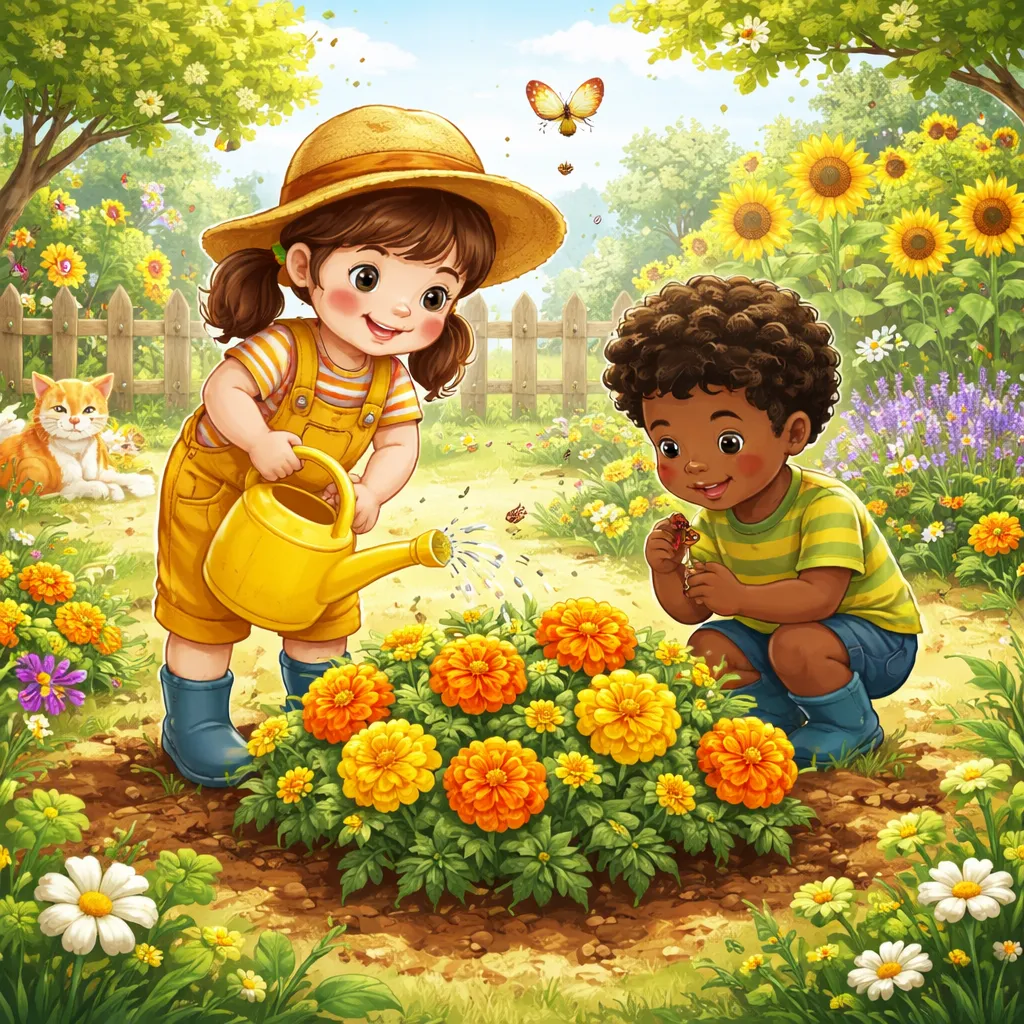
The marigold plant is a cheerful flower with golden blooms that shine like little suns. It grows as a bushy plant with sturdy stems. The leaves are dark green and finely divided. They look like fern leaves. When you touch the leaves, they release a strong, spicy scent. The flowers are round and full. They can be single with one layer of petals or double with many layers. The flowers come in shades of yellow, orange, and red. Some have petals tipped with a different color. Marigolds bloom all summer long. They keep going until frost. For children, marigolds are like little suns in the garden. They are bright and easy to see. Parents can plant marigold seeds with children. The seeds are large and easy to handle. Children watch the plants grow and bloom. The bright color and strong scent make marigolds unforgettable.
English Learning About This Plant
The English name “marigold” comes from “Mary’s gold.” The flower was associated with the Virgin Mary. The pronunciation is “mar-i-gold.” The International Phonetic Alphabet (IPA) is /ˈmærɪɡoʊld/. The word has three syllables. Children can say it: mar-i-gold. When we learn about marigold plant, we learn words for its parts. The stem is the sturdy, green part. The leaf is the dark green, fern-like part. The flower is the round, golden blossom. The petal is the soft, colorful part. The seed is the long, thin part that grows after the flower fades. These words help children describe this sunny plant.
There is a saying about marigolds. It goes, “Marigolds are the sunshine of the garden.” Another saying says, “Plant marigolds and watch the garden smile.” Parents can share these words with their child. They become gentle lessons about bringing brightness to the world. Marigolds also appear in many cultural traditions. They are used in festivals and celebrations around the world.
Plant Facts and Scientific Knowledge
The marigold plant belongs to the genus Tagetes. There are about 50 species. Marigolds are native to Central and South America. They are members of the daisy family, Asteraceae. The most common garden marigolds are African marigolds (Tagetes erecta) and French marigolds (Tagetes patula).
African marigolds grow tall. They can reach two to three feet. Their flowers are large and pom-pom shaped. French marigolds are smaller. They grow six to twelve inches tall. Their flowers are smaller and come in more colors. Signet marigolds have small, single flowers. Their leaves have a strong citrus scent.
Marigold flowers have many petals. Each flower is actually a cluster of tiny flowers. The center contains disk flowers. The outer petals are ray flowers. The flowers come in yellow, orange, red, and combinations.
Marigolds have a strong scent. This scent comes from compounds in the leaves and flowers. The scent repels some insects. This makes marigolds good companions for vegetable gardens. They help protect tomatoes and other plants from pests.
Marigolds have deep symbolic meaning. They represent warmth, creativity, and the sun. In Mexico, marigolds are used in Day of the Dead celebrations. They are called “flowers of the dead.” Their bright color and strong scent are believed to guide spirits home. In India, marigolds are used in weddings and festivals. They symbolize prosperity and good fortune.
How to Grow and Care for This Plant
Growing a marigold plant is perfect for children. Marigolds are easy to grow from seed. Plant the seeds in spring after the last frost. Choose a sunny spot. Marigolds need at least six hours of sunlight each day. They grow well in garden beds and pots.
Make a small furrow in the soil. Place the seeds about one inch apart. Cover with a little soil. Water gently. Children can help by placing the seeds. The seeds are large and easy for small fingers to hold.
Water marigolds regularly. They like consistent moisture. But they are drought-tolerant. They can survive if you forget to water. Water at the base. Avoid wetting the leaves.
Marigolds do not need much fertilizer. Too much fertilizer creates leaves but fewer flowers. They grow well in average soil. Remove dead flowers. This is called deadheading. It makes the plant produce more flowers. Children can pinch off the faded flowers easily.
Marigolds bloom all summer. In fall, they will die after frost. But you can save the seeds. Let some flowers dry on the plant. Pull out the long, thin seeds. Save them for next year.
Benefits of Growing This Plant
Growing a marigold plant brings many gifts to a family. First, the bright color brings joy. The golden flowers look like sunshine. Second, marigolds help protect other plants. Their scent repels some garden pests. Children learn about companion planting.
Marigolds attract pollinators. Bees and butterflies visit the flowers. Children can watch them throughout the summer. This teaches about the connection between plants and insects.
The flowers are edible. They can be added to salads. They make colorful decorations on cakes. Children can learn which parts are safe to eat. This connects gardening to food.
Marigolds also provide seeds. Children can save seeds from their plants. They can plant them next year. This teaches about the cycle of life.
What Can We Learn From This Plant
A marigold plant teaches children about brightness. The flowers are bright and easy to see. They do not hide. Children learn that they can shine. They can be bright in the world.
Marigolds also teach about protection. They protect other plants by repelling pests. Children learn that they can protect others. They can stand up for friends. They can help keep others safe.
Another lesson is about giving. Marigolds give color, scent, and seeds. They give food for pollinators. They give joy to people. Children learn that giving is rewarding. They can give in many ways.
Marigolds also teach about resilience. They grow in many conditions. They keep blooming. Children learn that they can be strong. They can keep going even when things are hard.
Fun Learning Activities
There are many simple activities to help children learn about marigold plant. One activity is seed saving. Let some marigold flowers dry on the plant. Show your child how to pull out the long, thin seeds. Put them in an envelope. Label it. Save them for next year. This teaches about life cycles.
Another activity is a scent test. Rub a marigold leaf between your fingers. Smell the scent. Describe it. Is it spicy? Is it strong? Compare different types of marigolds. This builds sensory language.
A nature journal works well for marigolds. Draw the fern-like leaves. Draw the round, golden flowers. Label the parts: stem, leaf, flower, petal. Write the date when the first flower opened. Count how many flowers are on the plant.
For art, try painting marigolds. Use bright yellow and orange paint. Paint the round, full flowers. Add the dark green, divided leaves. Paint the stems. This creates a sunny summer picture.
Vocabulary games are fun too. Write the words marigold, stem, leaf, flower, seed, and sun on cards. Say each word. Ask your child to point to the part on the plant. Practice saying marigold together. Clap the syllables: mar-i-gold.
Finally, try a companion planting activity. Plant marigolds near tomato plants or other vegetables. Explain how marigolds help protect the vegetables. Watch the garden together. See how the marigolds bloom all summer. This teaches about how plants help each other.
Through these activities, children build a deep connection with a plant that brings sunshine to the garden. They learn new words, practice saving seeds, and discover the joy of protection and giving. The marigold plant becomes a symbol of brightness and resilience. Each time they see marigolds, they remember that they can shine. They remember that they can protect others. This golden flower opens a world of summer color, simple gardening, and the lasting joy of watching sunshine bloom at their fingertips.