
What Is This Plant?
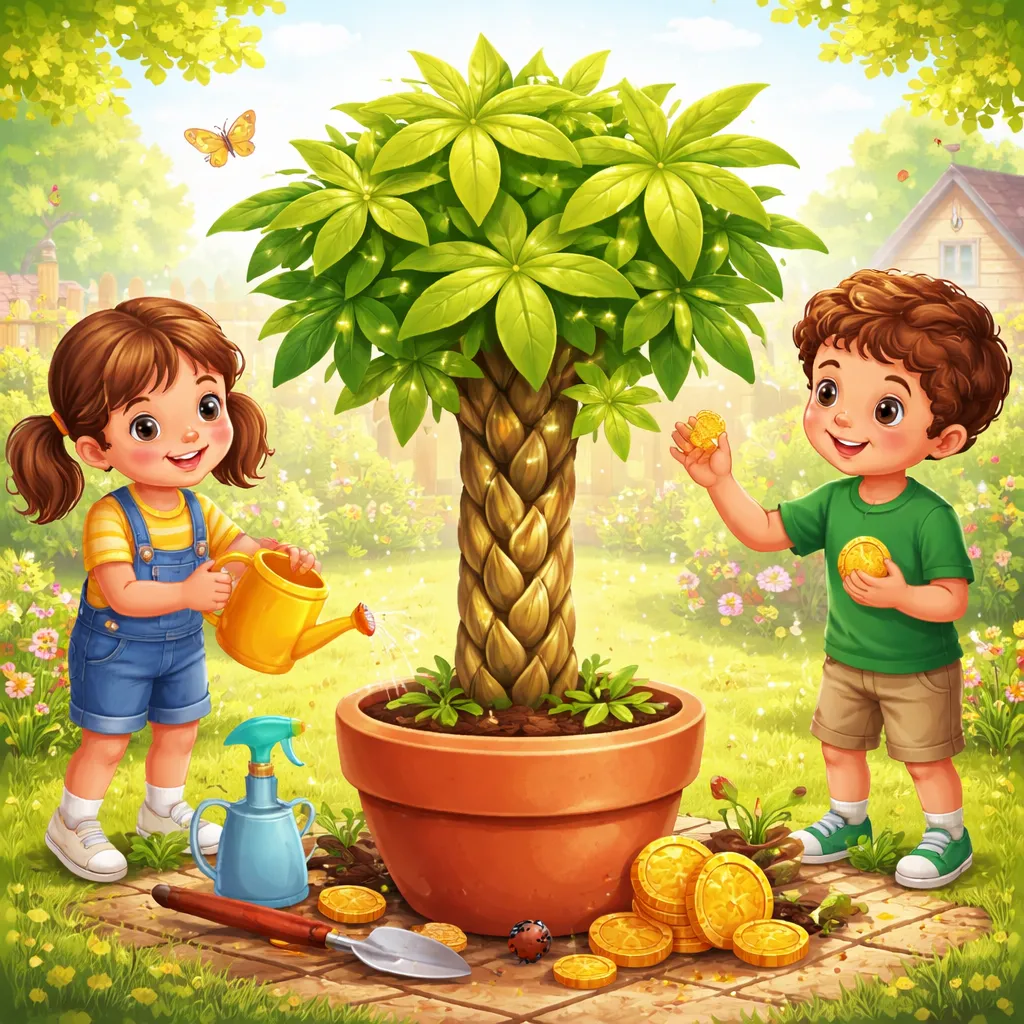
The money tree plant is a popular indoor tree with a braided trunk and glossy, star-shaped leaves. It grows as a small tree with a thick trunk. Often, several trunks are braided together. The leaves grow in clusters of five to seven leaflets. They look like green stars. The leaves are shiny and smooth. They are bright green. The plant is believed to bring good luck and prosperity. That is why it is called the money tree. In some cultures, it is given as a gift for good fortune. The plant can grow several feet tall indoors. It is easy to care for. For children, the money tree is like a lucky charm that grows. The braided trunk looks like a braid in hair. The star-shaped leaves are fun to count. Parents can grow money trees in pots. Children love the braided trunk and the lucky leaves. This plant teaches children about luck, prosperity, and the joy of giving.
English Learning About This Plant
The English name “money tree” comes from the belief that it brings good fortune and wealth. The pronunciation is “mun-ee tree.” The International Phonetic Alphabet (IPA) is /ˈmʌni triː/. Children can say it: mun-ee tree. When we learn about money tree plant, we learn words for its parts. The leaf is the glossy, star-shaped part with five to seven leaflets. The trunk is the thick, woody stem that is often braided. The braid is the weaving of multiple trunks together. The leaflet is one small part of the star-shaped leaf. The root is the part underground that takes in water. These words help children describe this lucky tree.
There is a famous saying about money trees. They are symbols of good luck. Another saying goes, “A money tree brings prosperity to the home.” Parents can share these words with their child. They become gentle lessons about hope, luck, and the joy of giving. Money trees are native to Central and South America.
Plant Facts and Scientific Knowledge
The money tree plant belongs to the species Pachira aquatica. It is a member of the mallow family, Malvaceae. It is native to Central and South America. It grows in wetlands. It is also called the Guiana chestnut. In the wild, it can reach 60 feet tall. Indoors, it grows 6 to 8 feet tall.
Money tree leaves are compound leaves. Each leaf has five to seven leaflets. The leaflets are arranged like a star. They are glossy and bright green. The leaves grow in clusters at the ends of branches.
The trunk is often braided. Young trees are braided by twisting the stems together. As they grow, they fuse. The braid gives the tree its distinctive look. The trunk is thick and woody.
Money trees produce flowers in the wild. They are large and showy. They are white with long, red stamens. The flowers are followed by edible nuts. Indoors, they rarely flower.
Money trees are easy to care for. They tolerate low light. They like consistent moisture. They are believed to bring good luck.
Money trees have symbolic meaning. They represent prosperity, good luck, and positive energy. They are often given as housewarming gifts. The five leaflets are said to represent the five elements: earth, water, fire, wind, and metal.
How to Grow and Care for This Plant
Growing a money tree plant is easy for families. Choose a spot with bright, indirect light. Money trees tolerate low light but grow best in bright light. They need well-drained soil. Use regular potting soil.
Plant money tree in a pot with drainage holes. Place the plant in the pot. Fill with soil. Water well. Children can help by putting the plant in the pot and adding soil.
Water money tree when the top inch of soil feels dry. It likes consistent moisture but does not like soggy soil. Water thoroughly, then let the soil dry slightly. In winter, water less. The plant will tell you when it needs water. The leaves will droop.
Money tree needs little fertilizer. Feed once a month in spring and summer with balanced fertilizer. Do not overfeed. Wipe the leaves with a damp cloth to keep them shiny. Children can help with this.
The braided trunk is delicate. Be careful not to damage it. The plant can be pruned to control size. Propagate from cuttings in water.
Benefits of Growing This Plant
Growing a money tree plant brings many gifts to a family. First, the braided trunk is beautiful. Children love the braid. Second, the star-shaped leaves are fun to count. Each leaf has five to seven leaflets.
Money trees are believed to bring good luck. Children learn about traditions and hope.
The plant cleans the air. It removes toxins. Children learn that plants help us breathe better.
Money trees are easy to care for. They survive neglect. This builds confidence.
What Can We Learn From This Plant
A money tree plant teaches children about hope. The plant is believed to bring good luck. Children learn that hope is important. They can hope for good things.
Money trees also teach about giving. The plant is often given as a gift. Children learn that giving brings joy. They can give to others.
Another lesson is about growth. The braided trunks grow together. Children learn that they can grow with others. They can be part of something bigger.
Money trees also teach about counting. The leaves have five to seven leaflets. Children learn to count the leaflets. They learn to notice details.
Fun Learning Activities
There are many simple activities to help children learn about money tree plant. One activity is a leaflet count. Look at a money tree leaf. Count how many leaflets are on one leaf. Most have five. Some have six or seven. This builds observation and counting skills.
Another activity is a braid study. Look at the braided trunk. See how the stems are twisted together. Try to braid string or paper. This connects the plant to art and texture.
A nature journal works well for money trees. Draw the star-shaped leaf with five leaflets. Draw the braided trunk. Draw the glossy leaves. Label the parts: leaf, leaflet, trunk, braid. Write the date when you got the plant.
For art, try painting money trees. Use green paint for the star-shaped leaves. Use brown for the braided trunk. Paint the five to seven leaflets. This creates a lucky tree picture.
Vocabulary games are fun too. Write the words money tree, leaf, leaflet, trunk, braid, and luck on cards. Say each word. Ask your child to point to the part on the plant. Practice saying money tree together. Clap the syllables: mun-ee tree.
Finally, try a luck activity. Talk about what luck means. Ask your child what brings them good luck. Make a lucky charm for the plant. This connects the plant to hope and tradition.
Through these activities, children build a deep connection with a tree that brings luck and prosperity. They learn new words, count leaflets, and discover the joy of giving. The money tree plant becomes a symbol of hope and generosity. Each time they see the braided trunk and star-shaped leaves, children remember that hope is important. They remember that giving brings joy. This lucky tree opens a world of tradition, counting fun, and the lasting lesson that the best gifts are the ones we share.