
What Is This Plant?
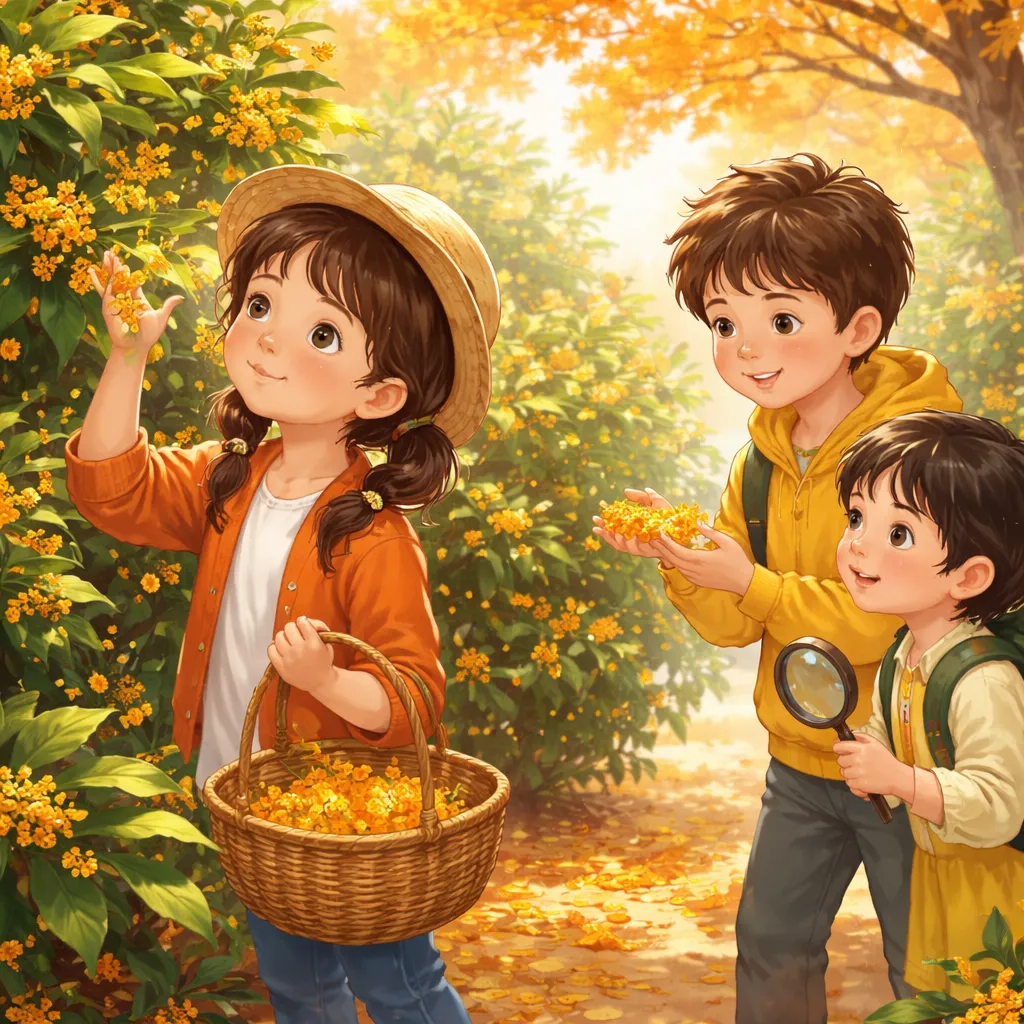
The osmanthus plant is an evergreen shrub or small tree that hides its flowers among glossy green leaves. It grows in a rounded shape with dense, dark green foliage. The leaves are oval with smooth or slightly toothed edges. They stay on the plant all year. The flowers are tiny and easy to miss. They grow in small clusters along the branches. But these small flowers have a big gift. They release one of the sweetest scents in the garden. The flowers can be white, pale yellow, or deep orange. They bloom in autumn. The scent travels far on the air. For children, osmanthus is like a secret. You may not see the flowers at first. But you smell them. Then you search for the source. Parents can plant osmanthus near a window or path. Children learn to follow their nose to find the tiny flowers. This plant turns a walk in the garden into a treasure hunt.
English Learning About This Plant
The English name “osmanthus” comes from Greek words. “Osme” means smell, and “anthos” means flower. So osmanthus means “fragrant flower.” The pronunciation is “oz-man-thus.” The International Phonetic Alphabet (IPA) is /ɒzˈmænθəs/. The word has three syllables. Children can say it: oz-man-thus. When we learn about osmanthus plant, we learn words for its parts. The leaf is the glossy, dark green part that stays all year. The stem is the woody part that holds the leaves and flowers. The flower is the tiny, fragrant blossom that grows in clusters. The bud is the small, unopened flower. The scent is the sweet smell that travels through the air. These words help children describe this hidden treasure.
There is a famous Chinese poem about osmanthus. The poet Bai Juyi wrote about osmanthus in his garden. He said the scent filled the autumn air like a sweet memory. Another saying goes, “Osmanthus teaches that small things can carry great fragrance.” This means even tiny flowers can fill the world with sweetness. Parents can share these words with their child. They become gentle lessons about how small gifts can make a big difference.
Plant Facts and Scientific Knowledge
The osmanthus plant belongs to the genus Osmanthus. There are about 30 species. Osmanthus is native to Asia, especially China, Japan, and the Himalayas. It is a member of the olive family, Oleaceae. Osmanthus has been cultivated for over a thousand years.
Osmanthus leaves are evergreen. They stay green through winter. The leaves are thick and glossy. Some species have leaves with spiny edges, like holly. Others have smooth edges. The leaves are dark green on top and lighter underneath.
The flowers are tiny. Each flower has four petals. They grow in clusters along the stems. The flowers can be white, cream, yellow, or orange. The orange-flowered type is called Osmanthus fragrans ‘Aurantiacus’. The flowers are not showy. Their beauty is in their scent.
Osmanthus blooms in autumn. The scent is strongest in the evening. The flowers attract moths and other night pollinators. After flowering, small purple-black fruits may appear.
Osmanthus has deep cultural significance. In China, osmanthus is associated with the Mid-Autumn Festival. People enjoy osmanthus tea and osmanthus wine. The flower symbolizes romance, beauty, and longevity. In Japan, osmanthus represents truth and nobility.
How to Grow and Care for This Plant
Growing an osmanthus plant is a wonderful family project. Choose a sunny or partly sunny spot. Osmanthus grows well in full sun to partial shade. It needs at least four hours of sunlight each day. The soil should be well-drained. Osmanthus can grow in many soil types.
Plant a young osmanthus shrub in spring or fall. Dig a hole twice as wide as the root ball. Place the plant in the hole. Fill with soil. Water well. Children can help by patting the soil around the plant.
Water regularly during the first year. Osmanthus likes consistent moisture but not soggy soil. Once established, it is quite drought-tolerant. Mulch around the base keeps the soil moist.
Prune osmanthus in late winter or early spring before new growth begins. Remove dead or crowded branches. This keeps the plant shapely. Osmanthus responds well to pruning. Children can help by collecting the pruned branches.
Fertilize in spring with a balanced fertilizer. A light feeding is enough. Osmanthus does not need heavy fertilizing. Protect from strong winter winds in cold areas. In very cold climates, grow osmanthus in a pot and bring it indoors for winter.
Benefits of Growing This Plant
Growing an osmanthus plant brings many gifts to a family. First, it fills the garden with sweet scent in autumn. The fragrance travels far. Children can smell it from inside the house when windows are open. Second, osmanthus stays green all year. It provides color even in winter.
The plant attracts pollinators. Bees and moths visit the tiny flowers. Children can watch for visitors in the evening. This teaches about nighttime pollinators.
Osmanthus has practical uses. The flowers can be used to make tea. Parents can show children how to steep dried osmanthus flowers in hot water. The tea has a sweet, floral taste. This connects the plant to food and culture.
The plant also offers a sensory experience. Children learn to use their nose to find the flowers. They learn that not all beauty is visible. Some beauty is smelled.
What Can We Learn From This Plant
An osmanthus plant teaches children that small things can have a big impact. The flowers are tiny. You could walk past them without seeing them. But their scent fills the whole garden. Children learn that they do not need to be big or loud to make a difference. A small kindness can spread like a sweet scent.
Osmanthus also teaches about hidden beauty. The flowers hide among the leaves. They do not show off. Yet people seek them out for their fragrance. Children learn that beauty comes in many forms. Some beauty is quiet.
Another lesson is about giving without showing. The osmanthus gives its scent freely. It does not need recognition. Children learn that giving does not need applause. They can do good things quietly.
Osmanthus also teaches about constancy. The plant stays green all year. It does not change with the seasons. Children learn that some things are steady. They can be a steady presence for others.
Fun Learning Activities
There are many simple activities to help children learn about osmanthus plant. One activity is a scent hunt. Close your eyes. Walk around the garden. Stop when you smell osmanthus. Open your eyes. Find the tiny flowers. This builds sensory awareness and observation.
Another activity is a flower search. Look closely at the osmanthus plant. Find the tiny flowers hidden among the leaves. Count how many flowers you see in one cluster. Use a magnifying glass to look at the small petals. This builds close observation skills.
A nature journal works well for osmanthus. Draw the glossy green leaves. Draw the tiny flowers up close. Label the parts: leaf, stem, flower. Write down how the plant smells. Write the date when the first flowers open.
For art, try making osmanthus scent pictures. Draw the osmanthus plant. Then add a scent by rubbing a leaf between your fingers. The natural scent stays on the paper for a short time. This connects art to the sense of smell.
Vocabulary games are fun too. Write the words osmanthus, leaf, flower, cluster, scent, and autumn on cards. Say each word. Ask your child to point to the part on the plant. Practice saying osmanthus together. Clap the syllables: oz-man-thus.
Finally, try a tea-making activity. If you have osmanthus flowers, harvest a small handful. Let them dry for a few days. Steep them in hot water. Taste the tea together. Talk about how tiny flowers can make a whole cup of tea sweet. This connects the plant to food and cultural traditions.
Through these activities, children build a deep connection with a plant that gives its gifts quietly. They learn new words, use their senses, and discover the joy of finding hidden treasures. The osmanthus plant becomes a symbol of quiet generosity and hidden beauty. Each time they smell osmanthus, they remember that small things can carry great fragrance. They remember that beauty is not always visible. This fragrant shrub opens a world of sensory learning, patience, and the simple joy of discovering that the sweetest gifts are often the ones we find when we slow down and pay attention.