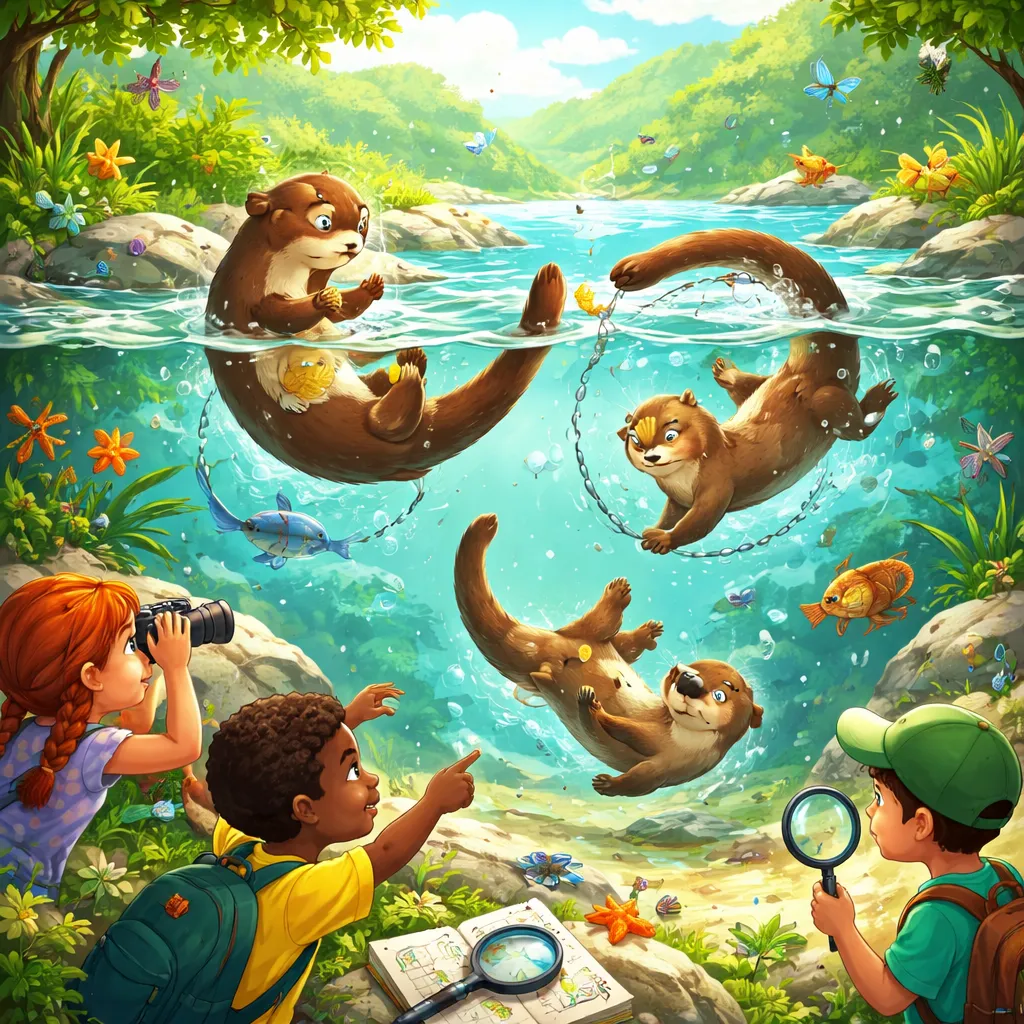

Imagine you’re by a river and you see a sleek, brown animal sliding down a muddy bank into the water. It might be an otter! With their playful nature, webbed feet, and love for water, otters are some of the most fun animals to watch. Learning about otters is a splashy adventure that takes us to rivers, lakes, and coasts. Let’s dive in and start our journey of learning about otter fun and skills!
English Language Learning
Vocabulary and Spelling Our playful swimmer is called an otter. The word "otter" is a noun. A noun names a person, place, or thing. So, an otter is a thing—a lively, aquatic animal. Spelling "otter" is simple: O-T-T-E-R. The 'O' starts the word, there are two 'T's in the middle, and it ends with 'E-R'. O-T-T-E-R spells otter.
Sound and Pronunciation Let’s say the word correctly. It sounds like this: /ˈɑː.t̬ɚ/. We can say it in two clear parts. First, say "ah". It’s the sound you make at the doctor, "ah". Next, say "ter". It rhymes with "her". Now, put it together! "Ah" "ter". Otter! Great! The word "otter" has two beats, or two syllables. Clap your hands twice: Ot-ter. It’s a smooth, water-like word.
Related Words Learning about otters is more fun with new words! Here are some important ones. Group: A group of otters is called a family, a romp, or a raft when they are resting together in the water. Home: An otter’s home by the water is called a holt or a den. Action: Otters love to slide on muddy or snowy banks, just for fun!
A Famous Saying People often say: "As happy as an otter." This is because otters always seem to be playing and having fun. They slide, splash, and chase each other. It’s a saying that reminds us to find joy and playfulness in our daily activities. Say the saying with me: "As happy as an otter." What makes you feel that happy?
Now you know the word "otter"! Are you ready to splash into some amazing facts? Let’s swim from words to wonderful knowledge!
Animal Knowledge
Who Are They? – Family and Group What kind of animal is an otter? Otters are mammals. They have fur, are warm-blooded, and mother otters feed their babies milk. They are part of the weasel family. Their cousins are badgers, minks, and wolverines. There are 13 different species, like the river otter and the sea otter.
What Do They Look Like? – Amazing Bodies Otters are about the size of a small dog, with long, sleek bodies. They have thick, water-repellent brown fur, webbed feet, and a long, strong tail. Sea otters are larger and fluffier. Their most important tool is their fur. It has two layers: a dense, soft undercoat to keep them warm and longer guard hairs to keep water out. They spend a lot of time grooming to keep their fur in perfect condition. Otters have special adaptations for water life. Their webbed feet make them powerful swimmers. Their nostrils and ears can close underwater. River otters have long whiskers to help them feel for prey in murky water.
Where Do They Live and How? – Home and Habits Otters live on every continent except Australia and Antarctica. Their homes are rivers, lakes, coasts, and wetlands. They need clean water with plenty of food. Otters are carnivores. This means they are meat-eaters. They eat fish, crabs, frogs, and other water creatures. Sea otters are famous for using rocks as tools to crack open shellfish. Otters are very social and playful. They are most active at night and at dawn and dusk. They spend their time hunting, grooming, and playing games. A group of otters is called a romp because they play together.
An Otter’s Life Story – Growing Up A baby otter is called a pup. Otters are mammals, so pups are born live from their mother. A mother otter usually has one to three tiny, blind pups at a time. The mother otter is a devoted parent. She teaches her pups everything: how to swim, hunt, and groom. She often carries them on her belly when they are small. The father does not usually help. Pups are born with a coat of baby fur. They open their eyes after about a month. They are very playful, which helps them learn important skills. They stay with their mother for about a year.
How Do They "Talk"? – Communication Otters talk with many sounds. They whistle, chirp, chuckle, and squeal. Each sound can mean something different, like a greeting or a warning. They use their bodies a lot. They play-fight, chase, and slide together to bond. They also use scent marking to define their territory. Their best senses are their excellent touch (through their whiskers) and hearing. Their whiskers are super-sensitive to vibrations in the water, helping them find prey. They also have good eyesight, even underwater.
Are They Okay? – Taking Care of Them Many otter species are threatened or endangered. This means they are in danger and need our help. The main threats are water pollution, loss of their wetland homes, and being caught in fishing nets. In the past, they were hunted a lot for their beautiful fur. You can be an otter hero! You can learn and tell others about the importance of clean water. You can support groups that protect rivers and coastlines. You can reduce plastic use and never litter, so trash doesn’t end up in their home. Clean water is good for otters and for us!
Life Connections and Inspiration
How to Be With Them – Safety and Love Otters are wild animals. They are playful but can be fierce if they feel threatened. We must always admire them from a safe and respectful distance. The rule is: Watch from far away. We can enjoy them in nature documentaries or at zoos with large, natural habitats. In the wild, we use binoculars to watch from the riverbank. Never try to touch, feed, or chase an otter. We must keep their water clean and free of our trash. We show our love by protecting the clean, healthy waterways they need to live and play. We can be voices for clean water for all.
Super Qualities We Learn from Them Otters teach us wonderful things. One super quality is playful cooperation. Otters work and play together in groups. They teach us that working as a team and having fun together makes hard tasks easier and life more joyful. Another quality is skillful adaptation. Otters are masters of their water world. They use tools, swim beautifully, and take excellent care of their fur. This reminds us to learn new skills, take care of ourselves, and adapt to our environment. Think about it: How can you be a playful and cooperative friend or teammate? What is a new skill you would like to learn and practice until you are great at it?
Take Action! – Your "Otter Raft" Project Let’s do a fun and cooperative activity! Your project is to build a floating "otter raft". Find some small sticks, corks, or waterproof craft materials. With an adult’s help, use string or rubber bands to tie them together into a small raft. Make sure it floats! Now, draw and color a few small otters on paper, cut them out, and tape them to your raft. Float your raft in a sink, bathtub, or a calm puddle outside. See if it stays together. This shows how otters sometimes rest together in a group called a raft.
Closing Learning about otter joy is a delightful adventure! We learned the word "otter" and how to say its two-part name. We discovered amazing facts about their waterproof fur, their playful romps, and their life in the water. We know that otters are social, skillful animals who need clean water to survive. You can use your new words to share stories about these aquatic acrobats. You can use your knowledge to understand the importance of clean water and teamwork. The animal world is full of playful and skillful teachers. Always remember to respect wildlife from a safe distance, find joy in play and teamwork, and take good care of your own "environment." Keep exploring with curiosity, practice your skills with joy, and be a friend to our planet’s waters. Your caring actions and playful spirit make you a true friend to the amazing otter.