
What Is This Plant?
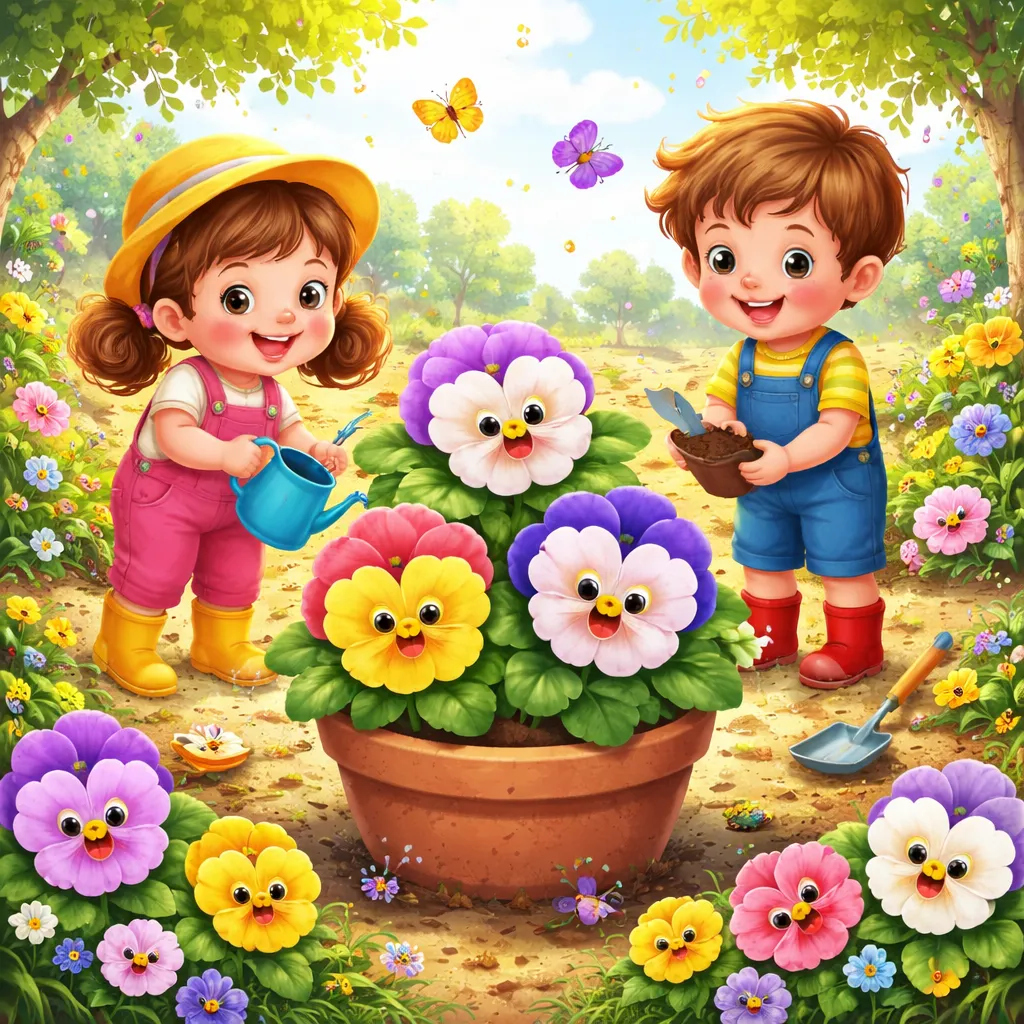
The pansy plant is a small, cheerful flower that blooms in cool weather. It grows in neat, low mounds. The leaves are green and oval-shaped. They grow close to the ground. The flowers are the main attraction. Each flower has five petals. The petals are round and soft. The flower looks like a face. Two petals point up. Two petals point out to the sides. One petal points down. Many pansies have dark markings on the petals. These look like eyes and a mouth. The flowers come in many colors. You can find purple, yellow, white, blue, red, and orange pansies. Some have two colors. Some have three colors. Pansies bloom in spring and fall. They love cool weather. For children, pansies are like friendly faces in the garden. Parents can plant pansies in pots or garden beds. Children love the smiling flowers. They can give each flower a name. This plant makes gardening feel like making new friends.
English Learning About This Plant
The English name “pansy” comes from the French word “pensée.” It means thought. The flower was called this because it looks like a face thinking. The pronunciation is “pan-zee.” The International Phonetic Alphabet (IPA) is /ˈpænzi/. The word has two syllables. Children can say it: pan-zee. When we learn about pansy plant, we learn words for its parts. The leaf is the green, oval part. The stem is the thin part that holds the flower. The flower is the colorful, face-like blossom. The petal is the soft, rounded part. The marking is the dark spot on the petals that looks like a face. These words help children describe this friendly plant.
There is a famous quote about pansies. In Shakespeare’s play Hamlet, Ophelia says, “There’s pansies, that’s for thoughts.” She meant the flower represents thinking and remembrance. Another saying goes, “A pansy is a smile from the garden.” This means the flowers look like they are smiling at you. Parents can share these words with their child. They become gentle lessons about kindness and remembering good things.
Plant Facts and Scientific Knowledge
The pansy plant belongs to the species Viola × wittrockiana. It is a hybrid. It was created by crossing different violet species. Pansies are members of the violet family, Violaceae. They are native to Europe but are now grown all over the world.
Pansy flowers have five petals. The two upper petals are usually larger. The two side petals have beards. These are small, hairy parts. The lower petal has a spur. This is a small tube that holds nectar. The dark markings on the petals are called whiskers or blotches. They guide bees to the center of the flower.
Pansies come in many colors. Some have single colors. Some have two or three colors. Some have ruffled petals. Some have petals with wavy edges. The flowers can be two to four inches across.
Pansies are cool-season flowers. They bloom best in spring and fall. In hot summer, they stop blooming. They can survive light frost. In mild winters, they can bloom through winter.
Pansies have symbolic meaning. They represent thoughtfulness, remembrance, and free thinking. They are flowers of love and admiration. Giving pansies means “I am thinking of you.” This makes them perfect flowers for children to give to people they care about.
How to Grow and Care for This Plant
Growing a pansy plant is easy for families. Plant pansies in spring or fall. Choose a sunny or partly sunny spot. Pansies need at least four hours of sunlight each day. They can grow in garden beds or pots.
Buy small pansy plants from a garden store. Choose plants with many buds. Dig a small hole. Place the plant in the hole. Cover with soil. Water well. Children can help by digging holes and placing the plants.
Water pansies regularly. They like consistent moisture. Water when the soil feels dry. Do not let the soil dry out completely. In pots, pansies need more water. Check the soil each day.
Remove dead flowers. This is called deadheading. Pinch off the faded flowers. This makes the plant produce more flowers. Children can do this easily. They can look for flowers that have stopped smiling.
Fertilize pansies every two weeks. Use a balanced fertilizer. Regular feeding keeps them blooming. In hot weather, pansies stop blooming. Cut them back. They will bloom again when cool weather returns.
Benefits of Growing This Plant
Growing a pansy plant brings many gifts to a family. First, the flowers have faces. Children love looking at them. They can imagine the flowers smiling at them. Second, pansies bloom in cool weather when other flowers are not blooming. They fill spring and fall with color.
Pansies are edible. The flowers can be added to salads. They make beautiful decorations on cakes. Children can learn which flowers are safe to eat. This connects gardening to food.
The plant teaches about seasons. Pansies love cool weather. Children learn that different flowers bloom in different seasons. They learn to appreciate spring and fall.
Pansies also make great gifts. Children can give a pot of pansies to a grandparent or teacher. The flowers carry the message “I am thinking of you.”
What Can We Learn From This Plant
A pansy plant teaches children about thoughtfulness. The flower’s name means thought. Children learn that thinking of others is important. A small gift or a kind word shows you care.
Pansies also teach about being yourself. Each pansy flower has its own face. Some have purple faces. Some have yellow faces. Some have three colors. Children learn that everyone is different. Each face is beautiful in its own way.
Another lesson is about blooming in your own time. Pansies bloom when it is cool. They do not try to bloom in summer heat. Children learn that they do not need to bloom at the same time as everyone else. They can find their own time.
Pansies also teach about resilience. They can survive frost. They keep blooming when other plants stop. Children learn that they can be strong. They can keep going even when conditions are not perfect.
Fun Learning Activities
There are many simple activities to help children learn about pansy plant. One activity is face spotting. Look at the pansy flowers. Find the two upper petals. Find the two side petals. Find the lower petal. Find the dark markings that look like eyes and a mouth. Each flower has a different face. This builds observation skills.
Another activity is a color hunt. Plant different colors of pansies. See how many colors you can find. Count the different shades. This builds color recognition and counting skills.
A nature journal works well for pansies. Draw the flower with its five petals. Draw the dark markings. Label the parts: leaf, stem, petal, marking. Write the date when the first flower opened. Draw different faces on different flowers.
For art, try painting pansy faces. Use purple, yellow, and white paint. Paint the five petals. Add dark markings for eyes and a mouth. Paint the green leaves around them. This creates a garden of smiling faces.
Vocabulary games are fun too. Write the words pansy, leaf, stem, flower, petal, and face on cards. Say each word. Ask your child to point to the part on the plant. Practice saying pansy together. Clap the syllables: pan-zee.
Finally, try a gift activity. Help your child plant a pansy in a small pot. Let them decorate the pot. Give it to someone they love. Talk about how the flower means “I am thinking of you.” This connects the plant to kindness and giving.
Through these activities, children build a deep connection with a flower that looks like a smiling friend. They learn new words, observe faces in nature, and discover the joy of thoughtfulness. The pansy plant becomes a symbol of kindness and individuality. Each time they see pansies, they remember that every face is different and beautiful. They remember that thinking of others is a gift. This cheerful flower opens a world of observation, creativity, and the simple joy of growing flowers with smiling faces.