
What Is This Plant?
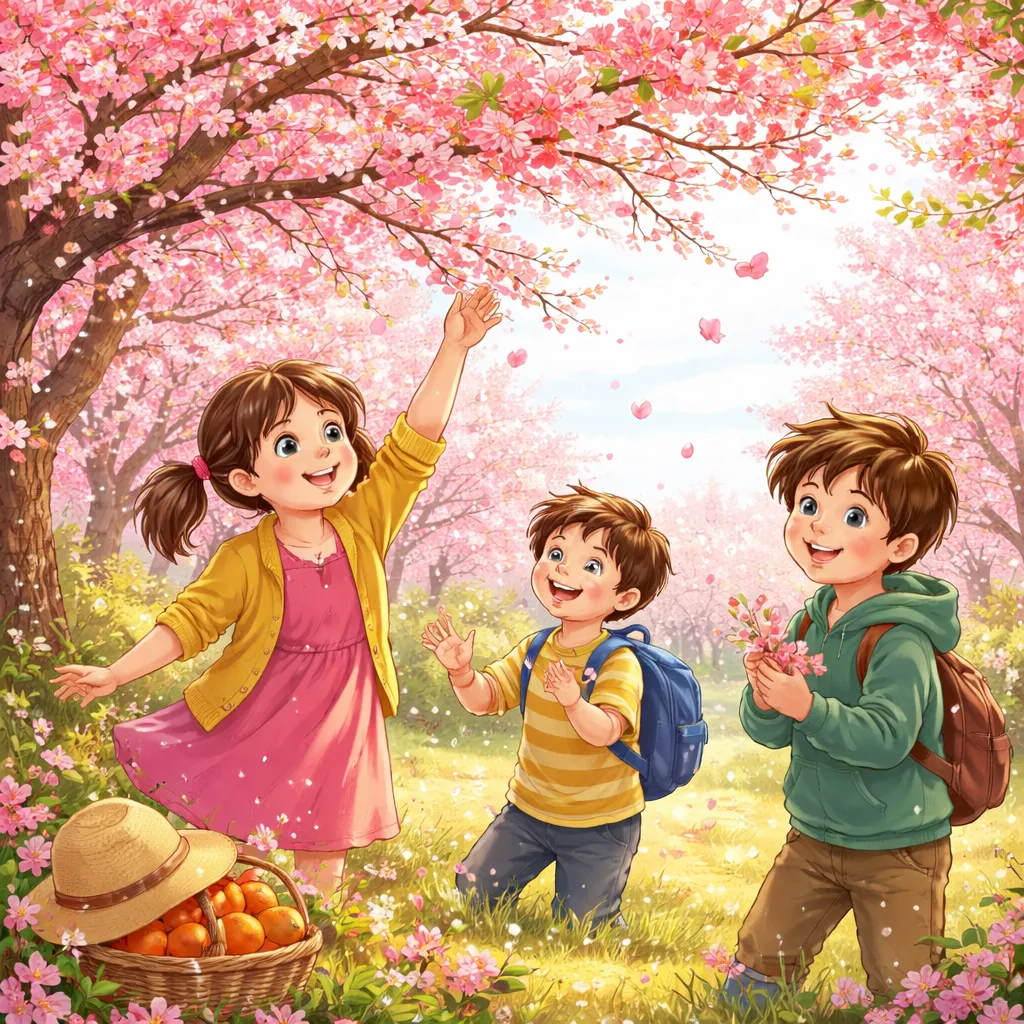
The peach blossom plant is a flowering tree that announces the arrival of spring with clouds of soft pink flowers. It grows as a small to medium-sized tree with spreading branches. Before the leaves appear, the branches become covered in delicate blossoms. Each flower has five petals. The petals are soft pink, sometimes with a deeper pink center. The flowers grow singly or in pairs along the branches. A light, sweet scent surrounds the tree when it blooms. After the flowers fade, long, narrow leaves appear. Later in summer, fuzzy fruits called peaches ripen on the tree. For children, peach blossoms feel like a celebration. The bright pink flowers bring color and joy after winter. Parents can take children to see peach blossoms in early spring. Walking among the flowering trees creates a magical memory.
English Learning About This Plant
The English name “peach blossom” combines two words. Peach comes from the fruit the tree produces. Blossom means a flower, especially on a fruit tree. The pronunciation is “peech blos-om.” The International Phonetic Alphabet (IPA) is /piːtʃ ˈblɒsəm/. The words have two syllables together. Children can say it: peach blos-om. When we learn about peach blossom plant, we learn words for its parts. The trunk is the main woody stem of the tree. The branch is the part that holds the flowers and leaves. The bark is the rough outer covering. The flower is the soft pink blossom with five petals. The bud is the small, round part that opens into a flower. These words help children describe this beautiful spring tree.
There is a famous Chinese poem about peach blossoms. The poet Tao Yuanming wrote about a hidden village where peach trees bloomed. He described a place of peace and happiness. Another saying goes, “Peach blossoms bring good fortune.” This means the flowers are seen as lucky. In many cultures, peach blossoms represent love, romance, and a happy life. Parents can share these words with their child. They become gentle lessons about finding joy and believing in good things.
Plant Facts and Scientific Knowledge
The peach blossom plant belongs to the species Prunus persica. It is part of the rose family, Rosaceae. Peaches are native to China. They have been cultivated for over 4,000 years. From China, peach trees spread to Persia and then to Europe and the rest of the world.
Peach blossoms have five petals. The flowers can be pale pink, bright pink, or almost white. Some cultivated varieties have double blossoms with many petals. The flowers bloom in early spring, usually before the leaves appear. They are among the first trees to flower after winter.
The fruit of the peach tree is a drupe. It has a fuzzy skin, juicy flesh, and a hard pit inside. The pit contains a seed. Peaches come in two main types. Clingstone peaches have flesh that sticks to the pit. Freestone peaches have flesh that comes away easily.
Peach trees need cold winters to produce fruit. They require a certain number of chill hours. This is time spent in temperatures below 45 degrees Fahrenheit. Without enough chill hours, the tree will not bloom or fruit well.
Peach blossoms have deep symbolic meaning. In Chinese culture, they represent longevity, love, and good luck. The peach is a symbol of immortality in some traditions. Peach blossoms are also associated with marriage and happiness. In Western cultures, peach blossoms represent sweetness and the joy of spring.
How to Grow and Care for This Plant
Growing a peach blossom plant is a rewarding family project. Choose a sunny spot. Peach trees need at least six to eight hours of direct sunlight each day. The soil should be well-drained. Peach trees do not like wet roots.
Plant a young peach tree in spring. Dig a hole twice as wide as the root ball. Place the tree in the hole. The graft union, which looks like a bump near the base, should be above the soil. Fill with soil. Water well. Children can help by holding the tree straight while you fill the hole.
Water the young tree regularly. Deep watering once a week helps the roots grow strong. In dry weather, water more often. Mulch around the base keeps the soil moist and prevents weeds.
Prune peach trees in late winter or early spring before the buds open. Remove dead, diseased, or crossing branches. Peach trees produce fruit on new wood. Pruning encourages new growth. Children can help by collecting the pruned branches.
Fertilize peach trees in early spring. Use a balanced fertilizer. Do not overfertilize. Too much nitrogen creates leaves but fewer flowers and fruits. Protect the tree from pests. Birds may eat the buds and fruit. You can use netting to protect the harvest.
Benefits of Growing This Plant
Growing a peach blossom plant brings many gifts to a family. First, it creates a stunning spring display. The pink flowers brighten the garden and lift everyone’s spirits. Second, peach blossoms attract bees and other pollinators. Children can watch the bees buzzing among the flowers.
The tree also provides food. In summer, the peaches ripen. Children can help harvest them. Peaches can be eaten fresh, made into jam, or baked in pies. This connects gardening to cooking and family meals.
The tree offers beauty throughout the year. In spring, the flowers bloom. In summer, the leaves are green and the fruit ripens. In autumn, the leaves turn yellow and red. In winter, the bare branches have a quiet beauty. Families can watch the tree change with the seasons.
Peach blossoms also connect families to cultural traditions. Parents can share stories about peach blossoms in art, poetry, and festivals. The tree becomes a way to learn about different cultures and their love for nature.
What Can We Learn From This Plant
A peach blossom plant teaches children about patience. The tree takes time to grow. It does not produce fruit right away. Children learn that good things come to those who wait. They learn to care for something over time.
Peach blossoms also teach about abundance. The tree produces many flowers and then many fruits. It is generous. Children learn that they can be generous too. They can share what they have with others.
Another lesson is about sweetness. Peaches are sweet and juicy. Children learn that sweetness in life comes from care. Watering, pruning, and waiting all lead to something sweet.
Peach blossoms also teach about renewal. Every spring, the tree blooms again. No matter what happened the year before, the flowers return. Children learn that each year is a new chance. They can begin again and bloom.
Fun Learning Activities
There are many simple activities to help children learn about peach blossom plant. One activity is a blossom count. When the tree blooms, go outside together. Pick one branch. Count how many flowers are on it. Count the petals on one flower. This builds observation and counting skills.
Another activity is a fruit watch. After the flowers fall, look for tiny green fruits. Check them each week. Draw how they grow. When they turn pink and fuzzy, they are almost ready. Harvest one together. Taste it. Talk about how the tree made this sweet fruit.
A nature journal works well for peach blossoms. Draw the tree in spring with its pink flowers. Draw the leaves in summer. Draw the fruit. Draw the fall colors. Label the parts: trunk, branch, flower, fruit. Write the date when the first flower opens and when the first fruit ripens.
For art, try painting peach blossoms. Use pink paint. Paint the branches first. Then use a small brush to add the five-petaled flowers. Add small green leaves after the flowers. This creates a beautiful spring picture.
Vocabulary games are fun too. Write the words peach blossom, trunk, branch, flower, bud, and fruit on cards. Say each word. Ask your child to point to the part on the tree. Practice saying peach blossom together. Clap the syllables: peach blos-som.
Finally, try a taste test. When peaches are ripe, taste one together. Describe the flavor. Is it sweet? Is it juicy? Talk about how the tree grew the fruit from a tiny flower. This connects the plant to food and gratitude.
Through these activities, children build a deep connection with a tree that gives both beauty and food. They learn new words, observe nature, and discover the joy of harvest. The peach blossom plant becomes a symbol of patience, abundance, and sweetness. Each time they see peach blossoms, they remember that spring brings new beginnings. They remember that care and waiting lead to something delicious. This lovely tree opens a world of seasonal wonder, cultural traditions, and the simple joy of watching life grow from flower to fruit.