
What Is This Plant?
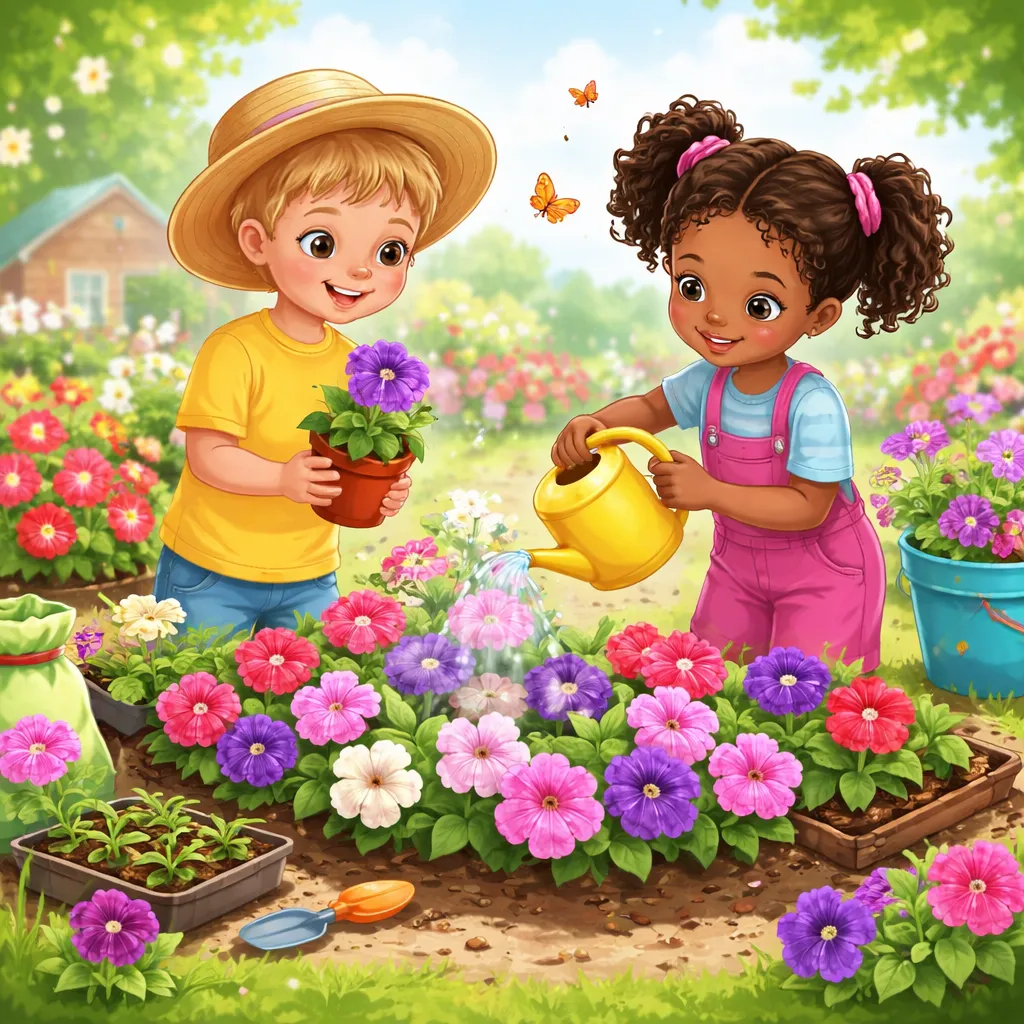
The petunia plant is a popular garden flower that blooms all summer long. It grows as a low, spreading plant or a mounding plant, depending on the type. The stems are green and slightly sticky. The leaves are soft and oval-shaped. They are covered in tiny hairs. The flowers are trumpet-shaped. They come in almost every color. You can find petunias in pink, purple, red, white, yellow, and blue. Some have stripes, spots, or ruffled edges. Some flowers are single with five petals. Others are double with many layers of petals. Petunias bloom from spring until frost. They do not stop. For children, petunias are perfect. They are easy to grow. They bloom for a long time. Parents can plant petunias in pots, hanging baskets, or garden beds. Children can water them and watch the flowers appear day after day.
English Learning About This Plant
The English name “petunia” comes from a word in a South American language. It means tobacco. Petunias are related to tobacco plants. The pronunciation is “pe-toon-ya.” The International Phonetic Alphabet (IPA) is /pəˈtuːnjə/. The word has three syllables. Children can say it: pe-toon-ya. When we learn about petunia plant, we learn words for its parts. The stem is the green, slightly sticky part. The leaf is the soft, oval-shaped part with tiny hairs. The flower is the trumpet-shaped blossom. The petal is the soft, colorful part. The bud is the tightly closed flower that will open soon. These words help children describe this cheerful plant.
There is a saying about petunias. It goes, “Petunias are the workhorses of the garden.” This means they bloom and bloom without complaining. Another saying says, “Petunias teach us to keep going.” They bloom all summer long. Parents can share these words with their child. They become gentle lessons about persistence and doing your best every day.
Plant Facts and Scientific Knowledge
The petunia plant belongs to the genus Petunia. There are about 20 species. Petunias are native to South America, especially Argentina and Brazil. They are members of the nightshade family, Solanaceae. This is the same family as tomatoes and potatoes.
There are two main types of petunias. Grandiflora petunias have large flowers. They are showy but can be damaged by rain. Multiflora petunias have smaller flowers. They are more weather-resistant. Spreading petunias grow low and wide. They are good for hanging baskets.
Petunia flowers can be single or double. Single flowers have five petals. Double flowers have many layers of petals. The flowers come in many colors. Some petunias have a sweet scent. Others have little scent.
Petunias bloom from spring until frost. They are annuals. This means they grow, flower, and die in one season. But they bloom so long that they feel like they last forever. They need full sun to bloom well. In shade, they produce fewer flowers.
Petunias have symbolic meaning. They represent anger and resentment in some traditions. But in modern gardens, they represent cheerfulness and persistence. They are flowers of summer and joy.
How to Grow and Care for This Plant
Growing a petunia plant is easy for families. You can start with seeds or buy small plants from a garden store. Choose a sunny spot. Petunias need at least six hours of sunlight each day. They can grow in garden beds, pots, or hanging baskets.
If planting seeds, start them indoors six to eight weeks before the last frost. Sprinkle seeds on soil. Do not cover them. They need light to germinate. Keep the soil moist. When seedlings are big enough, move them outside.
If buying plants, plant them after the last frost. Dig a small hole. Place the plant in the hole. Cover with soil. Water well. Children can help by digging holes and placing the plants.
Water petunias regularly. They like consistent moisture. Water at the base. Avoid wetting the leaves. This helps prevent disease. In pots, petunias need more water. Check the soil each day.
Pinch back petunias. When the plant is young, pinch off the growing tips. This makes the plant bushy. Remove dead flowers. This is called deadheading. It encourages more blooms. Children can help by pinching off the faded flowers.
Fertilize petunias every two weeks. Use a balanced fertilizer. Regular feeding keeps them blooming. Petunias are heavy feeders. They need food to produce so many flowers.
Benefits of Growing This Plant
Growing a petunia plant brings many gifts to a family. First, it provides color all summer long. The flowers do not stop. Second, petunias are very forgiving. If children forget to water one day, the plant usually recovers. This builds confidence in young gardeners.
Petunias attract pollinators. Bees and butterflies visit the flowers. Children can watch them throughout the summer. This teaches about the connection between plants and insects.
The plant is good for containers. Families without gardens can grow petunias on balconies or patios. Children can have their own pot to care for. This gives them ownership.
Petunias also provide cut flowers. Children can pick a few blooms to put in a small vase. They last several days indoors. This brings summer color inside.
What Can We Learn From This Plant
A petunia plant teaches children about persistence. The plant blooms all summer. It does not stop after one flower. It keeps making new flowers. Children learn to keep going. They can keep trying even after one success.
Petunias also teach about adaptation. They can grow in pots, baskets, or ground. They adapt to where they are planted. Children learn that they can adapt too. They can grow in different places and situations.
Another lesson is about giving. Petunias give flowers all season. They give color and beauty without asking for much. Children learn that giving is rewarding. They can share their gifts with others.
Petunias also teach about care. They need water, sun, and food. When they get care, they bloom. Children learn that care leads to growth. When they care for something, it thrives.
Fun Learning Activities
There are many simple activities to help children learn about petunia plant. One activity is a color garden. Plant different colors of petunias together. Let your child arrange them. Make stripes of color or patches of color. This builds creativity and design skills.
Another activity is a deadheading race. See who can find the most faded flowers to remove. Make it a game. This teaches care and observation while being fun.
A nature journal works well for petunias. Draw the trumpet-shaped flowers. Draw the soft, hairy leaves. Label the parts: stem, leaf, flower, petal, bud. Write the date when the first flower opened. Count how many flowers are open each week.
For art, try painting petunias. Use bright colors like pink, purple, and white. Paint the trumpet-shaped flowers. Add the soft green leaves. Paint a pot or basket around them. This creates a cheerful summer picture.
Vocabulary games are fun too. Write the words petunia, stem, leaf, flower, bud, and bloom on cards. Say each word. Ask your child to point to the part on the plant. Practice saying petunia together. Clap the syllables: pe-toon-ya.
Finally, try a container planting activity. Give your child their own pot. Let them fill it with soil. Let them plant petunia seedlings. Let them water and care for their own plant. This builds responsibility and pride. They can watch their plant bloom all summer.
Through these activities, children build a deep connection with a plant that gives color all season long. They learn new words, practice care, and discover the joy of persistent growth. The petunia plant becomes a symbol of cheerfulness and hard work. Each time they see petunias, they remember that they can keep going. They remember that care and food lead to bloom. This cheerful flower opens a world of summer color, simple care, and the lasting joy of watching something bloom day after day.