
What Is This Plant?
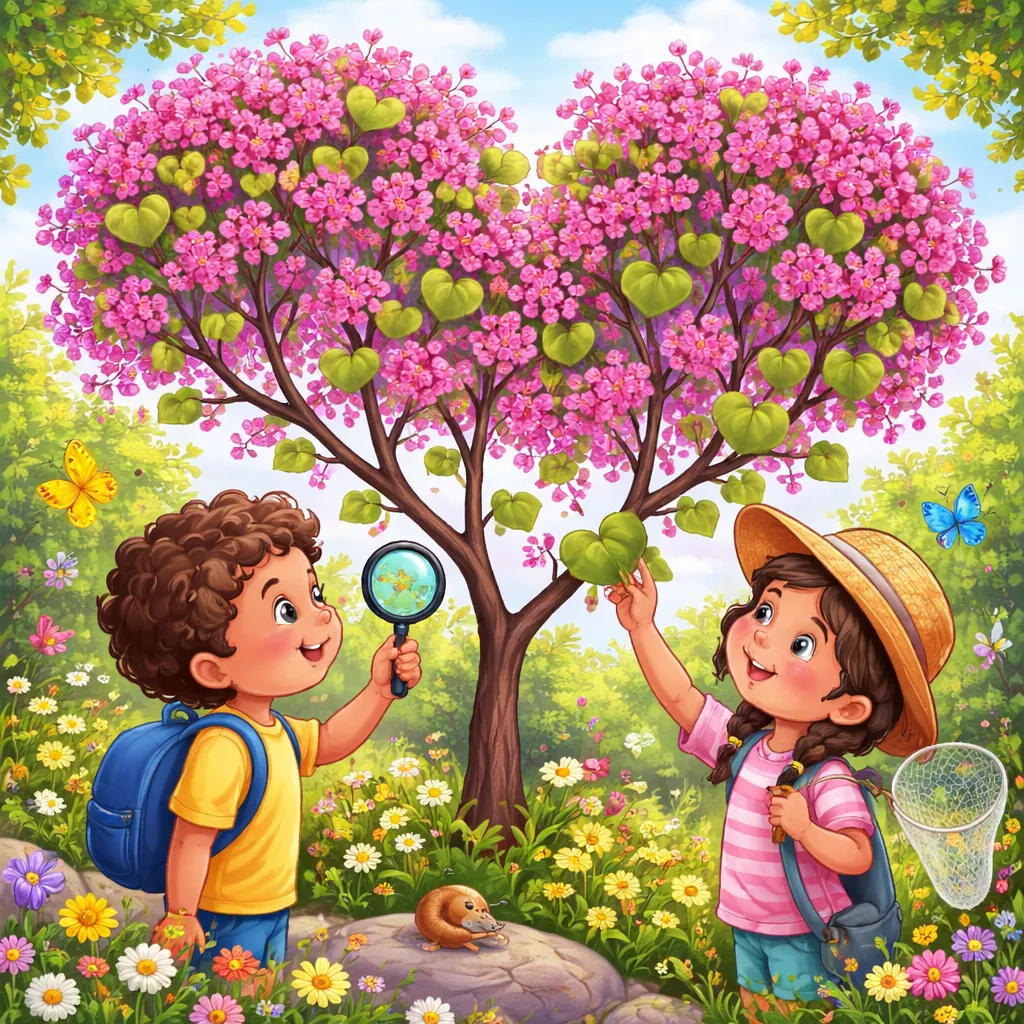
The redbud plant is a small flowering tree that covers itself in magenta-pink flowers in early spring. It grows as a small tree with a rounded crown. It usually reaches fifteen to twenty-five feet tall. The branches spread wide. The bark is dark and smooth. In early spring, before any leaves appear, the branches become covered in clusters of tiny flowers. The flowers are bright magenta-pink. They grow directly on the branches and even on the trunk. This is called cauliflory. The flowers look like small pea blossoms. They are sweet and edible. After the flowers fade, heart-shaped leaves appear. The leaves are bright green and soft. They are one of the most recognizable shapes in nature. For children, redbud is like a tree wearing jewelry. The flowers sparkle on every branch. The heart-shaped leaves are a symbol of love. Parents can plant redbud in the garden. Children can pick the heart-shaped leaves and give them to people they love. This plant teaches children about love and early spring beauty.
English Learning About This Plant
The English name “redbud” describes the color of the flower buds. They are red before they open. The pronunciation is “red-bud.” The International Phonetic Alphabet (IPA) is /ˈrɛdˌbʌd/. The word has two syllables. Children can say it: red-bud. When we learn about redbud plant, we learn words for its parts. The trunk is the main woody part of the tree. The branch is the part that holds the flowers and leaves. The flower is the small, magenta-pink, pea-shaped blossom. The leaf is the heart-shaped, bright green part. The pod is the flat, bean-like fruit that appears after flowering. These words help children describe this beloved spring tree.
There is a famous saying about redbud. It goes, “The redbud wears a crown of hearts.” The heart-shaped leaves and pink flowers make it a tree of love. Another saying says, “When the redbud blooms, spring is here to stay.” Parents can share these words with their child. They become gentle lessons about love and the constancy of spring. The redbud is the state tree of Oklahoma.
Plant Facts and Scientific Knowledge
The redbud plant belongs to the species Cercis canadensis. It is a member of the pea family, Fabaceae. Redbuds are native to eastern North America. They grow in woodlands and along streams. There are also redbuds in Europe and Asia.
Redbud flowers are unusual. They grow directly on the branches and trunk. This is called cauliflory. It is an adaptation that allows pollinators to reach the flowers easily. The flowers are pea-shaped. They have five petals. The color ranges from magenta-pink to lavender. White-flowered varieties exist.
The flowers are edible. They have a sweet, slightly sour taste. They can be added to salads. The buds can be pickled. Native Americans used redbud flowers and seeds for food.
The leaves are heart-shaped. They are about three to five inches across. They are bright green in spring and summer. In fall, they turn yellow. The seed pods are flat and bean-like. They contain several seeds.
Redbuds are small trees. They grow slowly. They are often planted as understory trees. They tolerate shade but bloom best in sun. They are important for early spring pollinators. Bees and butterflies visit the flowers.
Redbuds have symbolic meaning. They represent love, hope, and the arrival of spring. The heart-shaped leaves are a universal symbol of love. The flowers represent the renewal of life.
How to Grow and Care for This Plant
Growing a redbud plant is a wonderful family project. Plant in spring or fall. Choose a sunny spot. Redbuds need at least four to six hours of sunlight each day. They can grow in partial shade but flower less. They need well-drained soil.
Dig a hole twice as wide as the root ball. Place the tree in the hole. Fill with soil. Water well. Children can help by holding the tree straight while you fill the hole.
Water redbuds regularly during the first year. Once established, they need water during dry spells. Mulch around the base keeps the soil moist. Redbuds have shallow roots. Do not dig near the tree.
Fertilize redbuds in spring. Use a balanced fertilizer. Do not overfertilize. Too much nitrogen creates leaves but fewer flowers. Redbuds are low-maintenance trees.
Prune redbuds in late winter or after flowering. Remove dead or crossing branches. Redbuds often have multiple trunks. Choose one main trunk for a tree shape. Children can help by collecting the pruned branches.
Benefits of Growing This Plant
Growing a redbud plant brings many gifts to a family. First, the early spring flowers are spectacular. The magenta color stands out against the gray spring sky. Second, the heart-shaped leaves are beloved by children. They can pick them and give them as gifts.
Redbuds attract early pollinators. Bees and butterflies visit the flowers. Children can watch them on warm spring days.
The flowers are edible. Children can taste a flower. It is sweet and mild. This connects the plant to food and exploration.
Redbuds also teach about love. The heart-shaped leaves are a symbol. Children learn that love is expressed in many ways. A leaf can say “I love you.”
What Can We Learn From This Plant
A redbud plant teaches children about love. The heart-shaped leaves are a constant reminder. Children learn to express love. They can give leaves to people they care about.
Redbuds also teach about being early. They are one of the first trees to bloom. Children learn that being early is a gift. They can bring joy to others by arriving early.
Another lesson is about growing on the branches. The flowers grow directly on the wood. They do not need leaves to show off. Children learn that they can share their gifts without needing a stage.
Redbuds also teach about giving. The tree gives flowers, leaves, and seeds. It gives beauty to everyone. Children learn that giving is part of life.
Fun Learning Activities
There are many simple activities to help children learn about redbud plant. One activity is a leaf hunt. When the leaves appear, look for heart-shaped leaves. Pick one. Give it to someone you love. This builds emotional connection and observation.
Another activity is a flower taste test. When the redbud blooms, taste a flower. Describe the taste. Is it sweet? Is it sour? This builds sensory awareness and courage to try new things.
A nature journal works well for redbuds. Draw the heart-shaped leaves. Draw the clusters of magenta flowers on the branches. Draw the flat seed pods. Label the parts: trunk, branch, flower, leaf, pod. Write the date when the first flower opened.
For art, try painting redbuds. Use magenta and pink paint. Paint the clusters of tiny flowers on the branches. Paint the heart-shaped leaves. This creates a beautiful spring picture.
Vocabulary games are fun too. Write the words redbud, trunk, branch, flower, leaf, and heart on cards. Say each word. Ask your child to point to the part on the tree. Practice saying redbud together. Clap the syllables: red-bud.
Finally, try a love activity. When the heart-shaped leaves appear, help your child make a card. Press a heart-shaped leaf on the card. Write a message to someone they love. Give it as a gift. This connects the plant to emotional expression and kindness.
Through these activities, children build a deep connection with a tree that wears its flowers on its branches and its heart on its leaves. They learn new words, taste flowers, and discover the joy of giving love. The redbud plant becomes a symbol of love and early spring. Each spring when the magenta flowers appear, children remember that they can be early and bright. They remember that love comes in many forms, even a heart-shaped leaf. This beloved tree opens a world of spring wonder, emotional connection, and the lasting joy of watching flowers bloom directly on the branches and leaves shaped like hearts.