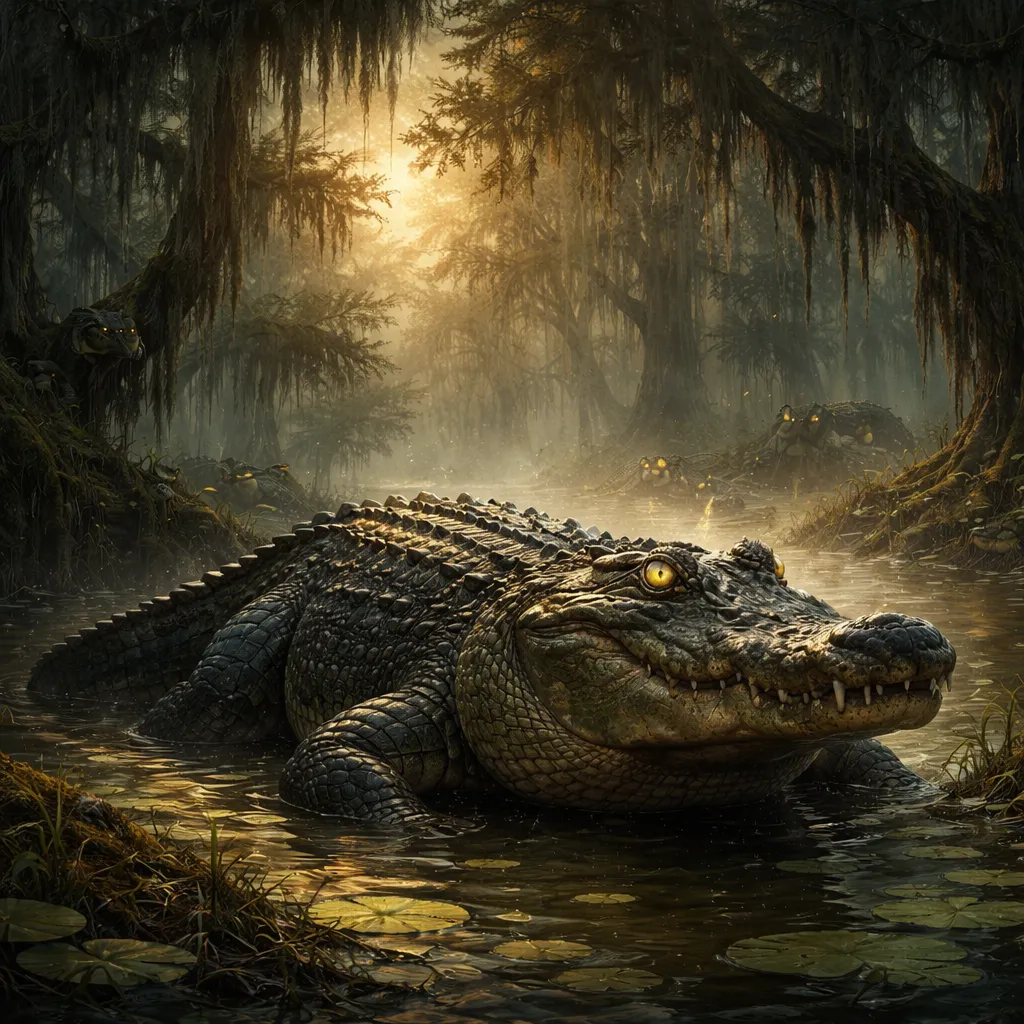

Imagine you’re in a swampy, green wetland in the southeastern United States or in China, and you see a large, dark-colored reptile with a wide snout, resting on a bank with its mouth open. It looks powerful and ancient. That’s an alligator! These incredible reptiles are masters of their freshwater homes. Learning about alligators is a thrilling adventure that shows us the power and importance of wetland predators. Let’s begin our journey of learning about alligator life and their role in the swamp.
English Language Learning
Vocabulary and Spelling Our wide-snouted swamp friend is called an alligator. The word "alligator" is a noun. A noun names a person, place, or thing. So, an alligator is a thing—a large, living reptile. Spelling "alligator" is interesting: A-L-L-I-G-A-T-O-R. A-L-L-I-G-A-T-O-R spells alligator.
Sound and Pronunciation Let’s say the word correctly. It sounds like this: /ˈæl.ɪ.ɡeɪ.t̬ɚ/. We can say it in four clear parts. First, say "al". It rhymes with "pal". Next, say "li". It’s a quick sound. Then, say "gay". It rhymes with "day". Last, say "tor". It’s like the end of "doctor". Now, put it together! "Al" "li" "gay" "tor". Alligator! Great! The word "alligator" has four beats, or four syllables. Clap four times: Al-li-ga-tor. It’s a long, rolling word.
Related Words Learning about alligators is more fun with new words! Here are some important ones. Baby: A baby alligator is called a hatchling. Its call is a high-pitched yelp. Body Part: The hard plates on an alligator’s back are scutes. Its home wetland is a swamp or marsh. Action: The way an alligator floats with just its eyes and nose above water is called periscoping.
A Famous Saying People sometimes say: "In a while, crocodile... See you later, alligator!" This is a fun, rhyming way to say goodbye to a friend. It’s a playful phrase that has nothing to do with real alligator behavior, but it makes their name memorable and fun! It reminds us that language can be playful. Say the saying with me: "See you later, alligator!" It’s a silly and friendly goodbye.
Now you know the word "alligator"! Are you ready to wade into some amazing facts? Let’s crawl from words to wonderful knowledge!
Animal Knowledge
Who Are They? – Family and Group What kind of animal is an alligator? Alligators are reptiles. They are cold-blooded, have scaly skin, and lay eggs. They belong to the Alligatoridae family. There are two species: the American Alligator and the smaller Chinese Alligator. They are close cousins of crocodiles, caimans, and gharials. They are ancient reptiles, often called "living fossils."
What Do They Look Like? – Amazing Bodies Alligators are large, powerful reptiles. A big one can be as long as a car! They are usually dark gray, black, or olive. Their most famous features are their broad, U-shaped snout and their powerful tail. Their body is built for the water! Their eyes, ears, and nose are on top of their head so they can see, hear, and breathe while almost completely underwater. Their skin is covered in tough, bony plates called osteoderms. Alligators have special adaptations. They have a special valve in the back of their throat that lets them open their mouth underwater to catch prey without swallowing water. They can hold their breath for a very long time. They are excellent swimmers, using their tail to move.
Where Do They Live and How? – Home and Habits Alligators live in freshwater wetlands. Their homes are swamps, marshes, rivers, and lakes in the southeastern United States and in eastern China. They need calm, freshwater to live. Alligators are carnivores. This means they are meat-eaters. They are apex predators, eating fish, turtles, snakes, birds, and mammals. They are patient hunters, often waiting motionless for prey to come close. They help keep other animal populations in balance. Alligators are often solitary but can be social. They are most active at night. They spend their time swimming, basking in the sun to warm up, and guarding their territory. A group of alligators is called a congregation.
An Alligator’s Life Story – Growing Up A baby alligator is called a hatchling. Alligators are reptiles, so hatchlings hatch from eggs. A mother alligator builds a large nest of mud and plants and lays 20 to 50 eggs. The mother alligator is a super protector! She guards the nest fiercely. When the babies are ready to hatch, they make yelping sounds. The mother may help them out of the nest and then carry them gently in her mouth to the water. Hatchlings are about 6 to 8 inches long. They stay with their mother for up to two years for protection. They grow about a foot a year. Alligators can live a very long time, some for over 50 years in the wild.
How Do They "Talk"? – Communication Alligators are very vocal! They make many sounds. Adults make deep bellows or roars. Babies make a high-pitched yelp to call their mother. They also hiss when threatened. They use body language. Slapping their head or tail on the water makes a loud splash to show they are there. Opening their mouth wide can be a warning to go away. Their best senses are their excellent hearing, eyesight, and sense of touch. They have good night vision. Their skin is very sensitive to vibrations in the water, helping them find moving prey.
Are They Okay? – Taking Care of Them The American Alligator is a success story! It was once endangered but is now thriving because of protection. The Chinese Alligator is critically endangered and one of the rarest reptiles in the world. The main threats are loss of wetland homes, pollution, and for the Chinese Alligator, very little remaining habitat. In the past, they were hunted for their skin. You can be an alligator ally! You can learn and tell others about their comeback story. You can support groups that protect wetlands. Never feed wild alligators—it makes them lose their fear of people, which is dangerous. If you live near them, learn how to stay safe.
Life Connections and Inspiration
How to Be With Them – Safety and Love Alligators are wild, powerful predators. They are not pets and can be dangerous. We must always admire them with great caution and from a very safe distance. The rule is: Always stay far away and never disturb. Never approach, feed, or try to touch an alligator. Stay away from the water’s edge in areas where they live. Keep pets on a leash. If you see one, tell an adult and move away calmly. They are an important part of nature, and we must respect their space. We show our love by protecting the clean, healthy wetlands they call home and by letting them live their wild lives in peace.
Super Qualities We Learn from Them Alligators teach us powerful lessons. One super quality is patient strength and awareness. An alligator can wait perfectly still for a long time, completely aware of its surroundings. It teaches us the value of patience, of being strong and steady, and of being aware of what is happening around us. Another quality is protective care and resilience. Mother alligators are fiercely protective of their young. Also, the American Alligator’s population came back from near disappearance. This reminds us of the importance of protecting our family and community, and that with care and effort, we can help things recover and thrive. Think about it: How can you practice being patient and aware, like an alligator waiting? Who or what in your life do you protect and care for?
Take Action! – Your "Alligator Habitat" Project Let’s do a protective and creative activity! Your project is to build a model of a healthy alligator wetland. Use a shallow box as the base. Add blue paper for water. Use green paper, clay, or real plants to make reeds and grass. Make a nest from twigs and moss. Create a clay alligator and her babies. Label the important parts: clean water, plants for hiding, and a safe nest. This shows what alligators need to survive and thrive.
Closing Learning about alligator power is a fascinating and hopeful adventure! We learned the word "alligator" and how to say its four-part name. We discovered amazing facts about their broad snouts, their protective mothers, and their life as patient swamp guardians. We know that alligators are strong, resilient reptiles that have made an amazing comeback but still need our respect and protection. You can use your new words to share the success story of these incredible animals. You can use your knowledge to be a safe and responsible visitor to wetlands and a champion for conservation. The animal world is full of patient and protective teachers. Always remember to respect wildlife from a very safe distance, practice patience and awareness, and care for and protect the people and places you love. Keep exploring with curiosity, move through the world with steady strength, and be a friend to the wild. Your thoughtful actions and caring spirit make you a true friend to the amazing alligator.