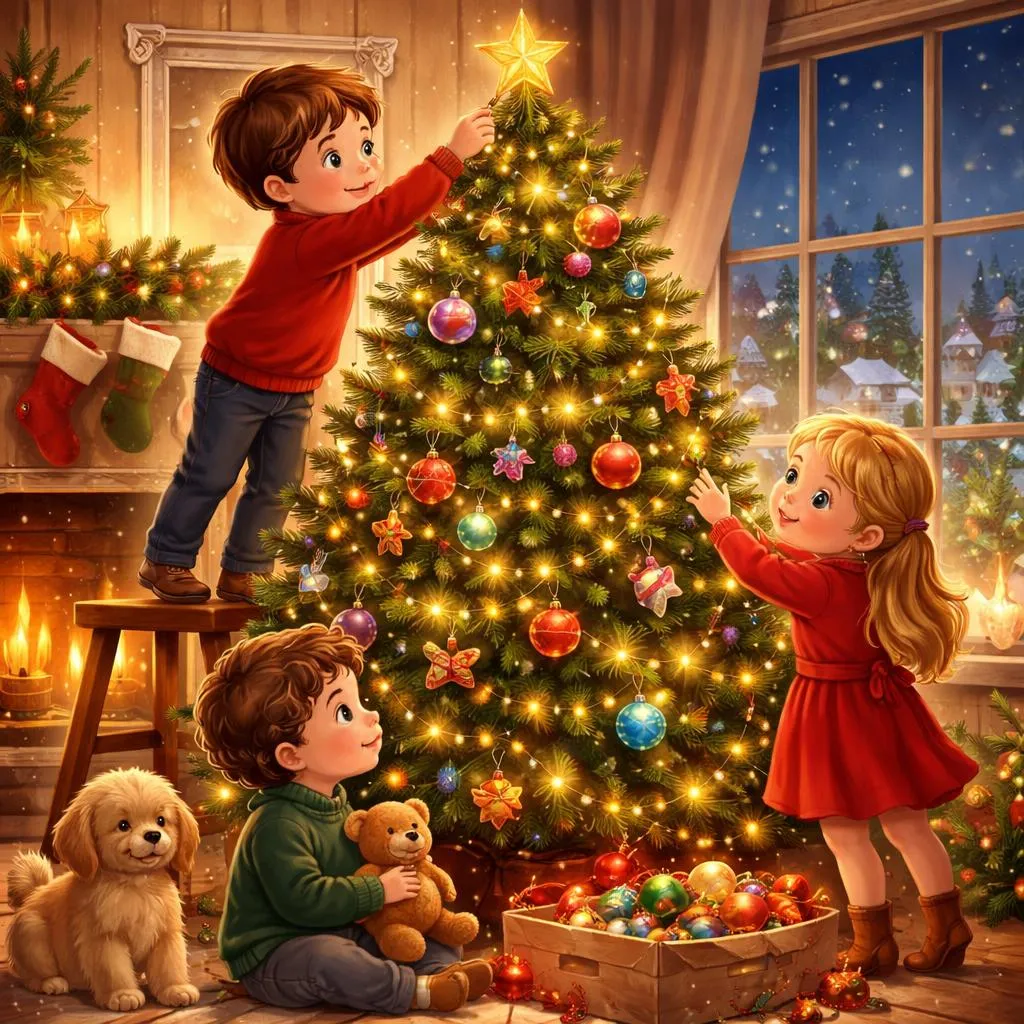

What Is the Children's Story of the Christmas Tree? Let us explore this cherished holiday narrative together. The children's story of the Christmas tree explains how this tradition began. Several different stories tell about the first Christmas trees. One popular story involves Martin Luther, the German reformer. Walking through forest one winter evening long ago. He saw stars twinkling through the evergreen branches. The beautiful sight inspired him to share it with family. He cut a small tree and brought it inside. He placed candles on its branches to represent stars. This story connects Christmas trees to the star of Bethlehem. Another story tells of German Christians in the Middle Ages. They brought trees inside and decorated them for Christmas. The evergreen tree symbolized eternal life through Jesus. Its green color through winter represented hope and promise.
Meaning and Purpose of the Christmas Tree Story This story carries deep meaning about Christmas symbols and traditions. The evergreen tree represents life that never dies completely. Even in cold winter, it stays green and alive. This symbolizes eternal life through Jesus' birth and resurrection. The lights on the tree represent Jesus as light of world. Stars, candles, and electric lights all carry this meaning. The tree's triangular shape reminds some of the Holy Trinity. The top of the tree points toward heaven above. Decorations added to the tree represent joy and celebration. Families gathering around the tree show unity and love. Gifts placed beneath represent God's gift of Jesus to world. The story connects natural beauty to spiritual truth meaningfully.
Origins of the Christmas Tree Tradition We can trace Christmas tree history through several sources. Ancient peoples brought evergreen plants indoors during winter. They celebrated life continuing through cold, dark months. Romans decorated with evergreen branches for Saturnalia festival. Northern European peoples honored trees in their traditions. The modern Christmas tree began in Germany during 16th century. Devout Christians brought decorated trees into their homes. Some built wood pyramids decorated with evergreens and candles. The tradition spread throughout Europe over next centuries. German immigrants brought Christmas trees to America. By late 1800s, trees had become popular across United States. England adopted the tradition after Queen Victoria's Christmas tree. Prince Albert, her German husband, introduced the custom there.
Vocabulary Learning from the Christmas Tree Story The Christmas tree story introduces rich seasonal vocabulary. Evergreen means a tree that stays green all year long. Symbol means something that represents something else important. Tradition means a custom passed down through generations. Ornament means a decoration used to beautify something special. Tinsel means thin, shiny strips used as tree decoration. Garland means a wreath or chain of decorations. Star represents the star of Bethlehem guiding wise men. Angel represents the angels who announced Jesus' birth. Lights represent Jesus as the light of the world. Presents represent gifts given to celebrate Jesus' birth. We can teach these words with picture cards showing examples. Use them in sentences about family Christmas traditions.
Phonics Points in the Christmas Tree Story The Christmas tree story provides useful phonics practice with holiday language. Christmas has the CH digraph and short I and short A. Tree has the TR blend and long E. Evergreen has the short E and long E and long E. Ornament has the OR combination and short A and short E. Tinsel has the short I and S and EL ending. Garland has the G sound and AR combination and ND. Star has the ST blend and AR combination. Angel has the long A and soft G and EL ending. Light has the L sound and long I and GH silent. Present has the PR blend and short E and short E. We can focus on one sound pattern from each story version. Find all words with that sound in the Christmas tree tale. Write them on ornament or tree shapes for practice.
Grammar Patterns in Christmas Tree Narratives Christmas tree stories model useful grammar for young readers naturally. Past tense tells the historical origins of the tradition. "Martin Luther walked through the forest one winter evening." Present tense describes what happens at Christmas today. "Families decorate their trees with lights and ornaments." Future tense shows what families will do next Christmas. "Next year we will add new ornaments to our collection." Questions explore the meaning behind the tradition. "Why do we put a star on top of the tree?" "Where did Christmas trees come from originally?" Commands appear in decorating instructions. "Hang the ornament carefully." "Place the star on top." Descriptive language paints beautiful holiday scenes. "The sparkling, candlelit tree glowed warmly in the dark room." Prepositional phrases describe locations on the tree. "On the branches, under the tree, above the presents." We can point out these patterns during reading.
Daily Life Connections Through Christmas Tree Stories Christmas tree stories connect directly to children's experiences. Many families have their own Christmas tree each year. Children help decorate and remember special ornaments. Each ornament might have its own family story attached. The angel or star placed on top is special moment. Presents appearing under the tree create excitement. The smell of evergreen fills the house with fragrance. Family traditions around the tree vary widely. Some open presents Christmas morning, others Christmas Eve. Some have real trees, others prefer artificial ones. These personal experiences make the stories meaningful. Children see themselves in the tradition described. We can point out these connections during reading. "Our family has a tree just like in the story." "Remember when we put the star on top together?"
Learning Activities for the Christmas Tree Story Many activities deepen understanding of Christmas tree traditions. Create a timeline showing history of Christmas trees. Include ancient traditions, Germany, America, and modern times. Make ornaments representing different parts of the story. Create Martin Luther star, evergreen symbol, and candle shapes. Decorate a classroom tree with handmade ornaments. Share stories behind each ornament created. Research how different cultures decorate Christmas trees. Compare traditions from around the world. Write a family Christmas tree memory story. Describe favorite ornaments or decorating moments. Create a tree-shaped book reporting what was learned. Pages for history, symbols, and family traditions included. These activities make the Christmas tree story personally meaningful.
Printable Materials for Christmas Tree Learning Printable resources support deep engagement with Christmas tree themes. Create a Christmas tree history timeline for children to complete. Add dates and events in correct chronological order. Design ornament templates for creating paper decorations. Stars, angels, bells, and candy canes included. Make a family tree tradition recording sheet. Describe how family chooses, decorates, and enjoys tree. Create a Christmas tree vocabulary matching game. Match words with pictures and simple definitions. Design a story sequencing activity for Martin Luther story. Put events in order from forest walk to candlelit tree. Make a Christmas tree coloring page with decorative elements. Add ornaments, lights, and star while coloring. These printables structure Christmas tree exploration activities effectively.
Educational Games About the Christmas Tree Games make Christmas tree learning playful and interactive. Play "Decorate the Tree" relay race with paper ornaments. Teams race to add ornaments to classroom tree. Create "Ornament Memory" matching pairs of ornament pictures. Find matching stars, angels, bells, and candy canes. Play "Tree Tradition Charades" acting out Christmas tree activities. Decorating, putting on star, placing presents underneath appear. Design "Tree Hunt" finding hidden ornament pictures around room. Search like looking for special ornaments at home. Play "Martin Luther Says" like Simon Says with tree actions. "Martin Luther says place candle on branch." "Martin Luther says admire twinkling lights." Create "Christmas Tree Bingo" with tree elements on cards. Ornaments, lights, star, angel, tinsel, presents included. These games build Christmas tree knowledge through active participation.
Teaching About Symbolism The Christmas tree carries rich symbolic meaning to explore. Evergreen trees stay green when other trees are bare. This represents eternal life that never ends. The tree points upward toward heaven above always. Lights on the tree represent Jesus as light of world. The star on top recalls the star of Bethlehem guiding wise men. Angels on the tree recall those who announced Jesus' birth. Gifts beneath represent God's gift of Jesus to humanity. The tree itself becomes a symbol of hope and joy. Children can understand these connections at their level. The symbols make the Christmas story visible and tangible. Every part of the tree carries meaning worth exploring.
Different Cultural Traditions Christmas tree traditions vary across cultures interestingly. Germany began the tradition with candlelit trees. England adopted trees after Queen Victoria's example. United States has the National Christmas Tree in Washington. Norway sends a giant tree to London each year. Thanks for Britain's help during World War Two. Mexico decorates trees with colorful ornaments and lights. Brazil uses artificial trees due to warm climate. Australia sometimes has beach Christmas trees with surfboards. Japan decorates trees though few are Christian there. The tradition has spread around the entire world. Each culture adds its own unique touches and customs. Children learn that traditions adapt and grow over time.
Environmental Considerations Christmas tree discussions can include environmental awareness. Real trees are renewable resources grown on farms. They provide habitat for birds while growing. After Christmas, they can be recycled into mulch. Artificial trees last many years but are plastic. They cannot be recycled when finally discarded. Some families choose potted living trees to plant later. Others decorate outdoor trees for birds and wildlife. These choices offer teaching moments about stewardship. Children learn to consider environmental impact of traditions. Families can make choices aligned with their values. The important thing is celebrating together meaningfully.
The Tree as Family Gathering Place The Christmas tree becomes a focal point for family activities. Families gather around it to sing carols together. They sit near it while reading Christmas stories. They place presents beneath it for opening later. They photograph children beside it each year. These photos document children growing up over time. The tree witnesses family history unfolding annually. It holds memories of Christmases past and present. Special ornaments recall babies, new homes, and loved ones. Each ornament tells part of the family's story. The tree becomes more than decoration over time. It becomes keeper of family memories and traditions. Children absorb this meaning through yearly experiences.