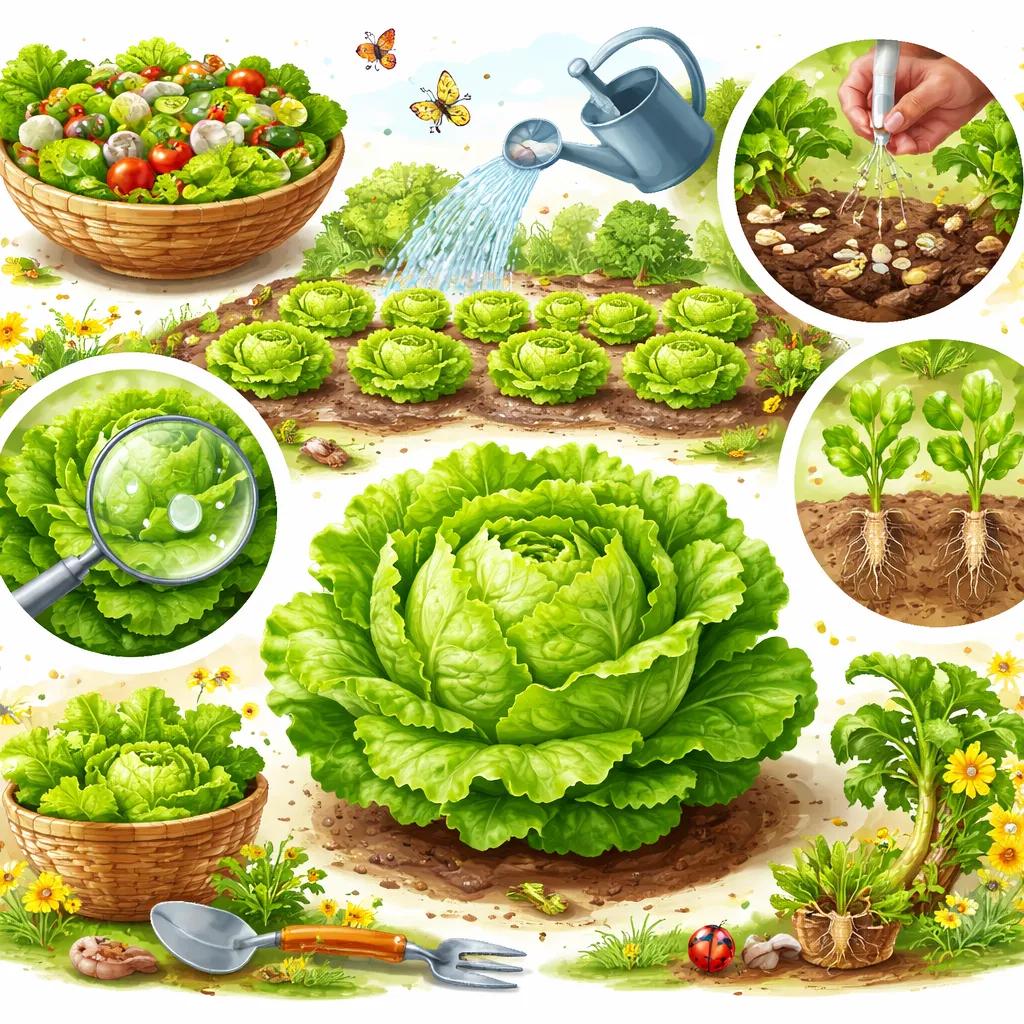

Have you ever made a big, fresh salad? The crispy, refreshing green base that holds all the tomatoes, carrots, and dressing is usually lettuce! In the garden, it doesn’t grow on a tall vine or deep underground. It grows as a beautiful, leafy rosette right on the soil’s surface. Some lettuces are light green and crunchy, some are dark red and frilly, and some are soft like butter. It’s the perfect cool-weather plant. Let’s get ready to learn about the crisp and wonderful Lettuce plant.
Let’s Learn the Word! – Open the Treasure Box of Language
Formal Name and Pronunciation This salad superstar is called Lettuce. Its scientific name is Lactuca sativa. You can say it like this: /ˈlet.ɪs/ (LET-iss). The “Let” is like the word, and “tuce” rhymes with “juice.” Let-tuce. Say it: Lettuce. It’s a light, crisp word.
The Etymology Tale The word “Lettuce” is all about milk! It comes from the Latin word “lactuca,” which comes from “lac,” meaning “milk.” Why milk? Because when you break the stem or leaf of a lettuce plant, a white, milky juice comes out! Its name is a clue to its special sap.
Nicknames and Friendly Aliases Lettuce is known by the shape of its head. The common, round, crunchy one is Iceberg Lettuce. The soft, loose-leaf kind is Leaf Lettuce. The one with red-tipped leaves is Romaine or Cos Lettuce. The tender, cup-shaped one is Butterhead or Bibb Lettuce. Because it’s for salads, it’s often just called Salad Greens.
Building Your Word Web: Core Parts Let’s learn the words for a Lettuce plant’s leafy body. The Leaf is the main, edible part—it can be curly, smooth, or frilly. The Head is the heart or the tight center of leaves. The Stem is very short, holding the leaves just above the soil. The Root system is shallow. The Sap is the white, milky liquid inside. A Rosette is the circular arrangement of leaves. A Garden bed of lettuce is a lettuce patch.
Action and State Words Lettuce plants are quick, cool growers. You sow seeds. The leaves form a rosette. You can harvest whole heads or pick outer leaves. The plant can bolt (send up a tall flower stalk) in heat. The leaves are washed, torn, and tossed into salads. A lettuce plant is crisp, watery, cool-season, and annual.
Ecosystem Friends Vocabulary A lettuce patch is a cool, moist place. The leaves can be a tasty snack for slugs and snails. Rabbits also love lettuce! Sometimes, aphids (tiny green bugs) might visit. But helpful ladybugs might come to eat the aphids. Birds might peck at the soft leaves too. Growing lettuce means sharing a little with the garden’s other inhabitants.
Cultural Imprint in Language Lettuce is a symbol of freshness, health, and new beginnings. In ancient Egypt, lettuce was sacred to the god of fertility. An old phrase is “my salad days,” which means the fresh, green time of youth. The word “lettuce” is sometimes used as slang for money, because it’s green like dollar bills! It represents everything crisp, clean, and healthy.
Ready for Discovery We know its milky, leafy name. Are you ready to be a garden detective and discover why this plant needs to stay cool and grow fast? Let’s explore the crisp world of the Lettuce plant.
Discover the Plant’s Secrets! – A Nature Detective’s Notebook
The Plant Passport Lettuce belongs to the Asteraceae family, the daisy and sunflower family. Its genus is Lactuca. It is an annual leafy vegetable. The plant forms a rosette of leaves that can be loose or form a tight head. The leaves vary hugely in color (green, red, speckled) and texture (crunchy, buttery, frilly). It grows best in the cool temperatures of spring and fall. It likes rich, moist soil and lots of water.
Survival Smarts Lettuce is a champion of cool weather. It grows very quickly in the mild temperatures of spring, producing lots of leaves before the hot summer sun arrives. The white, milky sap (called latex) contains mild chemicals that might help protect the leaves from some pests. To avoid the heat, it will quickly “bolt”—send up a tall flower stalk—to make seeds and start the next generation. Its shallow roots mean it needs frequent, gentle watering.
Its Role and Gifts In the garden, lettuce is a perfect early or late-season crop. Its greatest gift is its leaf. Lettuce is the foundation of salads all over the world. It provides a crunchy, watery, neutral base for all kinds of flavors. It is also used in sandwiches, wraps, and as a garnish. While not as vitamin-packed as dark greens like spinach, it is full of water, fiber, and some vitamins like Vitamin K.
Human History and Cultural Symbol Lettuce was first cultivated by the ancient Egyptians over 4,500 years ago. They grew it for its oil from the seeds and as a vegetable. The Greeks and Romans ate it. It was popular in medieval Europe. Christopher Columbus brought lettuce seeds to the Americas. Today, it is one of the most common vegetables in the world. It represents ancient agriculture and the universal love for a fresh, simple food.
Fun “Wow!” Facts Get ready for a water fact! Iceberg lettuce is about 96% water. That’s why it’s so incredibly crisp and refreshing! And here’s a family fact: Lettuce is a cousin to dandelions, sunflowers, and artichokes. Look at the flower—they all have a similar daisy-like shape!
From Seed to Salad Bowl in Weeks The story of the Lettuce plant is one of speedy, cool growth. Would you like to grow your own never-ending salad bar? You can grow lettuce easily in a pot or garden! Let’s see how.
Let’s Grow It Together! – A Little Guardian’s Action Guide
Good for Home Growing? Absolutely perfect! Lettuce is one of the easiest and most rewarding plants for a child to grow. It grows quickly, doesn’t need deep soil, and you can start harvesting in just a few weeks. You can grow a “cut-and-come-again” patch in a shallow window box or pot on a sunny balcony or step.
Little Gardener’s Toolkit You will need a packet of lettuce seeds (try ‘Salad Bowl’ or ‘Buttercrunch’). Get a wide, shallow pot or window box with drainage holes. Use rich, moist potting soil. Have a watering can with a gentle spray head, a sunny spot, and scissors ready.
Step-by-Step Growing Guide
Planting Your Crispy Friend Sow seeds in early spring or early fall. Lettuce seeds need light to germinate, so just press them gently onto the soil surface. Do not cover them, or just sprinkle a tiny bit of soil over them. Water gently with a spray bottle. Place the pot in a spot with morning sun and afternoon shade in warm weather, or full sun in cool weather.
Care Calendar Keep the soil evenly moist, never soggy. Lettuce has shallow roots and hates to dry out. Water gently at the soil level, not on the leaves. It likes cool temperatures. You can give it a little liquid fertilizer once it has a few true leaves. The most important job is to keep it consistently watered.
Watch and Be Friends Watch for the first two tiny seed leaves. Then the true lettuce leaves will form. The plant will grow into a beautiful green or red rosette. For leaf lettuce, you can start snipping the outer leaves when they are 3-4 inches long. Cut about an inch above the soil, and new leaves will grow from the center! For head lettuce, wait until the head feels firm. Watch for a center stalk—that’s bolting; harvest the plant then.
Problem Diagnosis If leaves wilt, it needs water right away. If leaves have big holes, look for slugs or snails at night; pick them off. If the plant bolts quickly, the weather is too hot; plant earlier or later next season. If leaves turn pale, it might need a little fertilizer. Lettuce is generally easy and problem-free.
Your Rewards and Gifts Your gift is the freshest salad you’ve ever tasted. You are learning about seed starting, plant care, and the joy of “cut-and-come-again” harvesting. Caring for lettuce teaches daily attention, gentle watering, and the instant reward of eating something you grew maybe just that morning. You become a grower of instant freshness.
Creative Fun Start a Salad Gardener’s Log. Draw the different leaf shapes and colors. Press a frilly red leaf. Create a “restaurant menu” featuring salads made only from your garden. With an adult, make a simple vinaigrette and have a taste test of your different lettuce types. Research ancient Egypt and draw a picture of lettuce in a hieroglyph. Make leaf prints with paint. Have a “Lettuce Wrap” contest to see who can build the best mini-wrap with a large lettuce leaf.
Growing a Living Salad Bowl By planting lettuce, you are not just growing a vegetable. You are growing a living lesson in quick cycles, a practice in gentle care, and the most direct farm-to-table experience possible. You are a cultivator of crisp, simple joy.
Conclusion and Forever Curiosity What a crisp, quick, and refreshing journey from a tiny seed to a salad bowl! You started to learn about the Lettuce plant, you discovered its secrets as the cool-loving, fast-growing, milky-sapped star of the salad, and you learned how to grow your own patch of perpetual crunch. You now know the Lettuce plant is not just a base for toppings; it is a lesson in cool-weather gardening, a member of the sunflower family, a piece of ancient history, and a symbol of pure, simple freshness. Remember, its power is in its water content and its speedy growth in the perfect weather. Your curiosity helps you appreciate the simple, foundational plants that make our meals fresh and healthy. Keep planting seeds that grow quickly, tasting the literal fruits (