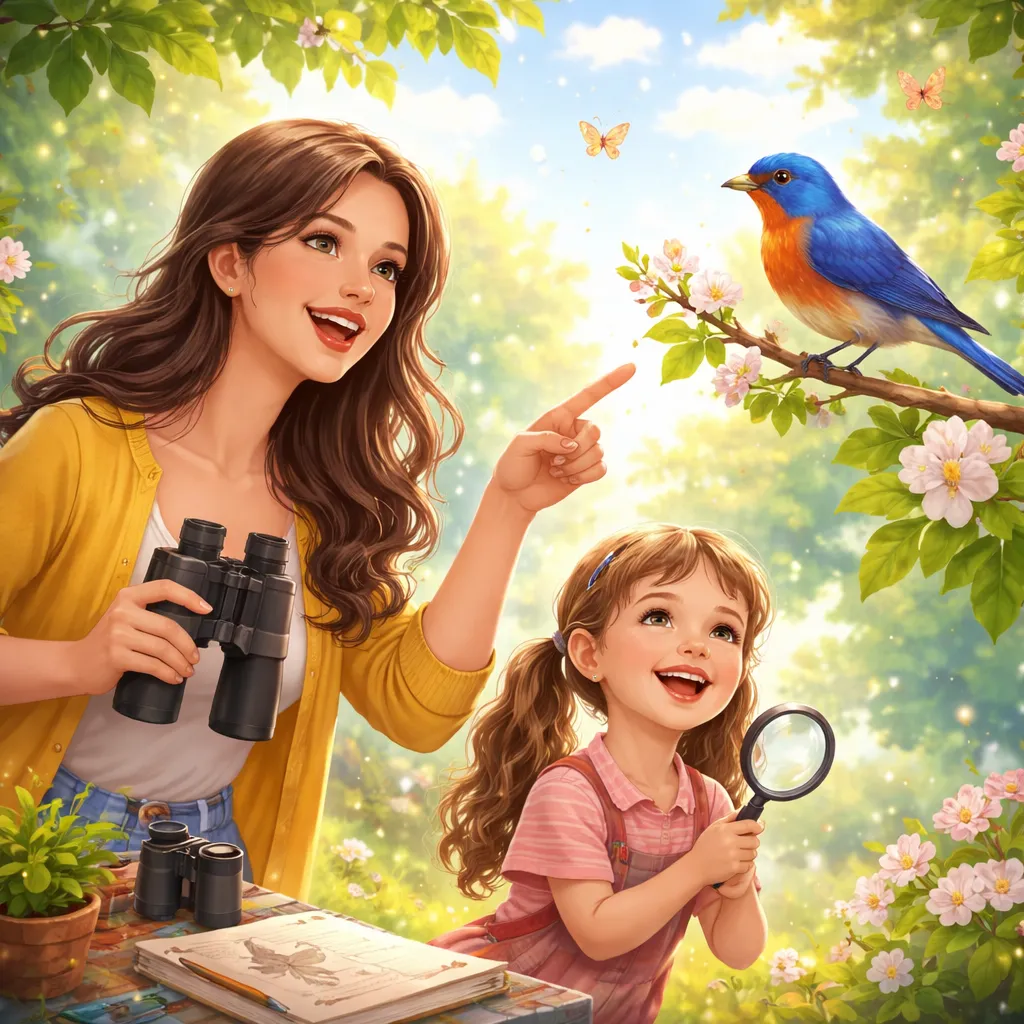

Imagine you’re walking in a quiet meadow or a park and you see a flash of bright blue darting from a fence post. It’s a small bird with a beautiful blue back and a warm, rusty breast. That’s a bluebird! With their gentle songs and lovely colors, bluebirds are often seen as symbols of happiness and hope. Learning about bluebirds is a delightful adventure that takes us to open fields and peaceful places. Let’s begin our journey of learning about bluebird beauty and their special meaning.
English Language Learning
Vocabulary and Spelling Our beautiful, blue-feathered friend is called a bluebird. The word "bluebird" is a noun. A noun names a person, place, or thing. So, a bluebird is a thing—a small, colorful, living bird. Spelling "bluebird" is two words put together: B-L-U-E and B-I-R-D. The first part is "blue", the color. The second part is "bird". B-L-U-E-B-I-R-D spells bluebird.
Sound and Pronunciation Let’s say the word correctly. It sounds like this: /ˈbluː.bɝːd/. We can say it in two clear parts. First, say "blue". It rhymes with "glue" or "true". Next, say "bird". It rhymes with "heard" or "word". Now, put it together! "Blue" "bird". Bluebird! Great! The word "bluebird" has two beats, or two syllables. Clap your hands twice: Blue-bird. It’s a smooth, gentle word.
Related Words Learning about bluebirds is more fun with new words! Here are some important ones. Body Part: The feathers on a bluebird’s back are its plumage. A baby bluebird is called a chick or a fledgling. Home: A bluebird’s nesting house, often put up by people, is called a nest box or a birdhouse. Sound: The soft, warbling song of a bluebird is a melody.
A Famous Saying People often say: "The bluebird of happiness." This is a symbol from stories and songs. It means that happiness is often found in simple, beautiful things around us, like the sight of a bluebird. It reminds us to look for and appreciate the small joys in life. Say the saying with me: "The bluebird of happiness." It’s a lovely thought, isn’t it?
Now you know the word "bluebird"! Are you ready to learn about these special songbirds? Let’s fly from words to wonderful knowledge!
Animal Knowledge
Who Are They? – Family and Group What kind of animal is a bluebird? Bluebirds are birds. They are warm-blooded, have feathers, and lay eggs. They are part of the thrush family. Their cousins are robins. In North America, there are three species: Eastern Bluebird, Western Bluebird, and Mountain Bluebird. They are known for their sweet songs and gentle nature.
What Do They Look Like? – Amazing Bodies Bluebirds are small birds, about the size of your hand. Male bluebirds are famous for their bright blue backs and rusty orange or red breasts. Females are grayer with hints of blue. Their most striking feature is their vibrant blue color. The blue in their feathers is not from pigment but from the way light reflects off tiny structures in their feathers. This is called structural color, like a soap bubble. Their beaks are short and good for catching insects. Bluebirds have special adaptations. They are cavity nesters, meaning they like to nest in holes in trees or in special nest boxes. They have excellent eyesight for spotting insects from a perch. They are not big singers, but their soft warble is very pretty.
Where Do They Live and How? – Home and Habits Bluebirds live in North America. Their homes are open areas like meadows, farmlands, parks, and orchards. They like places with short grass and scattered trees or posts where they can perch and look for insects. Bluebirds are insectivores in spring and summer. This means they eat mostly insects. They love caterpillars, beetles, and grasshoppers. In fall and winter, they eat more berries and fruits. They are helpful to farmers and gardeners because they eat insects that might harm plants. Bluebirds are often seen in pairs or small family groups. They are active during the day. They spend their time perching on wires or branches, swooping down to catch insects, and guarding their nest sites. A group of bluebirds is sometimes called a flock.
A Bluebird’s Life Story – Growing Up A baby bluebird is called a chick. Bluebirds are birds, so chicks hatch from eggs. Bluebirds usually lay four to six pale blue eggs in a nest inside a tree cavity or a nest box. Both parents take care of the chicks. The mother keeps the eggs warm. The father brings food. After hatching, both parents work tirelessly to feed the hungry chicks insects. They are very dedicated parents. Chicks are born naked and helpless. They grow quickly and are ready to leave the nest in about 15-20 days. The parents continue to feed them for a short time after they leave the nest. Bluebirds can have two or three families in one year.
How Do They "Talk"? – Communication Bluebirds have a soft, pleasant voice. Their song is a gentle, warbling "chur-lee" or "tur-wee". It is not loud, but it is very musical. They also have short call notes to keep in touch. They use body language too. A male might flutter his wings near a nest box to attract a female. They are generally peaceful but will defend their nest from other birds. Their best senses are their excellent eyesight and hearing. They have sharp vision to spot tiny insects from far away. Their hearing helps them communicate with their mate and chicks.
Are They Okay? – Taking Care of Them Bluebird populations faced big problems in the past but are now doing better thanks to conservation efforts. They are not endangered, but they still need our help. The main threats in the past were loss of nesting holes (when old, dead trees were removed) and competition for nests from other birds like starlings and house sparrows. Pesticides that kill insects also reduce their food. You can be a bluebird hero! You can help by putting up a proper bluebird nest box in a safe, open area. You can avoid using pesticides. You can plant native berry bushes for their winter food. Most importantly, you can learn about them and tell others.
Life Connections and Inspiration
How to Be With Them – Safety and Love Bluebirds are wild, gentle songbirds. They are shy and need peace and quiet, especially around their nests. We must always respect them and keep a safe distance. The rule is: Watch from far away with quiet respect. If you have a nest box, watch from inside your house or from many steps away. Never open a nest box when birds are using it. Never try to touch a bluebird, its eggs, or its chicks. Let them raise their families in peace. We show our love by providing safe homes (nest boxes) and protecting the open, natural spaces they need. We can be stewards of the land for all creatures.
Super Qualities We Learn from Them Bluebirds teach us beautiful lessons. One super quality is hope and renewal. Bluebirds are a sign of spring and new beginnings. They return year after year, bringing their beauty back to the same fields. They teach us to have hope, to believe in new beginnings, and to look forward to the future. Another quality is gentle helpfulness and community. Bluebirds help farmers by eating insects. People help bluebirds by putting up nest boxes. This beautiful partnership reminds us of the importance of helping each other and living in harmony with nature. Think about it: What is something that gives you hope, like the sight of a bluebird? How can you be helpful in your community, in big or small ways?
Take Action! – Your "Bluebird Box" Project Let’s do a hopeful and helpful activity! Your project is to design a plan for a bluebird-friendly space. On a large piece of paper, draw a meadow. Draw a nest box on a post. Draw berry bushes. Draw a birdbath. Label all the parts. Write why each part is important: the nest box is a home, the bushes provide food, the birdbath provides water. You can even make a small model nest box from a milk carton. This shows how we can create a welcoming space for bluebirds and other wildlife.
Closing Learning about bluebird hope is a beautiful and inspiring adventure! We learned the word "bluebird" and how to say its two-part name. We discovered amazing facts about their structural blue color, their insect-eating habits, and their life in nest boxes. We know that bluebirds are gentle, hopeful birds that need our help to thrive. You can use your new words to share the joyful story of these special birds. You can use your knowledge to take action and create safe spaces for wildlife. The animal world is full of hopeful and helpful teachers. Always remember to respect wildlife from a safe distance, hold onto hope, and look for ways to be helpful in your community. Keep exploring with a gentle heart, listen for the soft songs of nature, and be a friend to the wild. Your caring actions and hopeful spirit make you a true friend to the amazing bluebird.