
What Is This Animal?
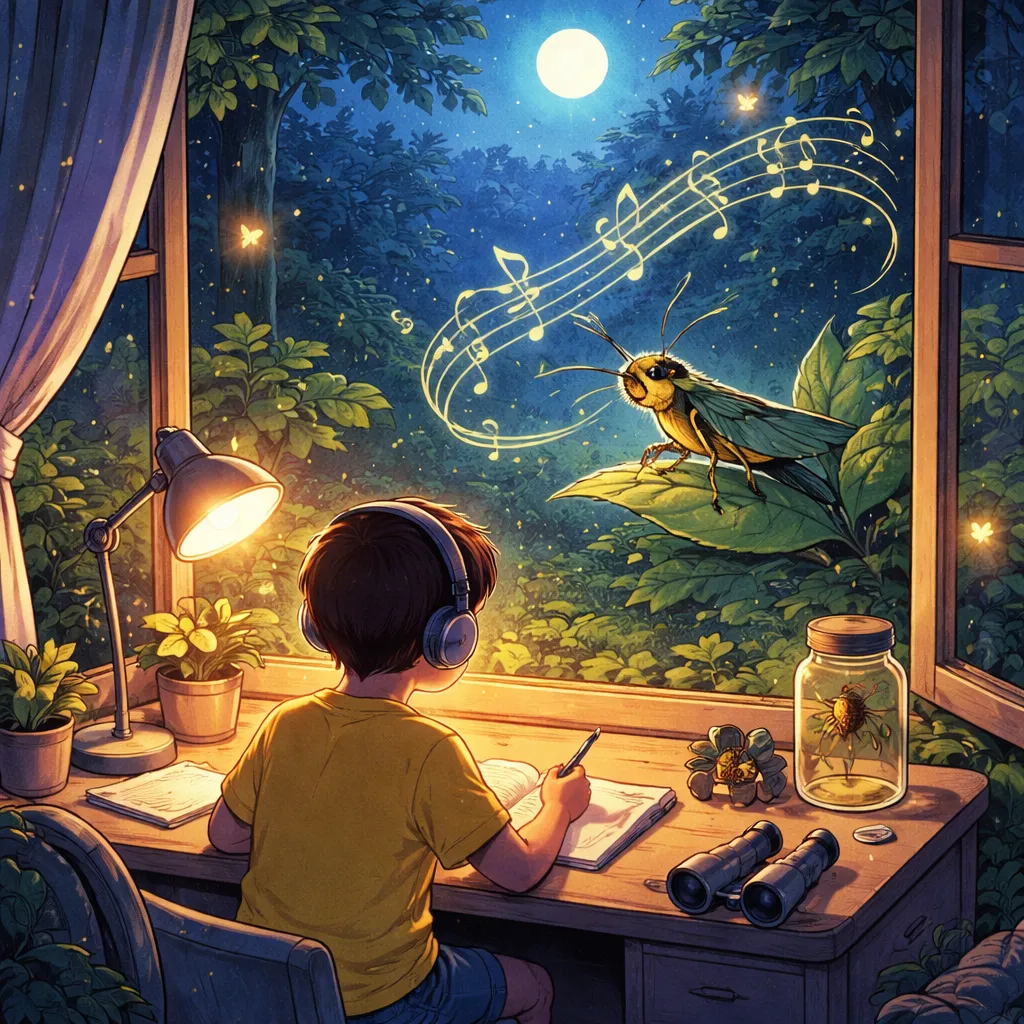
A cricket is a small insect known for its chirping sound. It has a round head, long antennae, and strong back legs. Its body is usually dark brown or black. Crickets are most active at night. Their songs fill the evening air.
Crickets look similar to grasshoppers. But crickets have longer antennae. Their bodies are more rounded. They make sound by rubbing their wings together. This sound helps them find each other. Only male crickets chirp.
These insects live in many places. You find them in fields, gardens, and under rocks. Some crickets live near homes. They hide during the day. They come out when the sun goes down. Their chirping tells us that night has arrived.
For children, crickets are nature’s lullaby. The soft sound helps them feel calm. Finding a cricket in the garden feels like discovering a secret musician. These gentle insects do not bite. They are safe to observe and enjoy.
English Learning About This Animal
Let us learn the English word cricket. We say it like this: /ˈkrɪkɪt/. The word has two quick sounds. Crick sounds like “krik.” Et sounds like “it.” Put them together: cricket. Say it three times. Cricket. Cricket. Cricket.
Now let us learn words about a cricket’s body. The head holds the eyes and long antennae. The antennae are very long and thin. They help the cricket feel its surroundings. The wings lie flat on the back. The hind legs are large and strong for jumping. The cerci are two small feelers at the back of the abdomen.
There is a famous quote from Charles Dickens about crickets. He wrote a story called “The Cricket on the Hearth.” The cricket was a symbol of good luck and happiness in the home. An old saying goes, “A cricket on the hearth brings good fortune.” People believed a cricket singing by the fireplace meant the family would be safe and happy.
These English words help children describe this nighttime musician. When they say antennae, they notice how long and delicate they are. When they say cerci, they learn a new word for a small body part. Parents can practice these words while listening to crickets at dusk. Point to pictures. Say the words together.
Animal Facts and Science Knowledge
Crickets belong to the insect order Orthoptera. This group includes grasshoppers and katydids. Crickets are insects. They have three body parts. They have six legs. They have two pairs of wings. Their wings fold flat against their bodies.
Crickets live in many habitats. They prefer warm places with plants and shelter. Some live in fields and meadows. Others live in forests or near buildings. They hide under rocks, logs, and leaves during the day. At night, they come out to feed and sing.
Crickets make sound through stridulation. They rub their wings together. One wing has a rough edge like a file. The other wing has a hard edge like a scraper. When they rub them together, the wings vibrate. This creates the chirping sound. Different cricket species have different songs.
Crickets eat plants and small insects. They eat leaves, grasses, and fallen fruit. Some crickets eat other insects. They are omnivores. They use their strong jaws to chew food. Crickets are food for many animals. Birds, frogs, and lizards eat them.
Crickets have special abilities. Their long antennae help them navigate in the dark. Their hind legs let them jump far to escape danger. They can hear through their front legs. Small ear openings sit just below the knees. Crickets also tell us the temperature. Count the chirps in fifteen seconds. Add thirty-seven. That gives the temperature in Fahrenheit.
How to Interact With This Animal Safely
Crickets are gentle wild insects. They do not bite or sting. They are safe to watch and hold gently. If you hear a cricket outside, let your child listen. Point to where the sound comes from. Move slowly. Crickets stop chirping when they sense movement.
If your child wants to catch a cricket, use a gentle method. Take a small jar with air holes. Place it near the cricket. Gently guide the cricket inside. Watch it for a few minutes. Notice its long antennae and strong legs. Then release it where you found it.
Teach children to be gentle. Crickets have delicate legs. Their legs can break if squeezed. Hold them with open hands. Let them jump when ready. Wash hands after touching crickets. This keeps both child and insect safe.
Never keep a cricket in a jar for more than one day. Crickets need fresh food and water. They need space to move. If your family wants to observe a cricket longer, place it in a small container with grass, a piece of fruit, and air holes. Watch it for a day. Then release it outside.
Teach children to protect cricket homes. Leave piles of leaves and rocks in the garden. These provide shelter. Do not use strong chemicals on lawns. Crickets need safe places to hide and sing. When we care for their homes, we enjoy their music for many nights.
What Can We Learn From This Animal
Crickets teach us to find our voice. Each cricket has its own song. It chirps to share who it is. Children learn that their voice matters. Speaking up, sharing ideas, and expressing feelings are all ways to sing our own song.
Crickets teach us to be comfortable in the dark. They are active at night. They are not afraid. Children learn that nighttime can be peaceful. Darkness brings rest and quiet. It is a time for listening and dreaming. Being calm in the dark is a skill we can practice.
Crickets teach us about patience. They wait until evening to sing. They do not rush. Children learn that good things come with time. Waiting for a turn, waiting for a special day, or waiting for a skill to grow all take patience. The cricket reminds us to enjoy the quiet moments too.
Crickets teach us about simple joys. A cricket’s song costs nothing. Yet it brings comfort to many. Children learn that happiness comes from small things. A warm evening, a gentle sound, or time with family can fill us with joy. We do not need big things to feel happy.
Fun Learning Activities
Let us make learning about cricket fun. One activity is the cricket chirp game. On a summer evening, sit outside. Count how many chirps you hear in fifteen seconds. Add thirty-seven to find the temperature. Check with a thermometer. See how close you get. Say “cricket chirps” and “temperature goes up.”
Another activity is drawing a cricket. Use a magnifying glass to look at pictures or a real cricket. Notice the long antennae and large hind legs. Draw what you see. Label the parts. Say the words aloud as you write them.
Create a story about a cricket’s night. Ask your child what the cricket sees when the moon rises. Does it climb on a leaf? Does it sing to other crickets? Does it hide from a bird? Write a few sentences together. Let your child draw pictures. Read the story aloud before bed.
Make a cricket from craft materials. Use a small brown paper roll for the body. Add pipe cleaner antennae and legs. Draw eyes. Use tissue paper for wings. Play with the craft cricket. Practice saying “cricket chirps” and “cricket jumps.”
Listen to cricket sounds online or in nature. Try to copy the sound with your voice. Chirp softly. Chirp loudly. Chirp fast. Chirp slow. This playful activity builds listening skills and laughter.
These simple activities bring learning to life. Children build English vocabulary while playing. They learn science through listening and observation. They connect with nature in gentle ways. Learning about cricket becomes a shared evening tradition. Each moment spent together strengthens language, curiosity, and a lasting appreciation for the small musicians that sing us into peaceful nights.