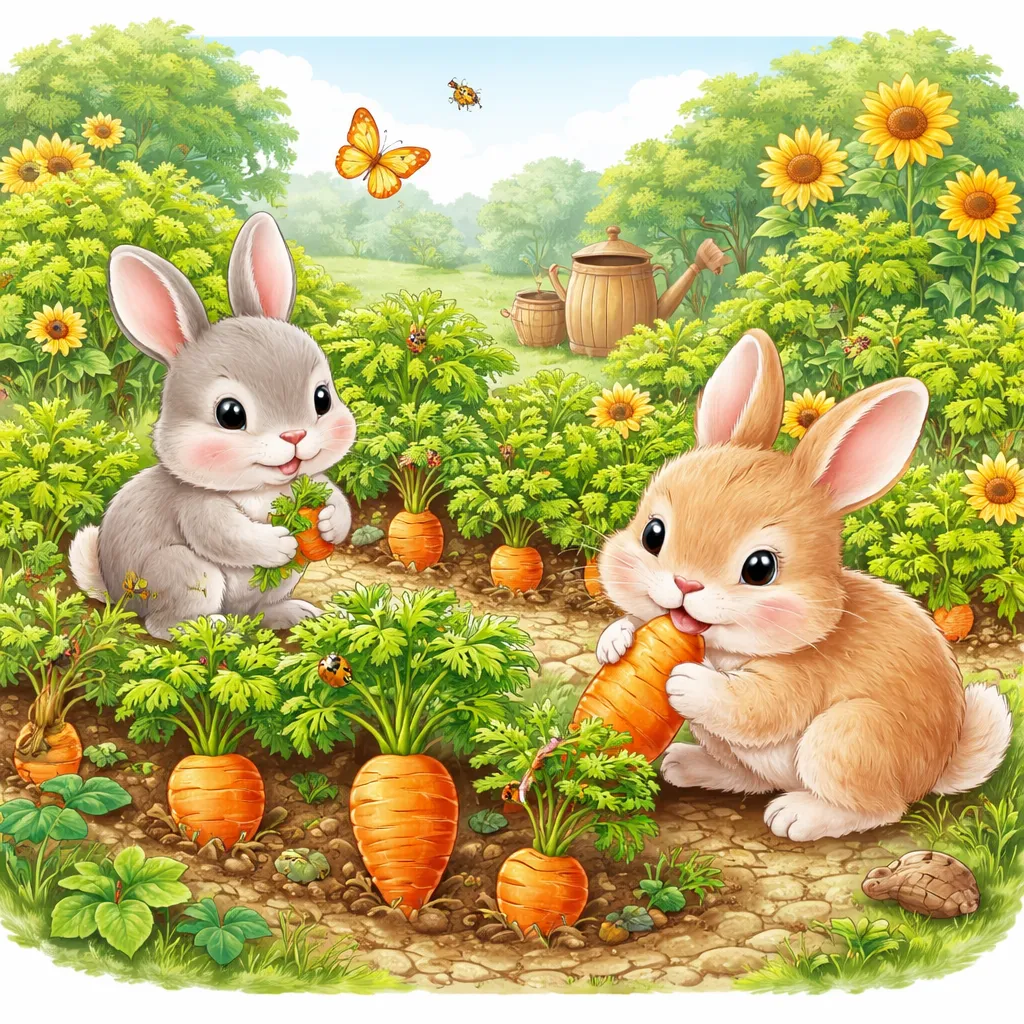

Have you ever pulled a long, crunchy, orange carrot from the ground, brushed off the dirt, and taken a bite? It tastes sweet, earthy, and fresh. This wonderful vegetable grows secretly downward, deep into the soil. Up above, all you see is a pretty, feathery green top that looks like lacy leaves. People and animals have loved this root for thousands of years. It’s packed with a special vitamin that’s great for your eyes. Let’s dig deep and learn about the amazing Carrot plant.
Let’s Learn the Word! – Open the Treasure Box of Language
Formal Name and Pronunciation This crunchy root is called a Carrot. Its scientific name is Daucus carota. You can say it like this: /ˈkær.ət/ (KAE-rut). The “Car” sounds like the vehicle, and “rot” rhymes with “dot.” Car-rot. Say it: Carrot. It’s a crisp, clear word.
The Etymology Tale The word “Carrot” is very old! It comes from the Greek word “karōton.” The Latin word became “carota,” and the French said “carotte,” which became the English “carrot.” Its name has been growing in languages for over a thousand years, just like the root grows in soil.
Nicknames and Friendly Aliases Carrots are known by simple, descriptive names. Because of their color, they are Orange Roots. The wild plant is called Queen Anne’s Lace (look for its pretty white flowers). Baby carrots are sometimes called Parisian Carrots or Round Carrots. In some stories, they are called Bunny Food.
Building Your Word Web: Core Parts Let’s learn the words for a Carrot plant’s hidden body. The Taproot is the main, long, orange root we eat. The Leaf is the feathery, green, fern-like top, called a frond. The Shoulder is the top of the root where it meets the leaves. The Core is the center part of the taproot. The Seed is tiny, brown, and ribbed. A Patch in the garden is a carrot patch.
Action and State Words Carrot plants are patient growers. You sow the tiny seeds. The taproot grows deep down. The leaves photosynthesize in the sun. The root is harvested by pulling. Carrots are scrubbed, peeled, or eaten raw. A carrot plant is crunchy, sweet, biennial (takes two years, but we eat it in one), and nutritious.
Ecosystem Friends Vocabulary A carrot patch is connected to the soil. Earthworms are great friends—they tunnel and make the soil soft for the taproot to grow straight. The lacy flowers of wild carrots (Queen Anne’s Lace) attract wasps and other beneficial insects that eat garden pests. Small creatures find shelter in the green fronds.
Cultural Imprint in Language Carrots are symbols of good vision, patience, and rewards. A common saying is, “Like a carrot on a stick,” which means a reward is held out to make someone try harder. People say eating carrots helps you see in the dark, which comes from their Vitamin A. The phrase “dangling a carrot” means offering an incentive. Carrots represent a goal worth working for.
Ready for Discovery We know its crunchy, ancient name. Are you ready to be a soil detective and follow the taproot to its secret end? Let’s explore the underground world of the Carrot plant.
Discover the Plant’s Secrets! – A Nature Detective’s Notebook
The Plant Passport Carrots belong to the Apiaceae family, the parsley and celery family. Its genus is Daucus. It is a biennial plant. In the first year, it grows a rosette of ferny leaves and a big, thick taproot. In the second year, it sends up a tall flower stalk. The wild carrot has a white root; the orange carrot was bred by people. It grows best in deep, loose, stone-free soil and cool weather.
Survival Smarts The carrot’s superpower is its taproot. This long, strong root drills deep into the soil to find water during dry times. It’s a fantastic storage unit. The plant stores sugars and starches in the root to have energy to flower the next year. The feathery leaves are perfectly shaped to catch sunlight without shading the plant’s own base too much. It’s a model of efficient design.
Its Role and Gifts In the garden, carrot roots help break up and aerate the soil as they grow down. Their greatest gift is the root itself. Carrots are one of the best sources of beta-carotene, which our bodies turn into Vitamin A, essential for good vision and health. They are eaten raw as snacks, cooked in soups and stews, or juiced. They are a sweet, healthy staple all over the world.
Human History and Cultural Symbol Carrots were first grown in Central Asia over 1,000 years ago. The original roots were purple, yellow, and white! Dutch growers in the 1600s are famous for developing the bright orange carrot we know today. They have been a reliable food source for centuries. The carrot represents selective breeding, nutrition, and the simple pleasure of homegrown food.
Fun “Wow!” Facts Get ready for a color fact! The world’s first carrots were not orange! They were purple, white, and yellow. Orange carrots were developed much later. And here’s a top fact: You can actually eat the green, feathery carrot tops! They taste a bit like parsley and can be used in pesto (but they can be bitter, so taste a little first).
From Tiny Seed to Crunchy Root The story of the Carrot plant is a lesson in patience. Would you like to grow your own sweet, crunchy treasures? You can grow carrots in a deep pot or garden bed! Let’s see how.
Let’s Grow It Together! – A Little Guardian’s Action Guide
Good for Home Growing? Yes, it’s a perfect garden challenge! Carrots need deep, loose, stone-free soil to grow straight and long. You can grow shorter, round varieties in a deep pot or window box. The hardest part is waiting for the seeds to sprout and thinning the tiny seedlings. The reward is the fun of pulling up your own perfect carrot.
Little Gardener’s Toolkit You will need a packet of carrot seeds (try a short variety like ‘Paris Market’ or ‘Little Finger’ for pots). Get a very deep pot (at least 12 inches deep) with drainage holes. Use loose, sandy potting mix (no big lumps or stones!). Have a watering can with a gentle spray, a sunny spot, and patience ready.
Step-by-Step Growing Guide
Planting Your Crunchy Friend Plant seeds in early spring or late summer. Carrots like cool weather. Scatter the tiny seeds on the soil surface. Barely cover them with a sprinkle of soil or sand. Water gently with a mist. Keep the soil moist. Place the pot in full sun. The seeds are slow to sprout, so be patient.
Care Calendar The soil must stay evenly moist until the seedlings are up. Once they are growing, water deeply but less often to encourage the roots to go down. They love full sun. You don’t need much fertilizer. The most important job is thinning. When seedlings are 2 inches tall, carefully pull out the extra ones so the remaining carrots are 2-3 inches apart. This gives them room to grow fat.
Watch and Be Friends Watch for the first, thin grass-like shoots. Then the proper feathery leaves will appear. The magic is underground! You can gently brush soil from a carrot’s shoulder to peek at its size, but cover it back up. When the carrot shoulders look nice and wide (after about 2-3 months), gently pull one up to check. Rinse it off and taste your homegrown crunch!
Problem Diagnosis If the leaves turn yellow, it might need a little nitrogen fertilizer. If the root is short and forked, the soil is too hard, rocky, or lumpy. The most common problem is not thinning the seedlings—they will stay skinny if crowded. Carrot rust flies can be a pest; cover your patch with a fine bug net.
Your Rewards and Gifts Your gift is the taste of real, garden-grown sweetness. You are learning about root growth, patience, and the importance of good soil. Caring for carrots teaches careful observation, gentle hands for thinning, and the joy of harvesting something you’ve only seen the “hair” of for months. You become a grower of underground mysteries.
Creative Fun Start a Root Detective’s Journal. Draw the feathery tops. Measure the width of the carrot shoulder each week. Try the carrot-top experiment: cut off the top inch of a store-bought carrot, place it in a shallow dish of water, and watch it grow new green fronds! Make a collage of carrots in different colors. With an adult, make a simple carrot and raisin salad. Write a story from the perspective of an earthworm helping a carrot grow. Create “carrot stamps” by cutting the wide end of a carrot into shapes.
Growing a Crunchy Surprise By planting carrots, you are not just growing a vegetable. You are growing a lesson in botany and patience, a connection to your food, and a delicious, healthy reward. You are a cultivator of crunchy, orange joy.
Conclusion and Forever Curiosity What a crunchy, sweet, and patient journey from a tiny seed to a deep taproot! You started to learn about the Carrot plant, you discovered its secrets as the beta-carotene-packed, soil-drilling champion of the garden, and you learned how to grow your own patch of orange gold. You now know the Carrot plant is not just rabbit food; it is a lesson in efficient design, a triumph of plant breeding, a vitamin powerhouse, and a symbol of the rewards of patience. Remember, its true sweetness develops quietly, out of sight. Your curiosity is the water and sunshine that helps knowledge grow deep and strong. Keep digging into the wonders of plants, savoring the simple, healthy foods of the earth, and planting seeds of wonder that yield delicious discoveries. Your adventure to learn about the Carrot plant shows us that the most vibrant treasures are often hidden, waiting for a curious gardener to gently pull them into the light.