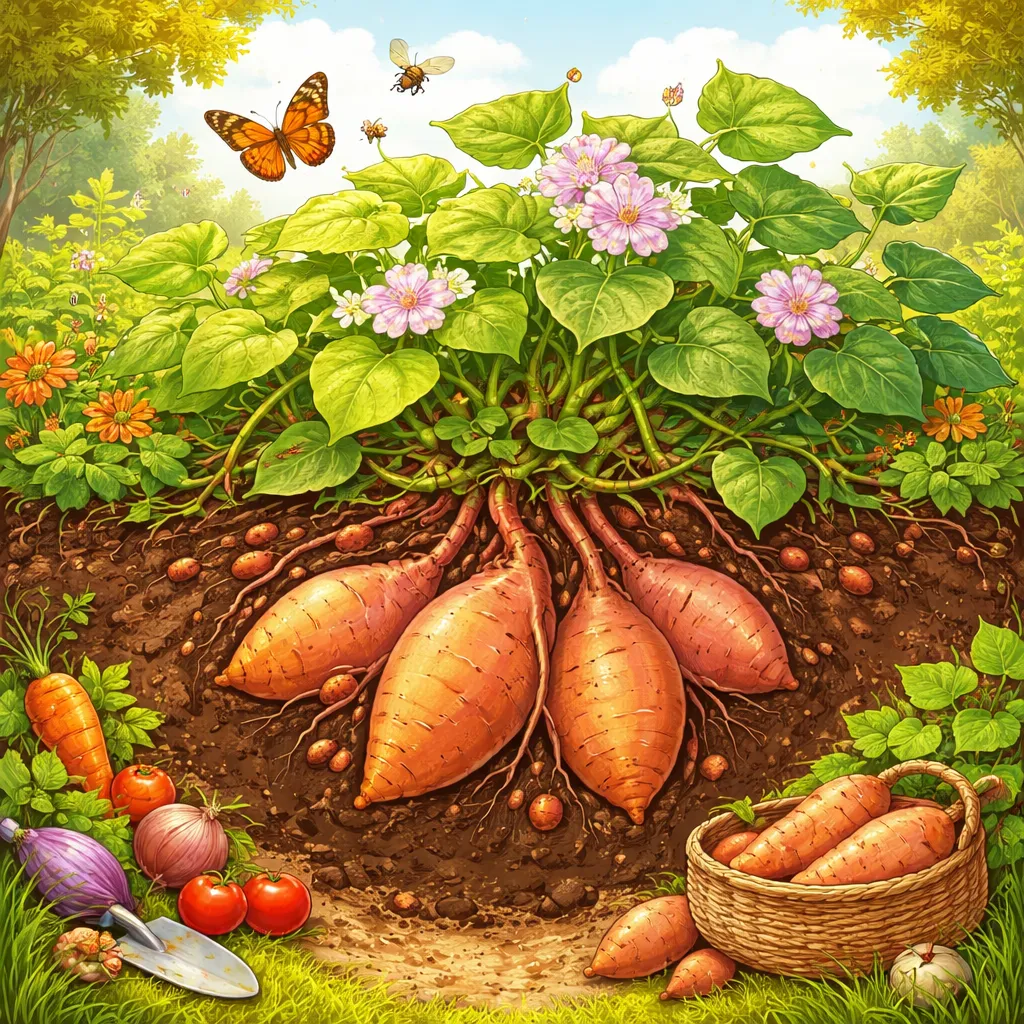

Have you ever eaten soft, sweet, orange fries or a warm, yummy pie at a holiday dinner? That sweet, delicious treat doesn’t come from a tree or a bush. It grows underground on the roots of a fast-growing, pretty vine! This plant loves hot weather and sends long, trailing stems in all directions. Its secret, tasty roots are packed with vitamins. People all over the world grow it as an important, healthy food. Let’s untangle the story of the Sweet Potato plant.
Let’s Learn the Word! – Open the Treasure Box of Language
Formal Name and Pronunciation This sweet treasure is the Sweet Potato. Its scientific name is Ipomoea batatas. You can say it like this: /swiːt pəˈteɪ.təʊ/ (SWEET puh-TAY-toe). The “Sweet” is like the taste, and “Potato” is the vegetable. Sweet Po-ta-to. Say it: Sweet Potato. It’s a happy, descriptive name.
The Etymology Tale The word “Potato” has a history we learned earlier, from the Taino word “batata.” The “Sweet” part was added to tell it apart from the regular, white potato when it came to Europe. Its scientific name Ipomoea tells us it’s in the morning glory family! So, its name means “the sweet batata that is a morning glory cousin.”
Nicknames and Friendly Aliases Sweet potatoes are known by many names, which can be confusing! In the United States, the orange ones are Sweet Potatoes. In some places, people call them Yams, even though true yams are a different plant! The leaves are Sweet Potato Greens. A baked sweet potato is sometimes called a Candied Yam.
Building Your Word Web: Core Parts Let’s learn the words for a Sweet Potato plant’s vining body. The Tuber is the sweet, starchy root we eat (it’s technically a storage root, not a stem tuber like a potato!). The Vine is the long, trailing stem that grows along the ground. The Leaf is heart-shaped or lobed, and green. The Slip is a small stem with roots, used for planting. The Flower looks like a pretty morning glory (its cousin!). A Patch of vines is a sweet potato patch.
Action and State Words Sweet Potato plants are energetic spreaders. They grow as a sprawling vine. The vines root at the nodes where they touch soil. The storage roots swell and sweeten underground. The plant is propagated from slips. The tubers are harvested by digging. A sweet potato plant is vining, sweet, heat-loving, and perennial in hot places.
Ecosystem Friends Vocabulary A sweet potato patch provides good ground cover. The dense vines shade the soil, keeping it moist and preventing weeds. This creates a cool, damp home for earthworms and beneficial insects. The flowers, if they bloom, can attract bees. The plant is generally tough and doesn’t attract many pests, making it a good garden friend.
Cultural Imprint in Language Sweet potatoes are a symbol of nourishment, comfort, and celebration. In the southern United States, they are a traditional holiday food. The phrase “sweet potato pie” brings to mind family gatherings and warmth. In some cultures, they represent good fortune and are eaten for luck. They are the sweet, healthy cousin in the root vegetable family.
Ready for Discovery We know its sweet, vining name. Are you ready to be a garden explorer and discover how this plant is related to a morning glory flower? Let’s dig into the secrets of the Sweet Potato plant.
Discover the Plant’s Secrets! – A Nature Detective’s Notebook
The Plant Passport The Sweet Potato belongs to the morning glory family, Convolvulaceae. Its genus is Ipomoea. It is a perennial vine in tropical areas but grown as an annual elsewhere. The plant has long, slender stems that trail along the ground or climb. The leaves are often heart-shaped. The flowers look like pale purple or white morning glories but don’t always bloom. The edible part is a swollen, sweet-tasting storage root. It loves hot, sunny weather and loose, sandy soil.
Survival Smarts The sweet potato is a champion of hot weather. Its vining habit helps it spread out quickly to capture lots of sunlight. The vines can even root where they touch the ground, helping the plant gather more water and nutrients. Its superpower is in its roots. They swell to store water and carbohydrates (which turn to sugar), helping the plant survive dry spells. This stored sugar is what makes it taste so sweet!
Its Role and Gifts The sweet potato vine is an excellent ground cover, protecting the soil. Its greatest gifts are nutrition and versatility. The orange roots are packed with Vitamin A (beta-carotene), Vitamin C, and fiber. They can be baked, mashed, fried, or used in pies. The young leaves and stems (greens) are also edible and nutritious, often used in stir-fries. It’s a “two-in-one” edible plant!
Human History and Cultural Symbol Sweet potatoes were domesticated in Central or South America over 5,000 years ago. Polynesian explorers amazingly took them across the Pacific Ocean to New Zealand long before European contact. They were a staple for early European settlers in North America. Today, they are a vital crop in Africa, Asia, and the Americas. They represent ancient voyages, resilience, and healthy eating.
Fun “Wow!” Facts Get ready for a flower fact! The sweet potato plant is a close cousin to the beautiful morning glory flower. If you see a vine with pretty purple trumpet flowers, it might be a sweet potato plant! And here’s a color fact: Sweet potatoes can be orange, white, purple, or even yellow inside. The orange ones have the most beta-carotene.
From a Slip to a Sweet Harvest The story of the Sweet Potato plant is one of tropical energy. Would you like to grow your own sweet, vining crop? You can grow sweet potatoes in a large container or a sunny garden bed! Let’s see how.
Let’s Grow It Together! – A Little Guardian’s Action Guide
Good for Home Growing? Yes, but it needs space and heat! Sweet potatoes need a long, hot growing season (about 100-140 days of warm weather). You can grow them in a very large, deep container or a sunny garden bed with room for the vines to run. The fun part is the “treasure hunt” at the end when you dig up the roots. It’s a summer-long project.
Little Gardener’s Toolkit You will need sweet potato slips (small starter plants), which you can buy or grow yourself from a store-bought sweet potato. Get an extra-large, deep container (like a 20-gallon fabric grow bag) or a sunny garden spot. Use loose, well-draining, sandy soil mix. Have a watering can, some compost, and the sunniest, hottest spot you have ready.
Step-by-Step Growing Guide
Planting Your Vining Treasure Plant slips in late spring, long after the last frost, when the soil is very warm. If in a container, fill it partway with soil. Plant the slip deep, covering the stem up to the top leaves. Water it well. Space plants about 12 inches apart. Place the container in full, blazing sun. Sweet potatoes love heat.
Care Calendar Water the plants well as they get established. Once growing, they are quite drought-tolerant. Water them during long dry spells. They need full sun. You don’t need to fertilize much; too much nitrogen makes leafy vines but small roots. The main job is giving the vines space to spread. You can gently guide the vines if they start to wander too far.
Watch and Be Friends Watch the slip grow into a long vine. See the heart-shaped leaves. The vine will grow quickly in the heat. You can even pinch off the very end of a vine to make it bushier. The magic is happening underground. Be patient all summer. After the first light frost in fall, the vines will start to yellow. Then, it’s time to carefully dig and find your sweet potatoes!
Problem Diagnosis If vines grow slowly, the weather is not warm enough. If leaves are chewed, look for beetles or caterpillars; pick them off. The most common problem is planting too early in cold soil, which stunts the plant. Sweet potatoes have few serious pests. The biggest need is patience and warmth.
Your Rewards and Gifts Your gift is a harvest of natural candy from the soil. You are learning about tropical plants, propagation from slips, and the patience needed for root crops. Caring for sweet potatoes teaches long-term care, observation, and the excitement of a hidden harvest. You become a grower of sweet, healthy food.
Creative Fun Start a Vine Trail Journal. Draw your plant’s spreading vines. Map how far they travel. Press a beautiful heart-shaped leaf. Try tasting a young sweet potato leaf (with an adult’s okay)—it’s like spinach! With an adult, bake your homegrown sweet potatoes—their natural sugar makes them so sweet. Research the Polynesian voyagers and draw their canoes carrying sweet potatoes. Create a “treasure map” of your garden leading to the sweet potato patch. Make vine crowns from the long stems.
Growing a Garden Carpet of Sweetness By planting sweet potatoes, you are not just growing a root. You are growing a living history lesson, a nutritious food source, and a beautiful, sprawling green carpet. You are a cultivator of sweetness and sustenance.
Conclusion and Forever Curiosity What a sweet, sprawling, and sun-loving journey! You started to learn about the Sweet Potato plant, you discovered its secrets as the vining, root-storing cousin of the morning glory, and you learned how to nurture your own patch of orange gold. You now know the Sweet Potato plant is not just a holiday side dish; it is a tropical adventurer, a two-part edible wonder, a lesson in ancient agriculture, and a symbol of healthy, sweet abundance. Remember, its treasure is hidden, waiting for the perfect warm day to be unearthed. Your curiosity helps you follow the vine to discover nourishing secrets. Keep planting in the sun, exploring global foods, and savoring the sweet rewards of patience and care. Your adventure to learn about the Sweet Potato plant shows us that the sweetest endings often have the longest, greenest beginnings.