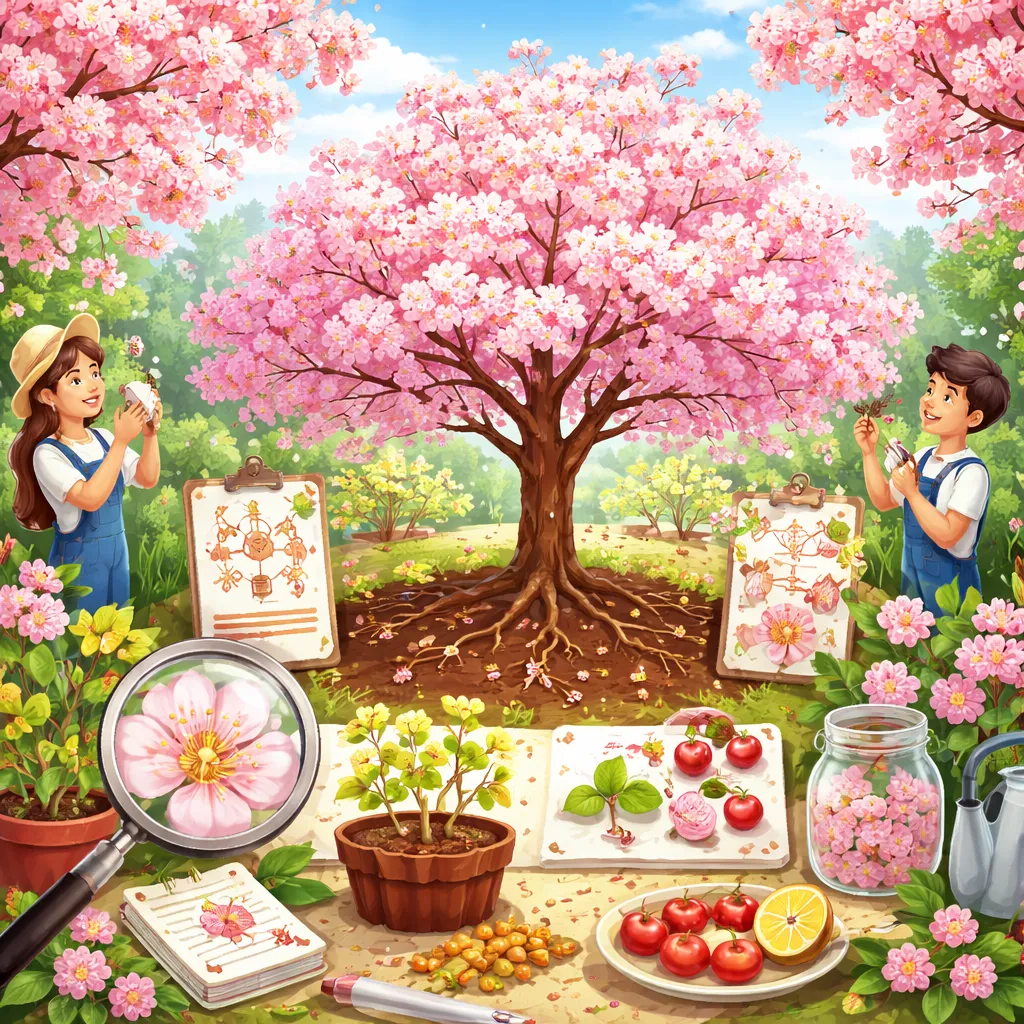

Have you ever stood under a tree in spring and felt soft pink petals fall like rain onto your shoulders? Have you popped a tiny red, juicy fruit into your mouth and tasted a burst of sweet summer sunshine? That magical tree gives us both stunning flowers and tasty fruits, and today we will learn about cherry tree plant together.
Children love chasing the falling pink petals and picking ripe cherries in summer, but few know its hidden stories. It paints the world pink in spring and brings sweet treats when the weather grows warm. Let us step into a wonderful adventure to explore this graceful and lovely tree.
Let‘s Learn the Word! – Open the Treasure Box of Language
Formal Name and Pronunciation The full name of this plant is cherry tree, pronounced /ˈtʃeri triː/. Clap twice for “cher-ry” and once for “tree” to make a fun rhythm for spelling. Pronounce the “ch” sound like a soft chuckle when you say the word aloud.
Word Origin Story The word “cherry” comes from the Latin word “cerasum”, named after an ancient Turkish city. Traders brought this fruit and its name to Europe hundreds of years ago. It changed little over time and became the sweet word we use today. “Tree” comes from Old English words that describe tall, woody plants that stand through all seasons.
Nicknames and Other Names Gardeners call it a stone fruit tree for its hard little seed inside the fruit. Children call it “Pink Petal Tree” for its beautiful spring blossoms. It is also known as a flowering cherry when it grows only for pretty flowers, not fruit.
Core Plant Parts Vocabulary Trunk grows slim and strong, like a brown pillar holding up the whole cherry tree. Branches spread gracefully like dancer’s arms holding clouds of pink flowers. Blossoms are soft pink or white, with five delicate petals like tiny hearts. Roots spread underground like thin threads drinking water and food from soil. Leaves are oval and green with sharp edges, unfurling after blossoms fall. Fruits are small and round, turning bright red or deep purple when ripe. Stone is the hard seed inside the cherry that holds life for a new cherry tree plant. Buds are tight pink bumps that wake up when spring winds blow gently.
Action and State Words Bloom means cherry blossoms open and cover the tree in a pink cloud in spring. Ripen tells when tiny green cherries turn red, sweet and juicy in summer. Wilt shows leaves drooping when the tree does not get enough fresh water. Juicy describes the sweet liquid that bursts when you bite a ripe cherry. Delicate means the soft petals that fall easily with a light wind.
Ecosystem Related Vocabulary Honeybees buzz from blossom to blossom to collect sweet nectar for their hives. Butterflies float around pink flowers, adding bright colors to the cherry tree. Sparrows nest on thick branches and eat insects that hurt the tree’s leaves. Squirrels love ripe cherries and hide the stones to grow new trees elsewhere.
Cultural Imprints in Language A wise saying tells that cherry blossoms teach us to cherish every beautiful moment. It teaches children that lovely things may be short but fill our hearts with joy. A sweet nursery rhyme sings, “Cherry pink, petals drift, bees take flight, nature’s gift.” It paints a lively picture of spring days around a blooming cherry tree. The idiom “cherry on top” means a wonderful extra treat that makes things perfect.
Now we have all the special words to explore deeper, and we can learn about cherry tree plant’s hidden natural secrets.
Discover the Plant’s Secrets! – Nature Detective’s Exploration Notes
Plant Passport The cherry tree belongs to the Rosaceae family, just like apples, peaches and roses. Its scientific genus is Prunus, with over 400 different kinds around the world. It has a slim trunk with smooth, gray-brown bark that glints in the sunlight. Its leaves are glossy ovals that turn golden red in beautiful autumn colors. In spring, it bears clusters of pink or white flowers before new leaves grow.
The cherry tree follows a bright seasonal cycle every single year. Pink buds burst into full blossoms as spring arrives in soft waves. Small green cherries form and swell as summer sunshine grows stronger. Fruits ripen to bright red in early summer, ready for picking and eating. Leaves turn fiery red and gold in autumn, then fall for winter rest.
Survival Wisdom Cherry trees love full sunlight and need many hours of sun to grow sweet fruits. They have shallow roots that spread wide to collect water from topsoil quickly. They can survive cold winters better than many fruit trees, but fear late spring frost. They first grew in Asia thousands of years ago, especially in Japan and China. Now they thrive in temperate climates across Asia, Europe and North America.
Ecological Niche and Contributions As a key producer, the cherry tree makes its own food with sunlight, water and air. Bees rely on its early blossoms for nectar when few flowers are in bloom. Birds build cozy nests on its branches, safe from wind and small predators. Its roots hold soil together and stop erosion during heavy spring rains. Leaves take in harmful gases and release clean oxygen for all living things to breathe. Fallen leaves rot into rich soil that feeds other small plants in the garden.
Human History and Cultural Symbols In Japan, cherry blossoms called “sakura” symbolize the beauty of fleeting moments. People hold flower-viewing parties under cherry trees every spring in Japan. In Chinese culture, cherry blossoms represent love, happiness and good fortune. People eat fresh cherries, make jams, bake pies and create sweet cherry syrups. Cherry wood is smooth and strong, used to make fancy furniture and musical instruments.
Fun Wow Facts Some cherry trees only grow flowers and never produce any edible fruits. Cherry blossoms only stay in full bloom for about one week each spring. A single cherry tree can grow hundreds of tiny fruits in one summer season.
We have uncovered all the amazing secrets of this tree, and now we can grow a cherry tree plant with our own hands.
Let’s Grow It Together! – Little Guardian’s Action Guide
Suitability for Home Planting Dwarf cherry trees grow perfectly in large pots on sunny balconies or small gardens. Full-sized cherry trees need a wide open yard for their branches to spread freely. It needs a spot with full sunlight all day, blocked by no tall buildings or big trees. Young kids can care for it easily with simple steps and gentle daily love.
Little Gardener’s Tool Kit A young dwarf cherry sapling works better than seeds for faster fruit growth. A large clay pot with drainage holes at the bottom to keep roots from rotting. Light, loamy soil mixed with compost to give the tree plenty of nutrients. A small watering can with a thin spout to water the soil softly and evenly. Organic fruit fertilizer and a small hand shovel for digging planting holes.
Step-by-Step Planting and Care Plant the sapling in early spring when frost is gone and air turns warm. Fill the pot with soil, dig a hole, place the sapling and cover roots fully. Pour water slowly until the soil is completely wet for the first planting.
Check the top soil every day, water only when it feels dry to the touch. Keep the pot in full sunlight, as sunshine makes cherries sweet and red. Use organic fertilizer once a month during spring and summer for healthy growth.
Observe the tree each day and draw its changes in a special nature notebook. Record when pink buds open, petals fall and tiny green cherries appear.
Problem Diagnosis Room Yellow leaves mean too much water, so stop watering and let soil dry out. Tiny green aphids on leaves can be wiped away with mild soapy water gently. Brown blossoms mean frost hurt the tree, cover it with cloth if cold wind comes. Droopy leaves mean the tree is thirsty, give it a slow deep drink of clean water.
Harvest and Growth Gifts Wait two to three years, and you can pick your own bright red home-grown cherries. Harvesting tiny fruits teaches kids patience and careful handling for fragile things. Caring for the tree builds responsibility and a heart full of love for nature. Sharing fresh cherries with family creates warm and unforgettable memories.
Creative Extension Activities Make a growth diary to draw and write about the tree’s changes every week. Create petal rubbings with paper and crayons to save cherry blossom shapes. Paint a picture of falling pink cherry petals with bright and soft colors. Learn cherry blossom poems and recite them under the tree in spring. Make cherry jam with your harvest and share it with friends and neighbors.
Nurturing a cherry tree helps us connect with nature and truly learn about cherry tree plant each passing day.
Conclusion and Eternal Curiosity Today we have finished a wonderful journey with the graceful cherry tree plant. We learned useful English words, discovered natural secrets and learned to grow the tree with care. This special tree gives us breathtaking pink blossoms, sweet juicy fruits and helps many small creatures. It teaches us to cherish beautiful moments, even if they do not last forever.
Keep your eyes wide open when you walk through parks or gardens in your neighborhood. Look closely at every tree and flower, and you will find new magic every single day. Never stop asking questions about nature, because the world holds endless wonders waiting for you to explore.